Opening a café is exciting — but the equipment list can feel overwhelming. Iced drinks need ice. Milk, cream and syrups need cold storage. Baristas need a solid, hygienic work surface. Get these three right and your service line runs smoothly from day one; get them wrong and you will be patching problems during your busiest hours.
This guide covers the three essential equipment categories for coffee shops — ice makers, cold storage and stainless steel work tables — with practical sizing advice, layout tips, and what to check when buying from a manufacturer.
1. Ice Makers: Sizing and Ice Type for Coffee Shops
For a café, ice is not an afterthought — it is a daily essential. Every iced latte, cold brew and frappé depends on it.
Which ice type fits a coffee shop?
|
Ice type |
Characteristics |
Best for |
|
Nugget ice |
Fully solid, crystal-clear, high hardness, less surface contact, slow melting — keeps cold drinks evenly chilled |
Iced coffee, cold brew, smoothies, juices, milk tea and other drinks |
|
Cube ice |
Thickness adjustable — solid or hollow core for flexibility, medium hardness |
General drinks, cocktails, water service, hotels, western restaurants, fast food, convenience stores |
|
Half-square ice |
Fully solid, hardness between cube and nugget ice, melts relatively slowly in drinks |
High-volume beverage service, Hong Kong-style tea drinks, tea restaurants, milk tea shops |
|
Flake / crushed ice |
Soft and fine |
Food display, smoothies, blended drinks, hot pot, sushi, seafood restaurants |
|
Cylindrical (jelly) ice |
Regular shape, attractive appearance, slightly larger size, holds more cold energy |
Bars, cafés |
|
Large cube ice |
Regular shape, attractive appearance, slightly larger size, holds more cold energy |
Bars, cafés |
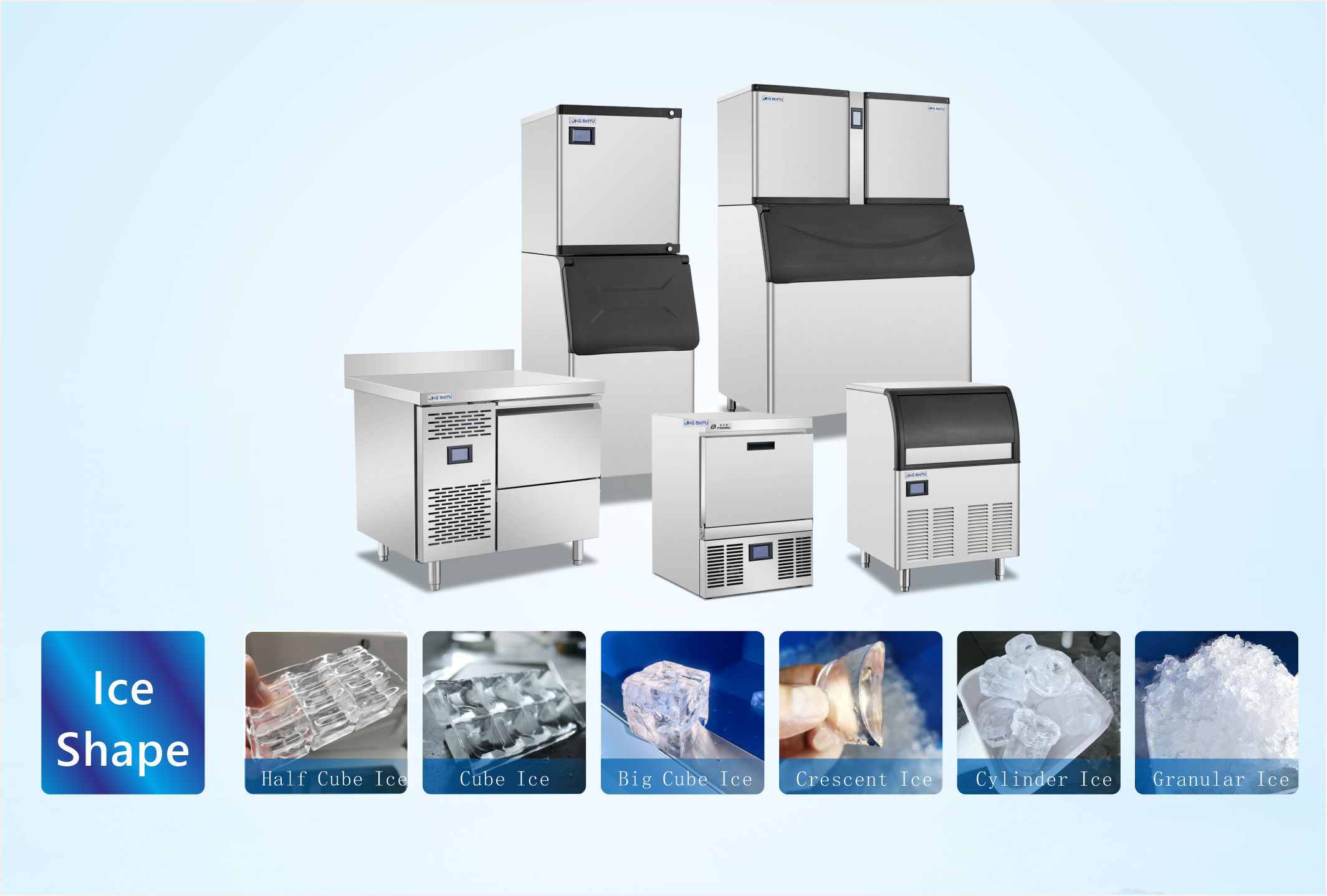
Most specialty coffee shops choose nugget ice for iced drinks and add a cube-ice machine if they also serve cocktails or bottled water. Many modern machines can produce multiple ice types — a useful feature as your menu evolves.
How big should your ice maker be?
As a rough rule, budget 0.3–0.5 kg of ice per iced drink. Plan for your peak day, not your average:
100 iced drinks/day → a 50 kg/day machine with storage bin;
200 iced drinks/day → a 100 kg/day machine, or a 50 kg unit plus a second one during summer peaks;
High-volume cafés (300+ drinks/day) → a 150–200 kg/day machine with a large storage bin.
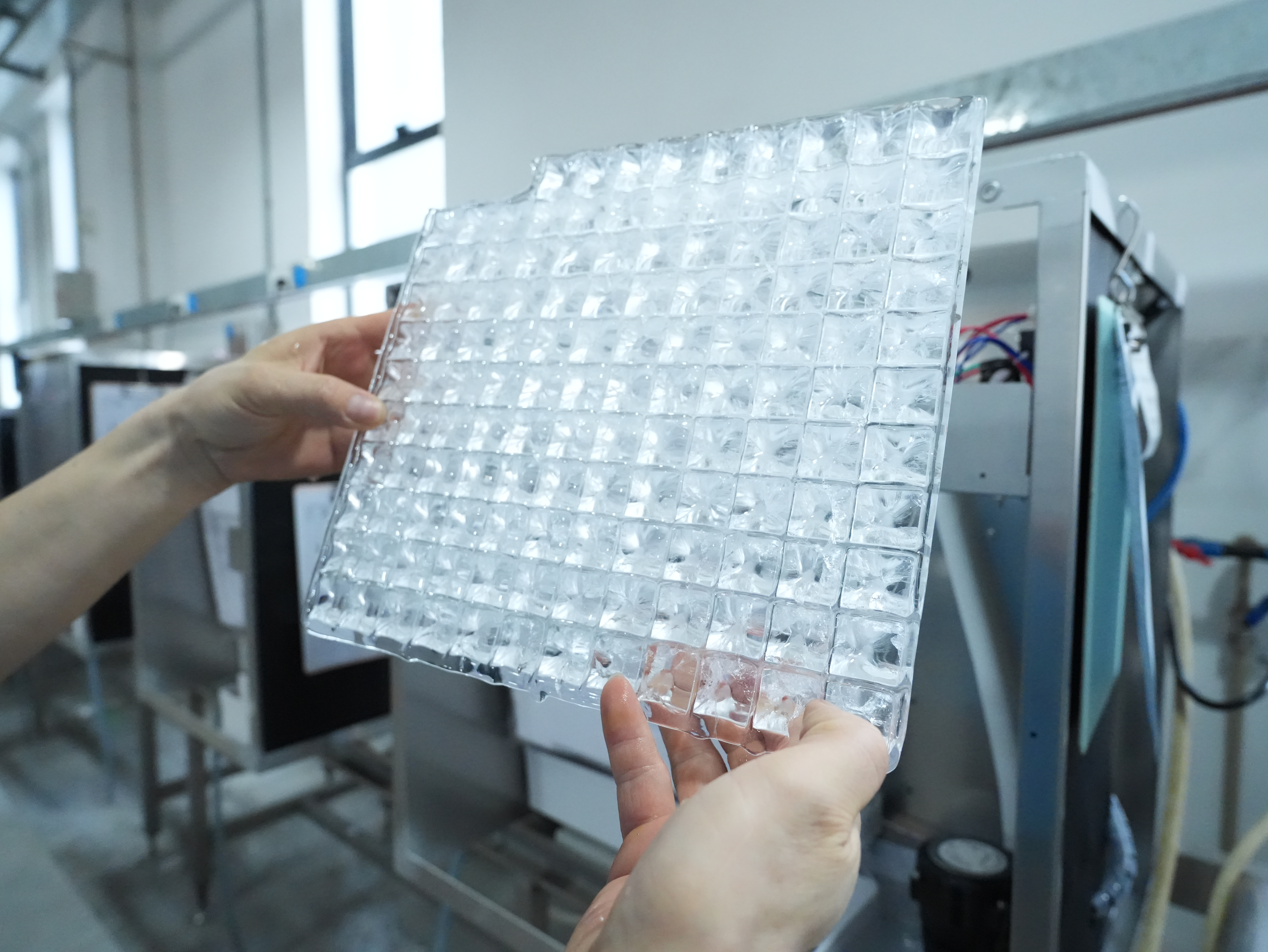
Choose a model with a storage bin (about 50% of daily output is a good target) so you never run out mid-service, and keep at least one spare day's capacity for hot weeks.
2. Cold Storage: What to Keep Cold (and at What Temperature)
A café handles several temperature-sensitive zones: milk and cream, syrups and sauces, pastries and desserts, and backup frozen stock.
The core temperature zones (same standards as full commercial kitchens)
|
Zone |
Temperature |
Café use |
|
Chilled storage |
2–8°C |
Milk, cream, syrups, sauces, eggs |
|
Frozen storage |
-12 to -20°C |
Ice cream, frozen pastries, backup stock |
Recommended unit lineup for a coffee shop
Chest refrigerator (customizable capacity): the workhorse behind the bar for high-frequency chilled ingredients such as milk, cream, syrups and sauces, keeping your service line compact and everything within arm's reach. It holds a stable 2–8°C, and we recommend sizing it for 2–3 times your daily sales; the top can double as a work surface to save bar space — ideal for small and medium cafés.
Chest freezer (customizable capacity): for backup stock such as ice cream and frozen pastries, holding -12 to -20°C (choose a -20°C model for ice cream to keep its texture firm). The chest design loses less cold air when opened, saving energy — a good fit for compact kitchens.
Upright dual-temp cabinet (chilled + frozen in one unit): an ideal space-saving choice for small cafés. The chilled section (2–8°C) and frozen section (-12 to -20°C) are independently controlled in separate zones — one unit, two functions, small footprint, suited to bars or kitchens with limited space; choose a top/bottom or left/right split layout to fit your needs.
Upright refrigerator/freezer: when a walk-in cold room is not an option, upright units offer flexible, height-adjustable shelving for bulk storage in higher-volume cafés. With a commercial-grade compressor and thickened insulation, they recover temperature quickly and stay stable even with frequent door openings, keeping food safe.
If you also prep food — sandwiches, salads, pastries — a refrigerated work table keeps ingredients cold right where you work, saving steps during rush hours.
3. Stainless Steel Work Tables: Your Prep and Service Backbone
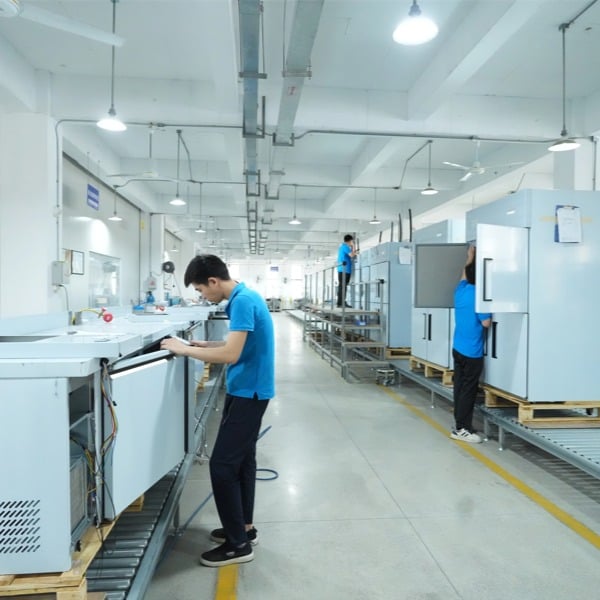
Every café needs clean, durable, food-safe work surfaces. That is exactly why stainless steel work tables and coffee operation tables are indispensable.
What to look for
Material grade: use 304 stainless steel for food-contact surfaces — it resists corrosion from milk, syrups and daily cleaning chemicals. 201 stainless is a budget option for less demanding areas.
Structure: reinforced legs and adjustable feet keep the table stable on uneven floors; some models include shelves or drawers underneath for extra storage.
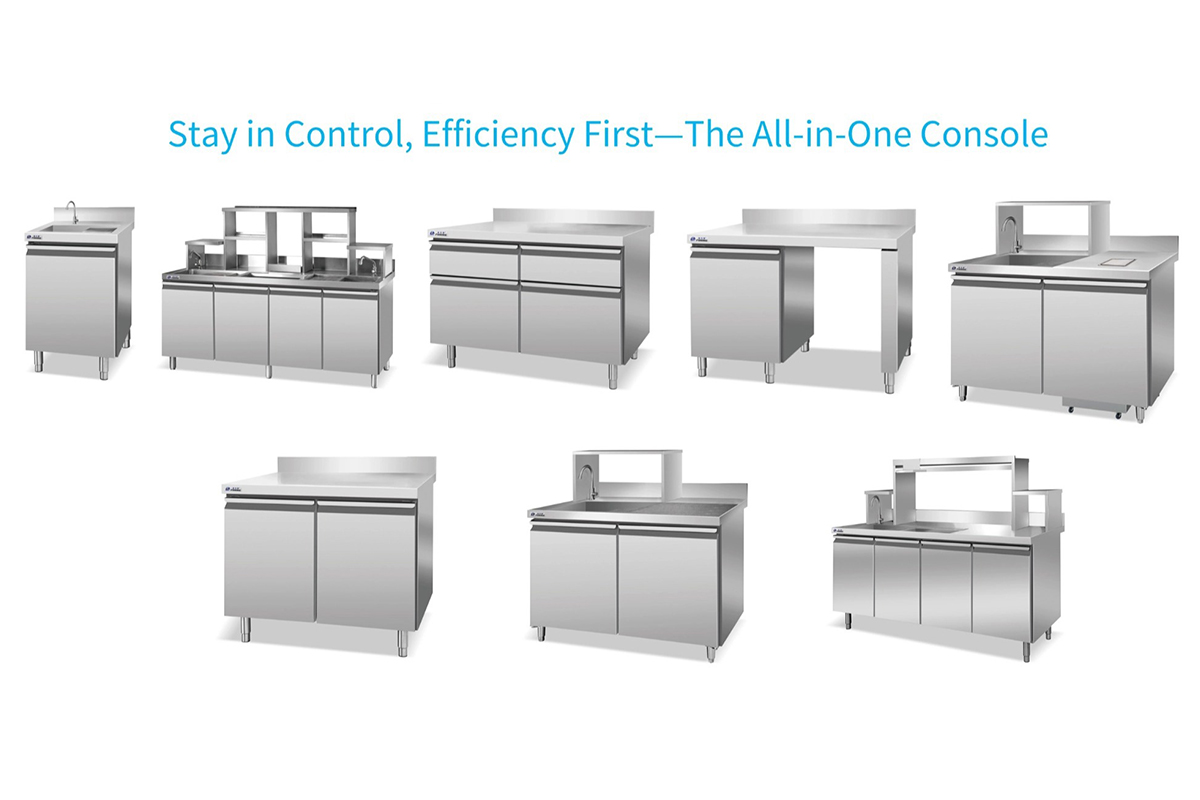
Configurations: choose from flat-top tables, tables with sinks, models with backsplash, or purpose-built coffee operation tables with space reserved for grinders, espresso machines and cup racks.
Customization: table dimensions can be tailored to your bar space, with free choice of material grade (304/201), table structure and add-on features (sinks, backsplash, drawers, cup racks, power sockets, etc.), and your logo can be customized too. As the source factory, Jingbaiyu can work directly with you on the design, so the table fits your service flow and interior style perfectly.
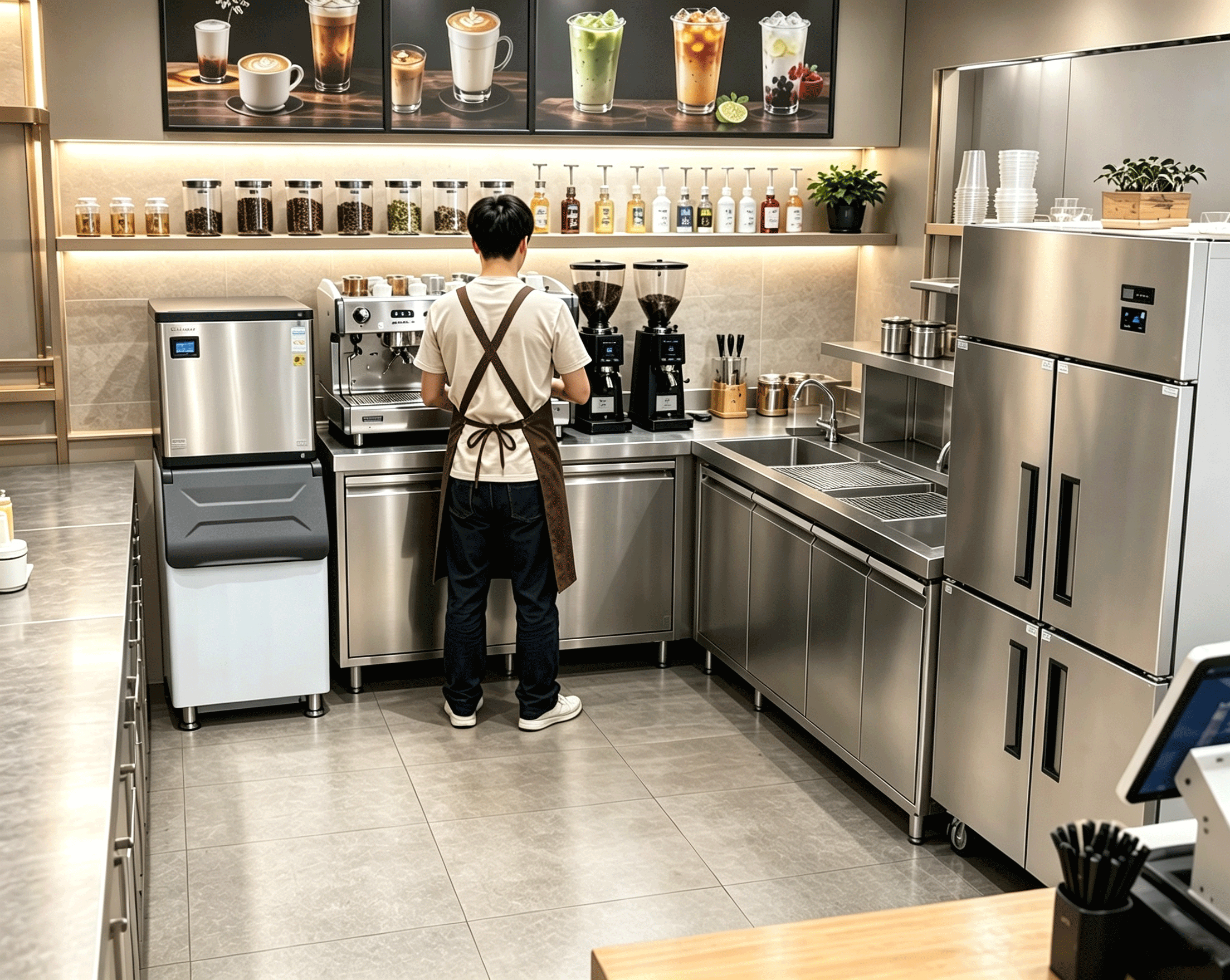
Layout tip: poor layout planning creates wasted steps and precious serving time. Arrange the ice maker, cold storage and work tables into a compact triangle behind the bar, so that during peak hours your barista can reach the ice, milk and espresso machine within two steps. On top of that, Jingbaiyu can provide complete equipment design and customization based on your workflow and operating habits, putting every unit in its place to maximize your café's output efficiency.
4. Sample Setup by Café Size
|
Equipment |
Small café (30–50 covers) |
Busy café (150+ iced drinks/day) |
|
Ice maker |
40–90 kg/day with storage bin |
100–860 kg/day with large storage bin |
|
Cold storage |
1–2 refrigerated and freezer work tables |
1 upright refrigerator + 1 upright freezer |
|
Upright dual-temp cabinet |
1 dual-temp cabinet (independent chilled and frozen zones) |
1 upright refrigerator + 1 upright freezer |
|
Stainless steel work tables |
1–2 tables |
2–3 tables (incl. coffee operation table) |
5. Buying Smart: Factory-Direct and Customization
Equipment is a long-term investment, so buy from a manufacturer you can trust.
What to check before you buy
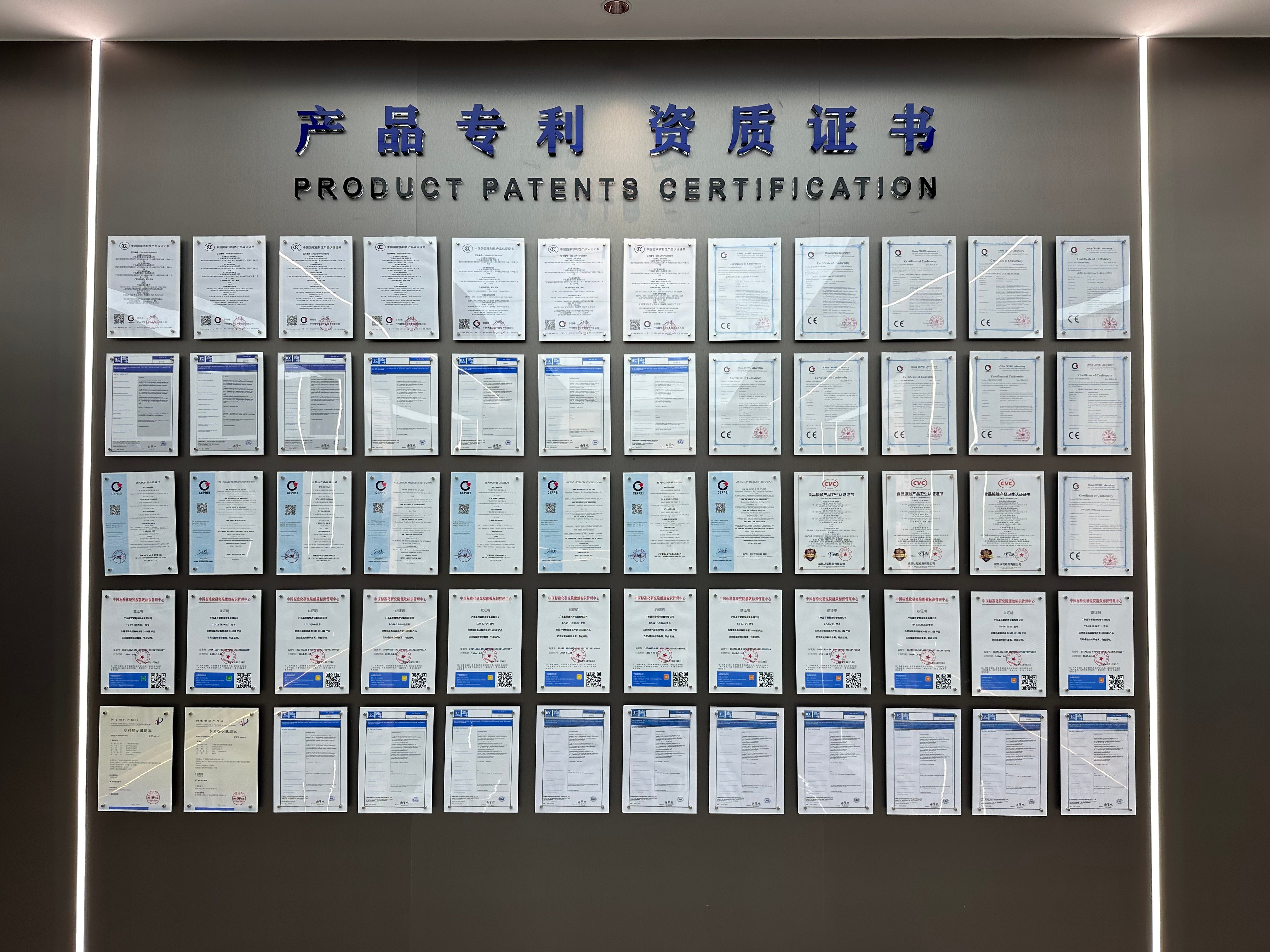
Certifications: confirm the equipment carries the required marks — such as CCC, CE, CB, UKCA and food-contact safety certification. These are non-negotiable for import and health inspections in many countries.
Quality system: a factory with ISO 9001:2015 certification and full-process quality control delivers consistent units, not lucky batches.
Production capacity: if you plan to expand or open multiple locations, a supplier's real production scale matters — look for a manufacturer that handles both stock orders and large custom orders.
After-sales and spare parts: confirm warranty terms and spare-parts availability before signing.
Why source directly from a factory?
Buying from a source factory instead of a trading intermediary gives you better unit pricing, direct technical support, and customization capability. For cafés and coffee chains, common customizations include:
Custom dimensions to fit your bar layout;
Material choices (full 304 stainless, color options);
Configuration and function (dual-temp, multiple ice types in one machine, special voltages for your market);
Branded logo customization for brand display.
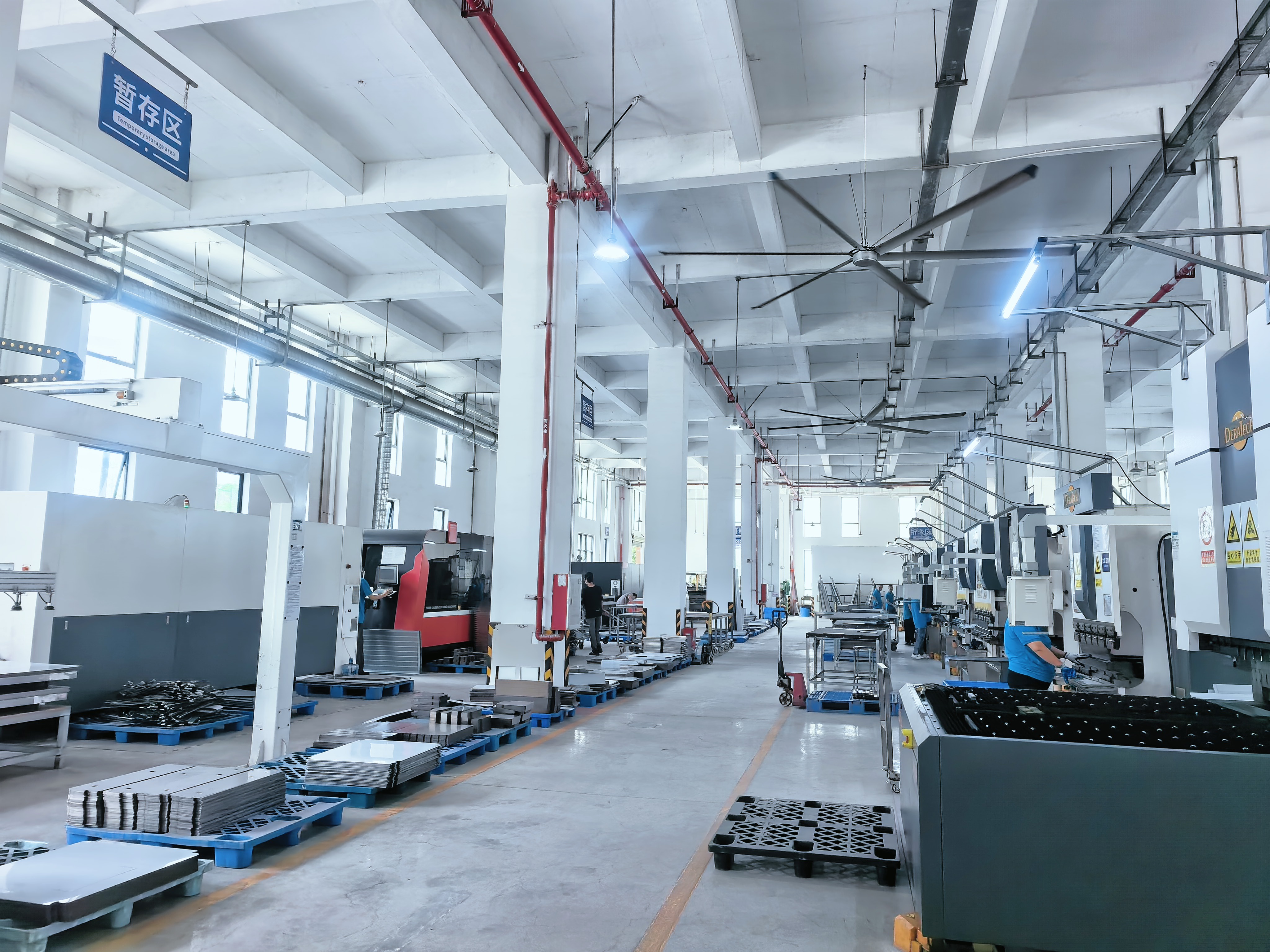
Jingbaiyu is a commercial refrigeration source factory in Qingyuan, Guangdong, China, with an 18,000 m² facility, standardized production lines, and an annual capacity of more than 60,000 units. We manufacture the full range of commercial ice makers (cube, half-square, large cube, nugget, flake and cylindrical ice), cold storage cabinets, refrigerated and freezer work tables, upright units and stainless steel coffee operation tables. Our products carry CCC, CE, CB and UKCA certification plus food-contact safety approval, and we provide complete OEM/ODM customization — free design, one-on-one project support, and full-process follow-up from drawing to delivery. Jingbaiyu has supplied cafés and coffee chains across Europe, the Middle East and Southeast Asia.
6. FAQ
Q: What type of ice do coffee shops use?
A: Most specialty cafés use nugget ice for iced coffee because it cools drinks quickly without watering them down. Many also add a cube-ice machine for cocktails or water service.
Q: How big an ice maker does a coffee shop need?
A: Budget 0.3–0.5 kg of ice per iced drink. A café selling 200 iced drinks a day should plan for a 100 kg/day machine with a storage bin.
Q: What temperature should café cold storage be set to?
A: Chilled units should run at 2–8°C and freezers at -12 to -20°C. Health standards require cold holding at 5°C/41°F or below, so keep a safety margin.
Q: Can the equipment be customized for my café?
A: Yes. Source factories offer OEM/ODM customization — dimensions, materials, configuration, functions, voltage and logo — usually with free design and full-process support.
Conclusion
A well-equipped café runs on three things: enough ice, the right cold storage, and a work surface that lasts. Plan each one for your peak day, stick to your temperature zones, and buy from a manufacturer that can certify, customize and support its products — your future self (and your baristas) will thank you.
Ready to outfit your coffee shop? Jingbaiyu offers factory-direct commercial ice makers, cold storage and stainless steel work tables — [contact us] for a free consultation and quote.

Copyright © 2026 by Guangdong Jingbaiyu Refrigeration Equipment Co., Ltd. - Privacy policy
 EN
EN