All Categories

Get a Free Quote

Our representative will contact you soon.
Email
Mobile/WhatsApp
Name
Company Name
Message
0/1000
a guide to selecting refrigeration equipment for restaurant kitchens dimensions temperature zones and materials-0

News

Home >  News

A Guide to Selecting Refrigeration Equipment for Restaurant Kitchens: Dimensions, Temperature Zones, and Materials

2026-08-21

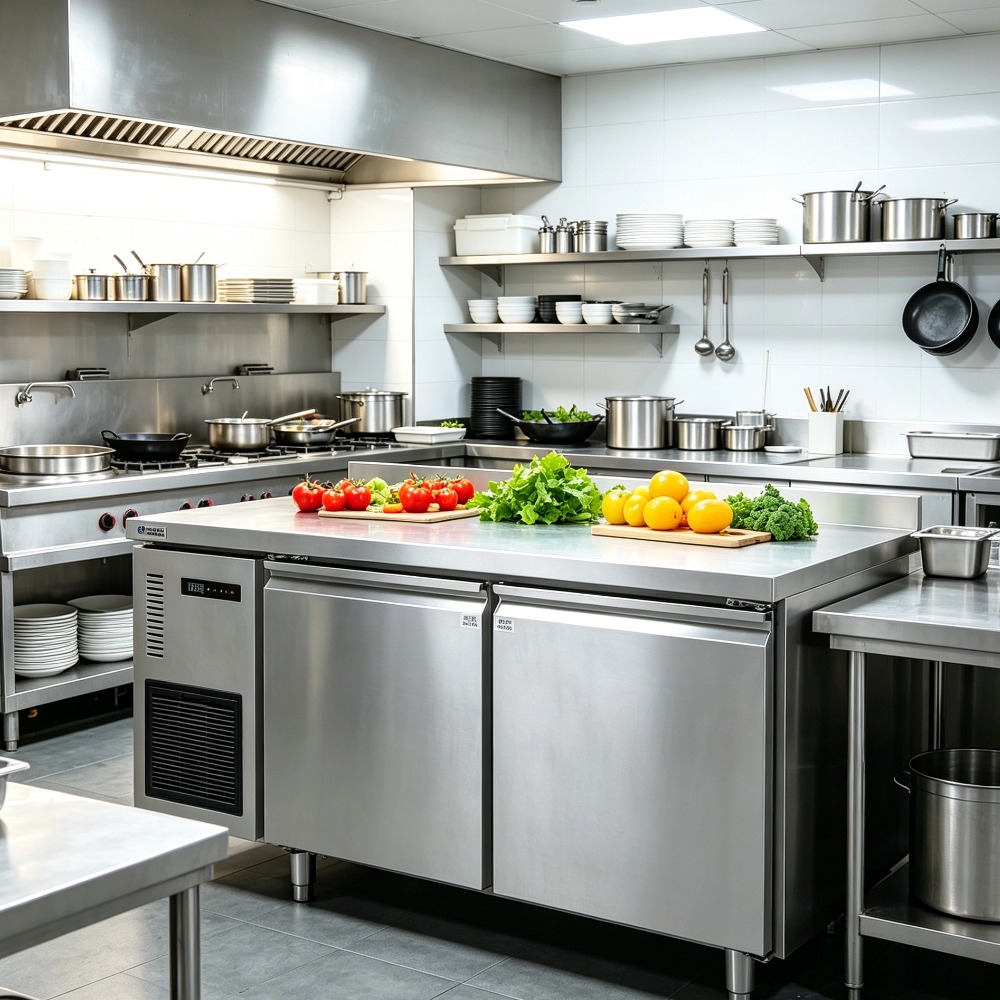
Refrigeration equipment is the backbone of a commercial kitchen. Choosing the wrong model can lead to a range of problems, including wasted space, increased energy consumption, food spoilage, and even failure to pass health inspections. This guide addresses three key factors—dimensions, temperature zones, and materials—to help restaurant operators make the right decisions.

1. Dimensions: Measure the Space First, Then Determine Capacity

“Measure twice, buy once” is the first rule of selecting refrigeration equipment.

1.1 Measuring the Installation Space

When measuring the installation space, allow for the following clearances:

  • At least 5–10 cm of ventilation clearance on both sides and at the rear to ensure air circulation
  • Additional clearance above the top of upright refrigerators for heat dissipation
  • Sufficient space for the door to open fully

1.2 Estimating Capacity Based on Daily Diner Count

For each additional diner, refrigeration capacity should be increased by approximately 0.03–0.05 m³. For example:

  • A café with an average of 50 guests per day: 1–2 upright refrigerators (total volume 1.5–2.5 m³)
  • A restaurant with an average of 200 guests per day: a combination of multiple upright refrigerators and freezers

1.3 Select a Jingbaiyu model based on intended use; customize all aspects—including materials, dimensions, functional requirements, and structure—to meet your needs

Model   Applications Typical Specifications
Refrigerated/Freezer Workstation Food preparation stations, condiment storage, small kitchens, etc. 125–395 L/unit
Flat-Top/Fruit Salad Display Case  Light meal and salad shops, fresh fruit cutting shops, bubble tea shops, tea shops 220–395 L/unit
Upright Refrigeration/Freezing/Dual-Temperature Cabinets (2–4 doors)  Storage of daily ingredients, beverages, and prepared foods  400–885 L/unit
Upright Refrigeration/Freezing Shelf Cabinets (1–2 doors)  Bakeries, cake shops, Chinese and Western restaurants, hotel kitchens  400–885 L/unit

1.4 Pre-Order Checklist

  • Installation space dimensions (including clearance for door opening and ventilation)
  • Capacity matching daily customer volume
  • Door type: Stainless steel doors (energy-efficient models) vs. glass doors (display models)
  • Compatible voltage specifications (110V / 220V / 380V)
  • If non-standard dimensions are required, Jingbaiyu supports the production of custom modelsODM.jpg

2. Temperature Zones: Store Each Type of Food at the Appropriate Temperature

Different foods have different storage temperature requirements, and a single temperature zone is unlikely to meet the needs of a full menu.

2.1 Standard Commercial Storage Zones

Zone  Temperature   Typical Items Stored
Dry Goods Storage  10–21°C Canned foods, dry goods
Refrigerated  0–5°C (ideally 0–4°C) Dairy products, eggs, vegetables, prepared foods
Fresh and Chilled 0–2°C Raw meat, poultry, fish
Standard Freezer -18°C or lower Frozen foods, bulk frozen meat and protein

2.2 Single-Temperature or Dual-Temperature Zones

Baiyu offers three configuration options to meet different kitchen needs:

  • Single-temperature refrigerator: Designed exclusively for 0–5°C refrigeration, suitable for scenarios with high volumes of daily refrigerated storage, such as fruits, vegetables, dairy products, and prepared foods.
  • Single-freezer unit: Focuses on freezing at -18°C and below, suitable for bulk storage of frozen meat, seafood, and frozen ingredients.
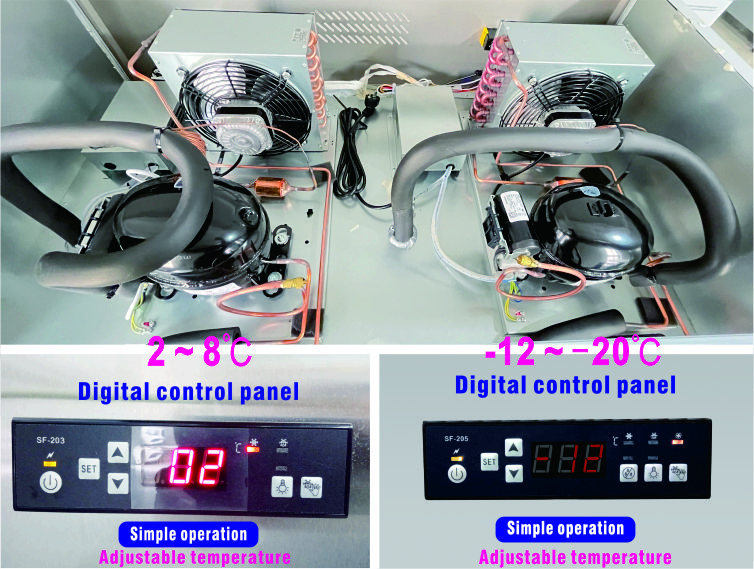
  • Dual-temperature cabinet with independent refrigeration systems: The left and right compartments are equipped with two separate refrigeration systems, ensuring that refrigeration and freezing do not interfere with each other and allowing for precise temperature control in each compartment. This design meets both storage needs, saves space, and is suitable for medium-sized restaurant layouts.

Selection Recommendations: For high refrigeration and freezing demands with ample space, choose single-temperature units configured separately; for limited space or balanced demands for both types, choose a dual-temperature cabinet with independent left and right systems.
refrigerator freezer (5).jpg

3. Materials: Stainless Steel, Insulation, and Refrigeration Core

The exterior material determines hygiene standards and service life; the insulation directly affects the unit’s energy consumption; the refrigeration core determines the equipment’s operational stability.

3.1 Stainless Steel Grades: 304 vs. 201

  • 304 Food-Grade Stainless Steel: Corrosion-resistant; recommended for the inner liner, shelves, and all food-contact surfaces; withstands long-term cleaning with acidic ingredients and commercial detergents
  • 201 stainless steel: Offers better value for money and is commonly used for exterior panels and the casing of dry areas; however, its rust and corrosion resistance is relatively weak in humid or acidic environments.

Selection tip: An interior made of 304 stainless steel paired with an exterior of 201 stainless steel is the industry’s mainstream, cost-effective solution; for coastal areas or high-humidity kitchens, models made entirely of 304 stainless steel are recommended.

3.2 Insulation Layer: Polyurethane Foam (PUF)

High-density polyurethane foam is the preferred choice due to its excellent thermal insulation properties. A thicker foam layer reduces cold air loss and helps maintain a stable internal temperature.

3.3 Door Assembly, Seals, and Refrigeration Core
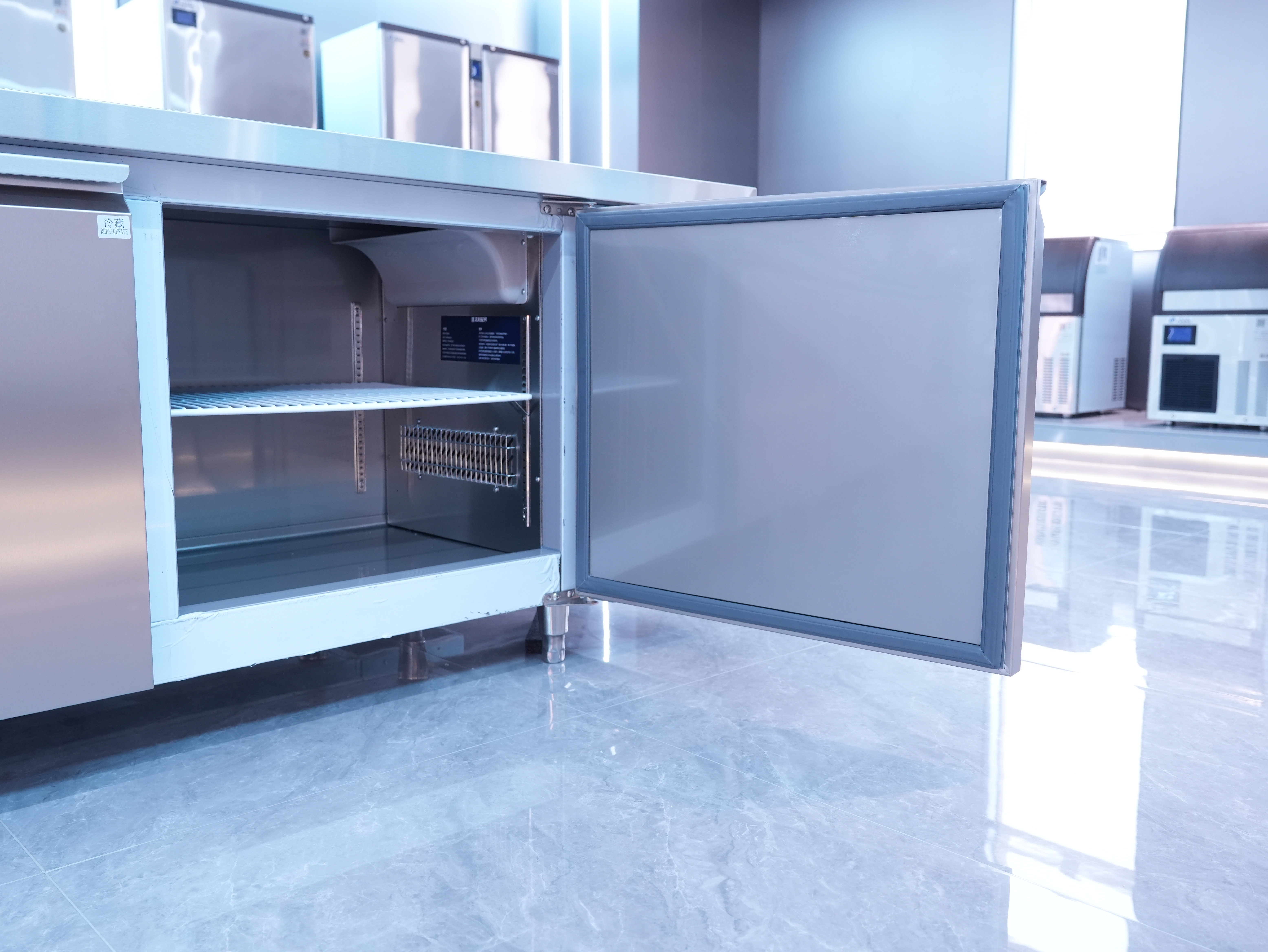
  • Magnetic door seals must fit snugly around the entire perimeter of the unit. Cold air leakage through door seals is the most common cause of high energy consumption; prioritize door seals that can be replaced individually.
  • For freezer units used in humid environments, it is recommended to opt for a door frame with anti-condensation heating to reduce issues with ice buildup and condensation on the door.
  • It is recommended to select compressors from well-known brands and prioritize the use of R290 eco-friendly refrigerant, which complies with mainstream global environmental regulations.
  • Be sure to confirm that the equipment is suitable for high-temperature commercial kitchens to prevent frequent malfunctions in hot kitchen environments.DSC00871.JPG

4. Purchasing Recommendations and Common Pitfalls to Avoid

4.1 Practical Purchasing Recommendations

  • Select a model based on actual daily inventory levels; do not configure based on holiday peak demands, as unused capacity increases power consumption.
  • Prioritize condenser ventilation; airflow blockages are the primary cause of premature compressor failure
  • Request product compliance certifications, complete unit test reports, and full warranty terms from suppliers
  • Direct procurement from the manufacturer supports custom specifications and OEM/ODM branding, eliminating markups by middlemen; this allows for configuration solutions tailored to local climate and restaurant menus

4.2 Common Mistakes to Avoid

  • Using purchase price as the sole selection criterion: Low-cost equipment typically features thinner insulation and inferior compressor configurations, resulting in higher long-term energy consumption and maintenance costs
  • Ignoring the year-round ambient temperature in the kitchen during selection
  • Failing to leave the required ventilation clearance when installing the equipment
  • Mismatch between the equipment’s voltage and the power supply specifications of the country or region of use (110V, 220V, or 380V)
  • Purchasing single-temperature refrigerators when both refrigeration and freezing storage are required
  • Failing to confirm the door opening direction before delivery and installation, resulting in doors blocking walkways

About Us

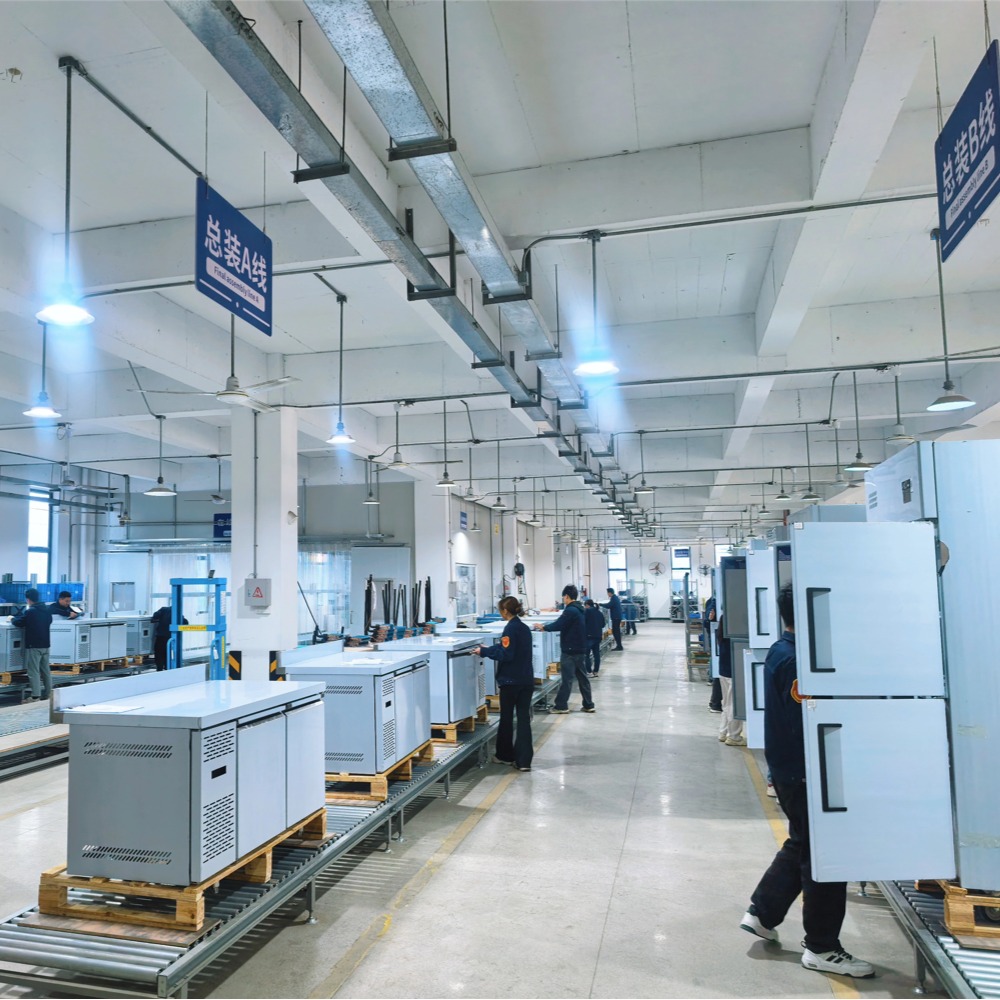
Guangdong Jingbaiyu Refrigeration Equipment Co., Ltd. is a source manufacturer located in Guangdong, China, specializing in the production of commercial refrigerators, commercial ice makers, and stainless steel workbenches. We support customization of non-standard sizes, OEM/ODM manufacturing, and offer factory-direct pricing.

For free equipment configuration recommendations, please send us your kitchen floor plan and restaurant type, and our professional team will provide you with a one-on-one solution. Feel free to contact us for a detailed quote.[Get a quote] or [Request a custom design] today.

1(c9ae93f4c3).jpg

a guide to selecting refrigeration equipment for restaurant kitchens dimensions temperature zones and materials-1
a guide to selecting refrigeration equipment for restaurant kitchens dimensions temperature zones and materials-2

Get a Free Quote

Our representative will contact you soon.
Email
Mobile/WhatsApp
Name
Company Name
Message
0/1000

Contact Us

SEND