All commercial ice makers produce ice in the same way, and heat dissipation always relies on the condenser. Air‑cooled units use fans to blow heat into the room, while water‑cooled units pass water through the condenser to absorb heat, which is then drained to the sewer or sent to a cooling tower.
This critical design choice directly determines water bills, power consumption, kitchen temperature, maintenance workload, and whether the machine can deliver its rated ice output during the hottest weeks of the year.
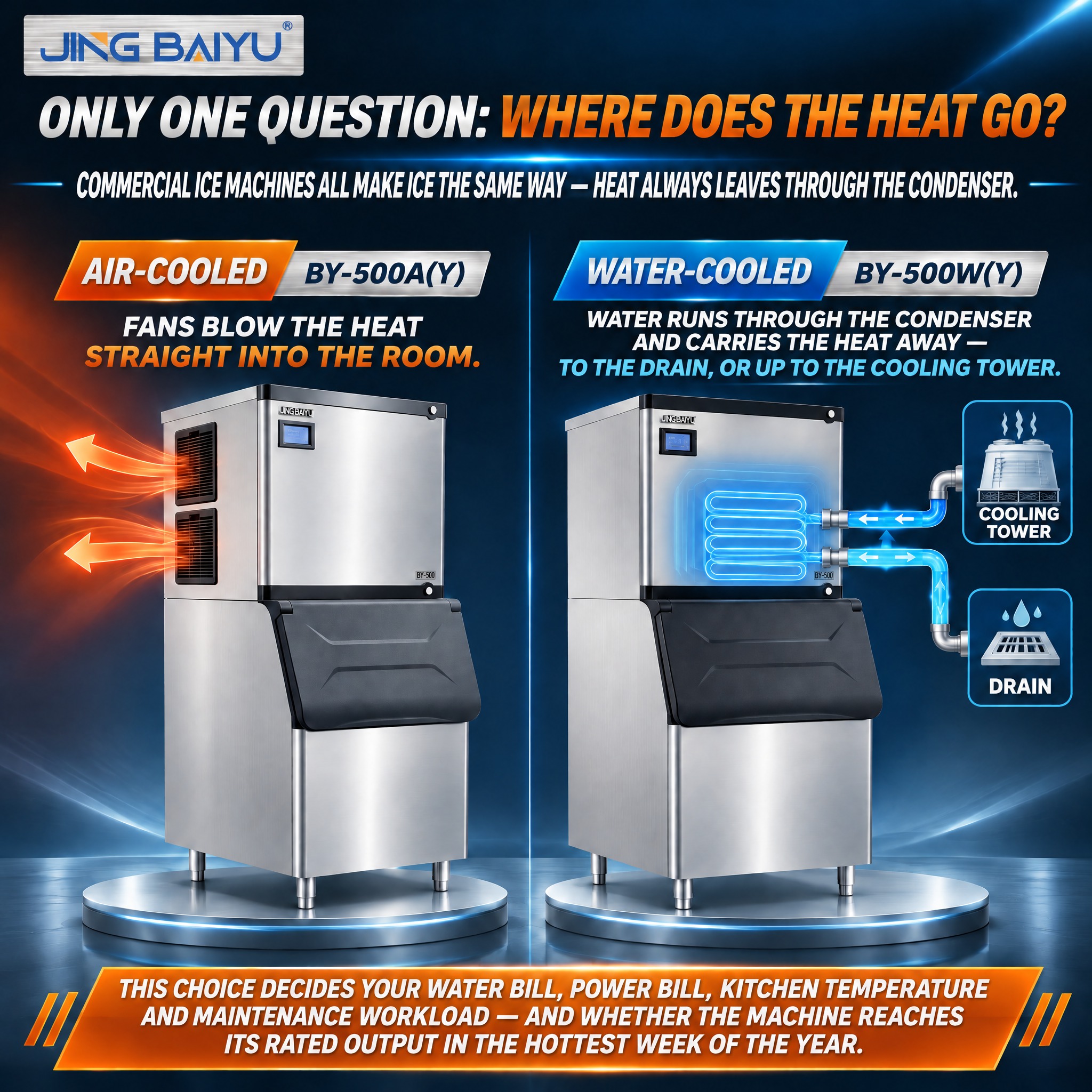
Air‑cooled and water‑cooled ice makers share identical core components: evaporator ice trays, compressors and condensers. The only difference lies in the medium used to remove heat. For air‑cooled models, ambient air flows across fin‑and‑tube coils, and heat remains inside the premises. For water‑cooled units, water circulates through shell‑and‑tube or double‑pipe condensers for heat exchange. Heat is either discharged directly in once‑through systems or recirculated with a cooling tower. All subsequent performance gaps stem from this distinction.
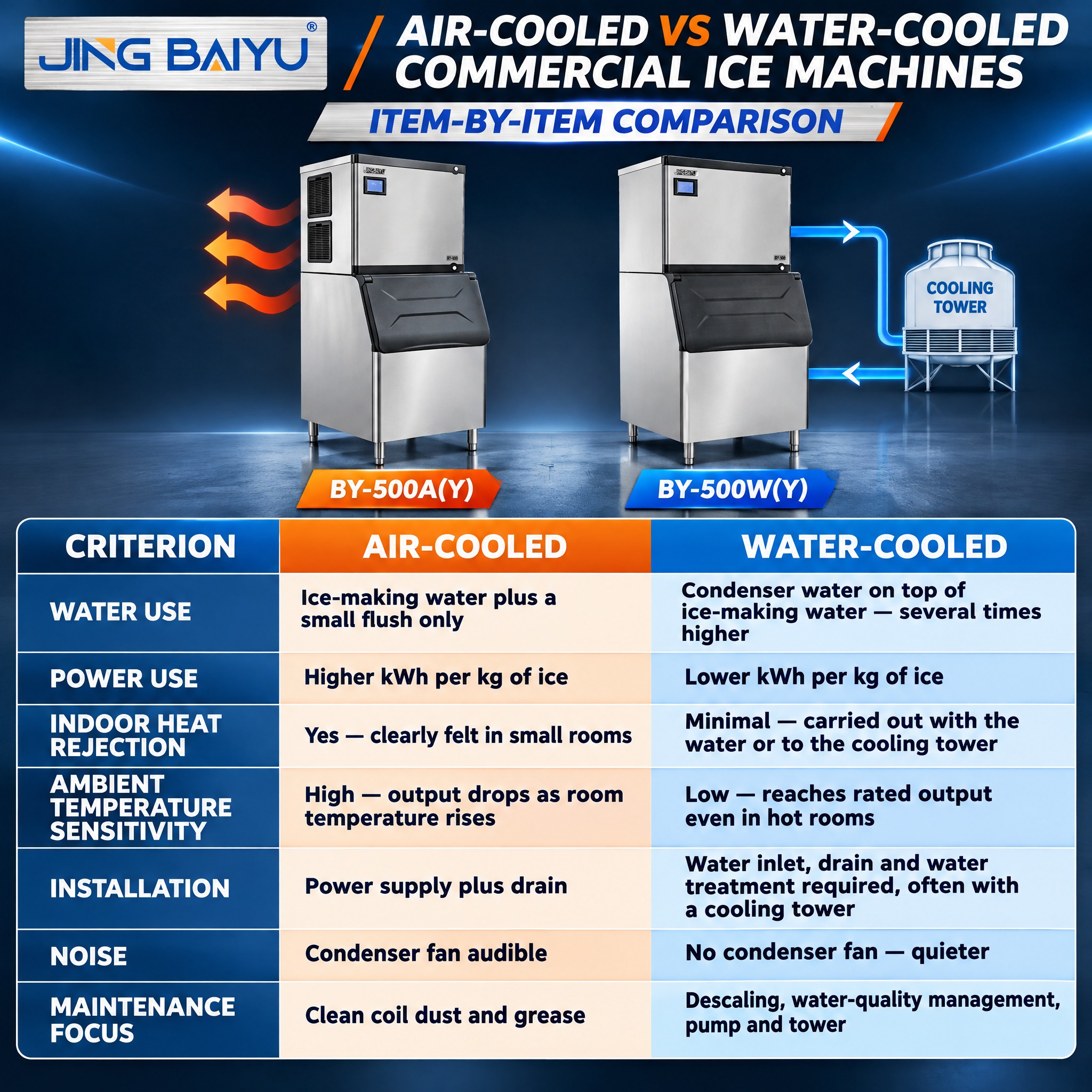
Table 1 Comparison between air‑cooled and water‑cooled commercial ice makers
| Comparison Item | Air‑Cooled | Water‑Cooled |
|---|---|---|
| Water Consumption | Water for ice‑making plus minor rinsing water | Extra cooling water several times higher than ice‑making water consumption |
| Power Consumption | Higher power consumption per kilogram of ice | Lower power consumption per kilogram of ice |
| Indoor Heat Rejection | Noticeable heat buildup, especially in small rooms | Minimal; heat is removed via water or cooling tower |
| Ambient Temperature Sensitivity | High; ice output drops as room temperature rises | Low; maintains rated output even in hot environments |
| Installation | Power supply plus drain connection | Water inlet, drain, water treatment; cooling tower often required |
| Noise | Fan‑generated operating noise | Quieter with no condenser fan |
| Key Maintenance Tasks | Clean dust and grease off condenser coils | Scale removal, water quality management, pump and tower upkeep |
Q: Which is better, air‑cooled or water‑cooled? A: There is no absolute answer. Air‑cooled units feature lower upfront cost and simpler maintenance, yet their output declines in hot spaces and they release heat indoors. Water‑cooled machines deliver stable performance at high temperatures and save power, but they consume more water and require water treatment solutions.
Q: How much water does a water‑cooled ice maker consume? A: Water consumption varies by model and ice‑making capacity. Contact JINGBAIYU for detailed technical data.
Q: Why does an air‑cooled ice maker produce less ice in summer? A: Rated capacity is tested under reference ambient conditions. Higher room temperature slows down heat rejection and extends ice‑making cycles. It is recommended to clean condenser coils, restore proper airflow and over‑size the unit for hot‑weather operation.
Two factors govern equipment selection: heat‑disposal methods and controllable long‑term operating costs. Air‑cooled ice makers are preferred for well‑ventilated sites with moderate room temperature where simple installation and maintenance are priorities. Water‑cooled units are suitable for hot equipment rooms, high ice‑demand applications with sufficient water supply.
Do not compare only purchase prices. Evaluate the 5‑year total cost of ownership based on local water rates, electricity tariffs and maintenance expenses before finalizing your solution.
Located in Qingyuan, Guangdong, JINGBAIYU has over 20‑year expertise in refrigeration equipment manufacturing. The factory covers 18,000 m² with an annual output exceeding 60,000 units. It supplies air‑cooled and water‑cooled ice makers producing full‑cube, half‑cube, large‑cube, crescent, cylindrical and flake ice. Products are certified to ISO 9001:2015, CE, CB and UKCA standards. OEM and ODM customization are available, with proven export experience for Europe, the Middle East and Southeast Asia. Send us your ambient temperature, water‑supply conditions and daily ice‑production requirement to receive professional selection advice and quotations.

Copyright © 2026 by Guangdong Jingbaiyu Refrigeration Equipment Co., Ltd. - Privacy policy
 EN