When you buy a stainless steel worktable, the grade matters more than the price tag. 304 and 201 look almost identical on the surface — same shine, same feel — but they behave very differently in a commercial kitchen, where water, salt, acid and cleaning chemicals meet the surface every day. Choosing the wrong grade can mean rust spots within months, or paying extra for corrosion resistance you do not need. This guide explains the difference and helps you choose by application.
|
Property |
304 stainless steel |
201 stainless steel |
|
Composition |
~18% chromium + 8% nickel (18/8) |
Chromium + manganese, low nickel |
|
Corrosion resistance |
High |
Moderate |
|
Food contact |
Food-grade — ideal |
Acceptable in low-demand, dry areas |
|
Moisture & acid resistance |
Strong |
Limited |
|
Cost |
Higher |
Lower |
|
Service life in wet environments |
Long |
Shorter |
304 contains around 18% chromium and 8% nickel (often called 18/8), a combination that delivers strong corrosion resistance and makes it the standard food-grade alloy for commercial kitchens. 201 replaces most of the nickel with manganese, which lowers the cost — and lowers corrosion resistance. Both are austenitic stainless steels; the difference shows up over time in a wet, acidic, frequently cleaned environment.
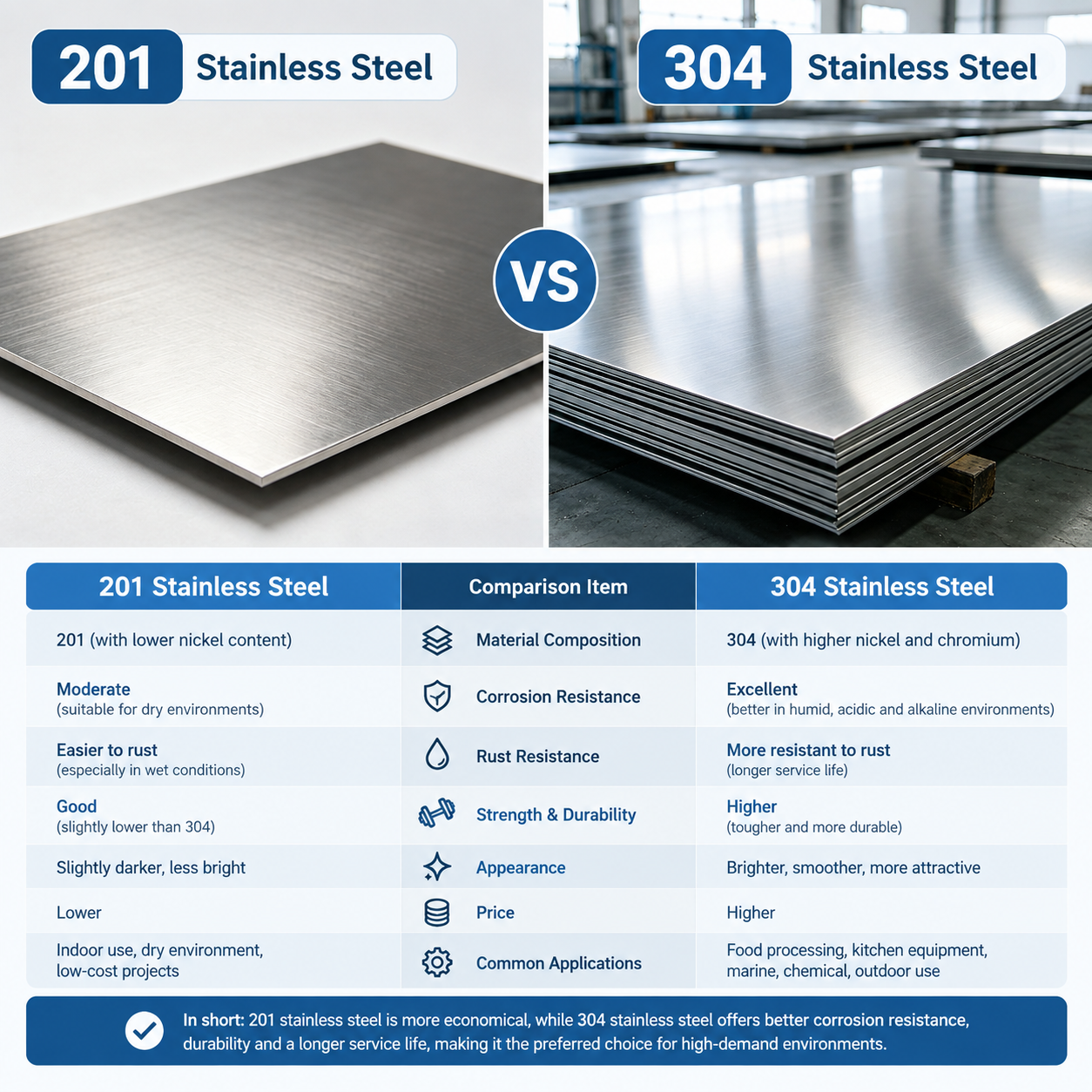
A commercial kitchen is one of the harshest environments for metal: constant moisture, salty and acidic ingredients (tomato, vinegar, citrus, marinades), aggressive sanitizers, high heat and daily scrubbing. In these conditions, 201 can develop surface rust, pitting and discoloration — most often at welds, edges, scratches and sink areas. Once corrosion starts, it is difficult to reverse, it looks unhygienic, and it shortens the life of the table. 304 is engineered for exactly this environment.
|
Application |
Recommended grade |
Why |
|
Tabletop, shelves, prep surfaces (food contact) |
304 |
Direct food contact and daily washing |
|
Sinks and drainage areas |
304 |
Constant water and food acids |
|
Coffee stations (milk, syrup spills) |
304 |
Sugar and dairy are corrosive over time |
|
Legs, frames, undershelf supports, dry storage |
201 |
Structural, low moisture, budget-friendly |
|
Coastal or high-humidity locations |
304 throughout |
Airborne salt accelerates corrosion |
In practice, many kitchens choose a hybrid build: 304 interior + 201 exterior — food-contact and wet surfaces in 304, structural parts in 201. It is the most widely used value configuration.
Whatever grade you choose, simple care habits prevent most corrosion: rinse and dry the surface after cleaning, do not leave acidic food or chlorine-based sanitizer on the steel overnight, and avoid steel wool and harsh abrasive pads.
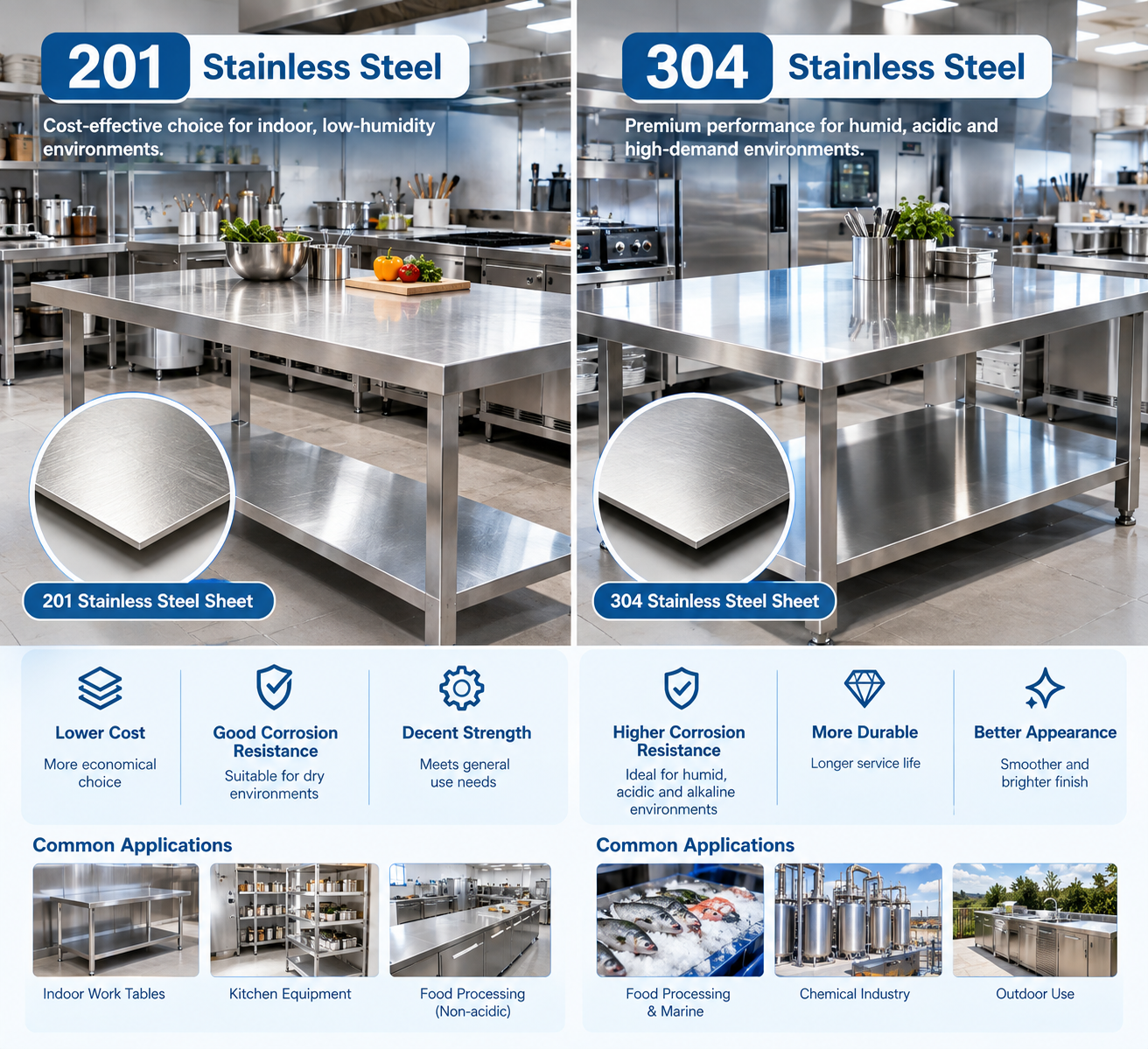
304 costs more upfront because of its nickel content. But on surfaces that meet food, water and chemicals every day, that extra cost usually pays back through longer service life, less maintenance and fewer replacements. Where 201 makes sense is in dry, structural or low-contact parts — legs, frames and undershelves. The practical rule: spend on the surfaces that get wet; save on the parts that stay dry.
Jingbaiyu is located in Qingyuan, Guangdong, China. With over 20 years of expertise in commercial refrigeration equipment, we own an 18,000 ㎡ manufacturing plant with an annual production capacity of more than 60,000 units.
We produce stainless‑steel worktables and coffee worktables with a choice of 201 / 304 stainless‑steel materials. Custom sizes and configurations are available. Our products suit various commercial scenarios including bubble‑tea & coffee shops, Western restaurants, fast‑food kitchens, bars, bakeries, fresh‑meat stores and more. We also manufacture ice makers and freezers. Compatible with different global plug standards, our products meet worldwide export requirements.
The company holds ISO 9001:2015 quality management system certification, as well as multiple authoritative domestic and international certifications such as CCC, CE, CB and UKCA. We provide OEM / ODM customization and full‑range one‑stop supporting services for customers.
Is 201 stainless steel food-safe?
It can be used in dry, low-demand areas, but for direct food contact and wet zones, choose 304.
How can I verify which grade I received?
Ask for the material certificate. If you are still in doubt, have a small sample chemically tested.
Is 304 worth the extra cost?
For food-contact and wet areas, yes — longer service life and easier hygiene usually outweigh the higher upfront price.
Grade choice is an application decision, not a luxury. Put 304 where food, water and cleaning chemicals meet the surface — tabletops, sinks and coffee stations — and use 201 for dry structural parts. That hybrid approach gives commercial kitchens the best balance of hygiene, durability and cost.
Need work tables built with the right steel? Jingbaiyu manufactures [stainless steel work tables] and coffee operation tables in 304 or 201, with custom sizes — [contact us] for a free consultation and quote.

Copyright © 2026 by Guangdong Jingbaiyu Refrigeration Equipment Co., Ltd. - Privacy policy
 EN
EN