A commercial freezer is one of the biggest equipment investments in food service — and one of the hardest to get right. Choose too small and you run out of space in peak season; choose the wrong type and you sacrifice energy, access speed or display appeal. This guide walks through the decisions that matter — temperature, type, capacity and build quality — for both restaurants and supermarkets.
Start With the Temperature You Need
Nearly all commercial freezers hold food at -12°C to -20°C or below, the standard for safe long-term frozen storage. Two exceptions matter:
Ice cream and premium frozen desserts need a colder -18°C to -22°C to stay firm and creamy;
If you also need chilled storage, a dual-temp cabinet lets one unit cover both frozen and chilled zones.
Pick the temperature first — it eliminates machine types that will never fit your menu.
Freezer Types — and Where Each Belongs
|
Freezer type |
Best for |
Notes |
|
Upright freezer |
Restaurant kitchens, daily frozen prep |
Easy access, shelf storage, fits back-of-house |
|
Chest freezer |
Bulk ingredient storage, with a working top surface |
Combines storage and prep, saving back-of-house space |
|
Dual-temp cabinet |
Chilled + frozen in one unit |
Ideal for smaller kitchens |
|
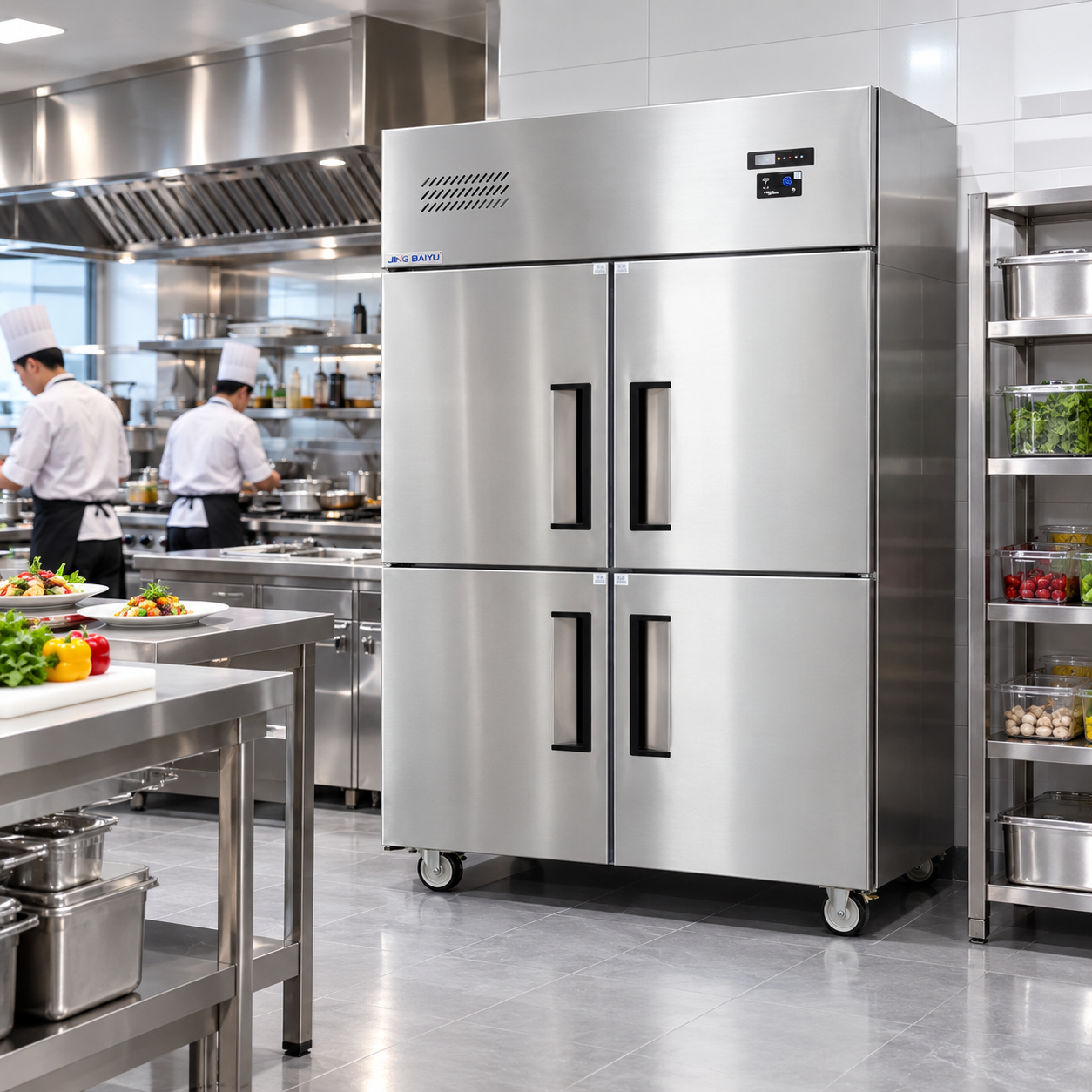
Upright pan/rack freezer |
Bakeries, pastry kitchens, back-of-house dough freezing |
Holds standard baking trays on racks — no transfer or repacking; slide trays straight in and out; large-capacity central storage for dough and semi-finished products, improving bakery efficiency |
Restaurant vs Supermarket: What Each Really Needs
|
Business |
Typical setup |
Key priority |
|
Restaurant / café |
An upright or chest freezer plus a dual-temp cabinet |
Fast access to daily prep, space efficiency |
|
Supermarket / grocery |
Upright freezer + upright freezer |
Large capacity, high turnover |
|
Both |
Right-size for your peak day; hold 2–3 days of stock |
Efficiency and reliability |
For restaurants, selection puts more weight on access efficiency, space utilisation and ease of operation — equipment should sit as close as possible to the prep station for quick reach-in access. Whatever the business type, choosing a freezer is not only about cabinet volume: consider how you will actually use it — shelving and basket structures, door style, and the distance between the unit and the prep station or sales area — so the back-of-house runs smoothly.
Build Quality: What to Check Before You Buy
A well-built freezer runs cheaper and lasts longer. Check these points before you commit:
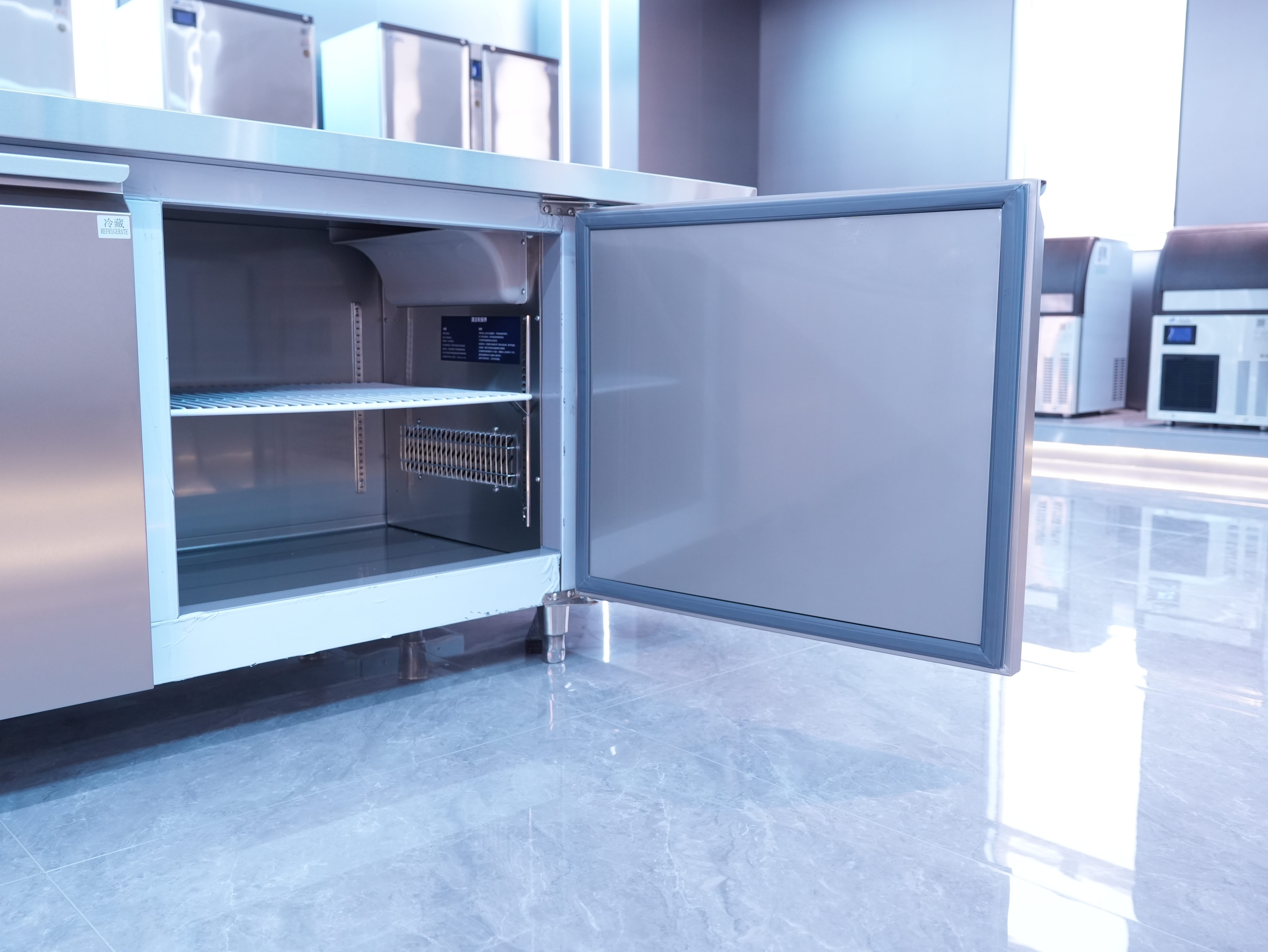
304 stainless steel on food-contact surfaces, for hygiene and corrosion resistance;
Thick polyurethane insulation to hold temperature and cut energy use;
Magnetic gaskets that seal fully and can be replaced;
A commercial-grade compressor with an eco-friendly refrigerant.
Don't Forget Running Costs
A freezer runs 24 hours a day, so its energy efficiency matters as much as its purchase price. Thick insulation, a quality compressor and efficient defrost cycles cut electricity use all year — and good ventilation (5–10 cm around the unit, away from heat sources) keeps it running efficiently. Over several years, an efficient freezer usually costs less than a cheap one.
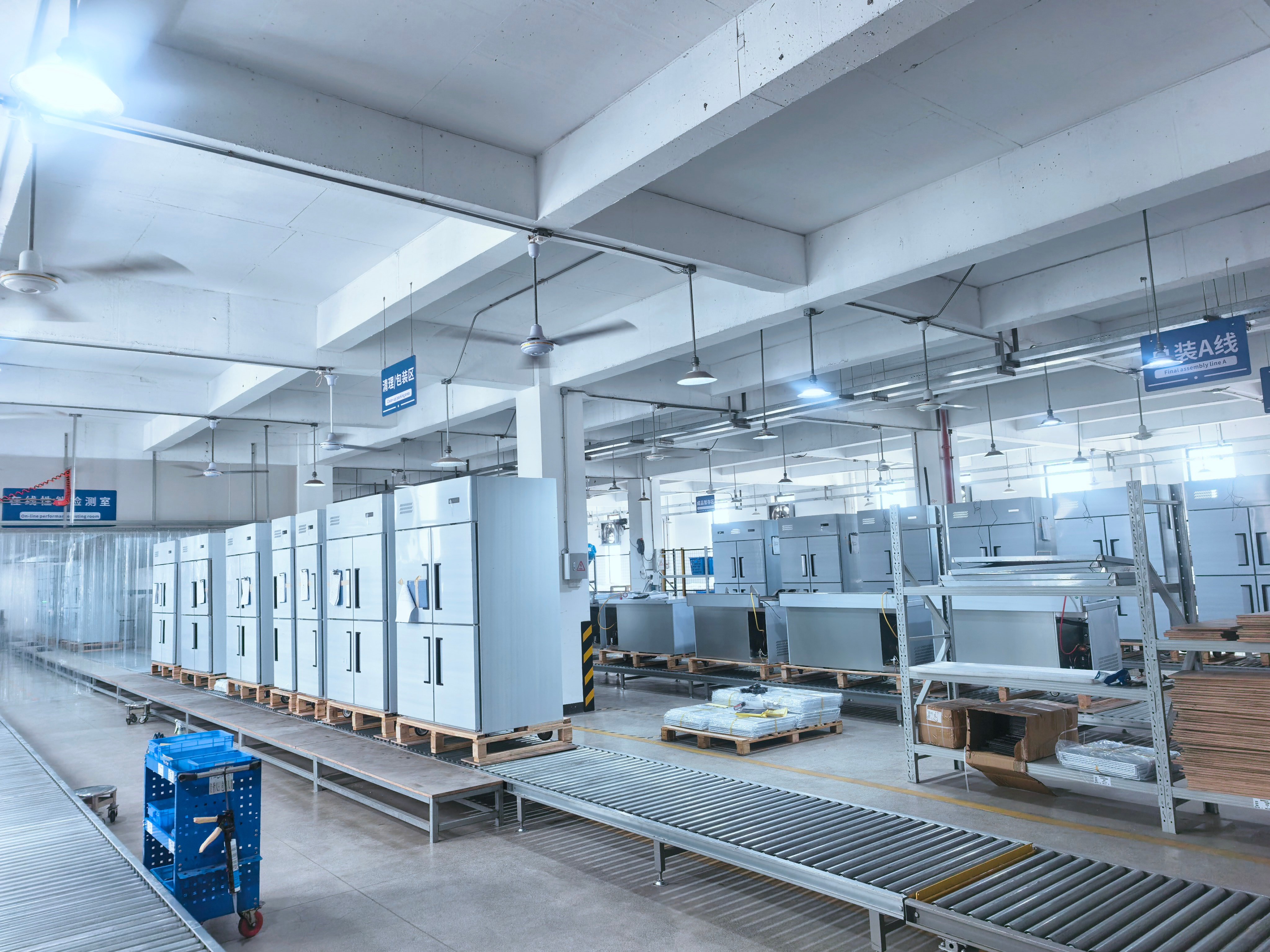
JINGBAIYU is a commercial refrigeration source factory in Qingyuan, Guangdong, China, with over 20 years of experience, an 18,000 m² facility and an annual capacity of more than 60,000 units. We manufacture upright and chest freezers, dual-temp cabinets, refrigerated and freezer work tables, commercial ice makers and stainless steel work tables, with custom sizes and OEM/ODM support, under ISO 9001:2015 quality control with CCC, CE, CB and UKCA certification, among others.
FAQ
What temperature should a commercial freezer be?
-12°C to -20°C for standard frozen storage; -18°C to -22°C for ice cream and premium frozen desserts.
Is a chest freezer or an upright freezer better?
Upright freezers suit large back-up stock; chest freezers combine storage with a working top surface.
What size freezer does a restaurant need?
Size it for your peak day plus 2–3 days of stock. Supermarkets should match display capacity to turnover instead.
Conclusion
Choosing a commercial freezer comes down to matching temperature, type and capacity to how you actually work — fast access for restaurants, display and volume for supermarkets — and buying a unit with the insulation and components to run 24/7. Because a freezer never switches off, efficiency is part of the design, not an optional extra. Get those right, and the freezer quietly does its job for a decade.
Looking for the right freezer? JINGBAIYU manufactures [commercial cold storage], [ice makers] and [stainless steel work tables] factory-direct — [contact us] for a free consultation and quote.

Copyright © 2026 by Guangdong Jingbaiyu Refrigeration Equipment Co., Ltd. - Privacy policy
 EN