Your ice maker is switched on and the display is lit — but the bin stays empty. Unlike a machine that produces too little ice, a machine producing no ice at all usually points to a few specific faults: no water, a paused cycle, a failed sensor, or a refrigeration fault. Here is how to diagnose it, step by step.
Rule Out the Simple Things First
Before assuming a breakdown, check the basics:
Is the bin actually full? An ice-full sensor stops production — and a stuck sensor or ice bridge can make the machine think the bin is full when it is empty.
Is it in cleaning mode? Many models pause production during or after a cleaning cycle until they are reset.
Is the power uninterrupted? Check the supply, the breaker, and any error code on the display.
Is water reaching the machine? Confirm the supply valve is open and the inlet line is not blocked.

The Most Common Causes and Fixes
|
Cause |
What you'll see |
What to do |
|
Closed water valve / no supply |
Reservoir empty, no ice |
Open the valve; check supply pressure |
|
Clogged water inlet filter |
Slow or no filling |
Clean or replace the filter |
|
Faulty water inlet valve |
Machine never fills during the cycle |
Replace the inlet valve |
|
Stuck float switch |
No fill, or constant overflow |
Clean or replace the float |
|
Bin-full sensor or ice bridge |
Machine stops although the bin is empty |
Clear the ice bridge; test the sensor |
|
Stuck in clean mode |
Display shows a clean/reset prompt |
Complete and reset the cleaning cycle |
|
No power / tripped breaker / control board fault |
Blank display or persistent error code |
Check the power; call a professional for the board |
|
Frozen water line |
No water enters the evaporator |
Thaw the line; check insulation |
|
Low refrigerant / leak |
Compressor runs, but the evaporator stays warm |
Professional — recharge or repair |
|
Failed compressor |
No cooling at all |
Professional — compressor replacement |
|
Overheat protection in a hot kitchen |
Machine stops after running a while |
Improve ventilation |
|
Faulty temperature sensor (thermistor) |
Cycles run but ice never freezes or harvests |
Professional — replace the sensor |
Water Problems: the Most Common Cause of "No Ice"
Water faults cause more "no ice" calls than anything else — a machine cannot make ice without a steady, clean supply. Work through it in order: is the supply valve open? Is the pressure adequate? Is the inlet filter clogged with scale? Is the float switch moving freely, and does the inlet valve open during the cycle? In hard-water areas, scale is the usual culprit — regular descaling and a water filter prevent most of these failures.
Sensor, Control and Refrigeration Faults
If water flows correctly but no ice forms, the fault is usually electronic or mechanical: a temperature sensor (thermistor) failure stops harvesting (the machine cycles but never freezes or releases ice); a control board fault can halt it mid-cycle; and a refrigeration fault leaves the compressor running while the evaporator stays warm. A machine that runs continuously without producing ice usually has a refrigeration fault.
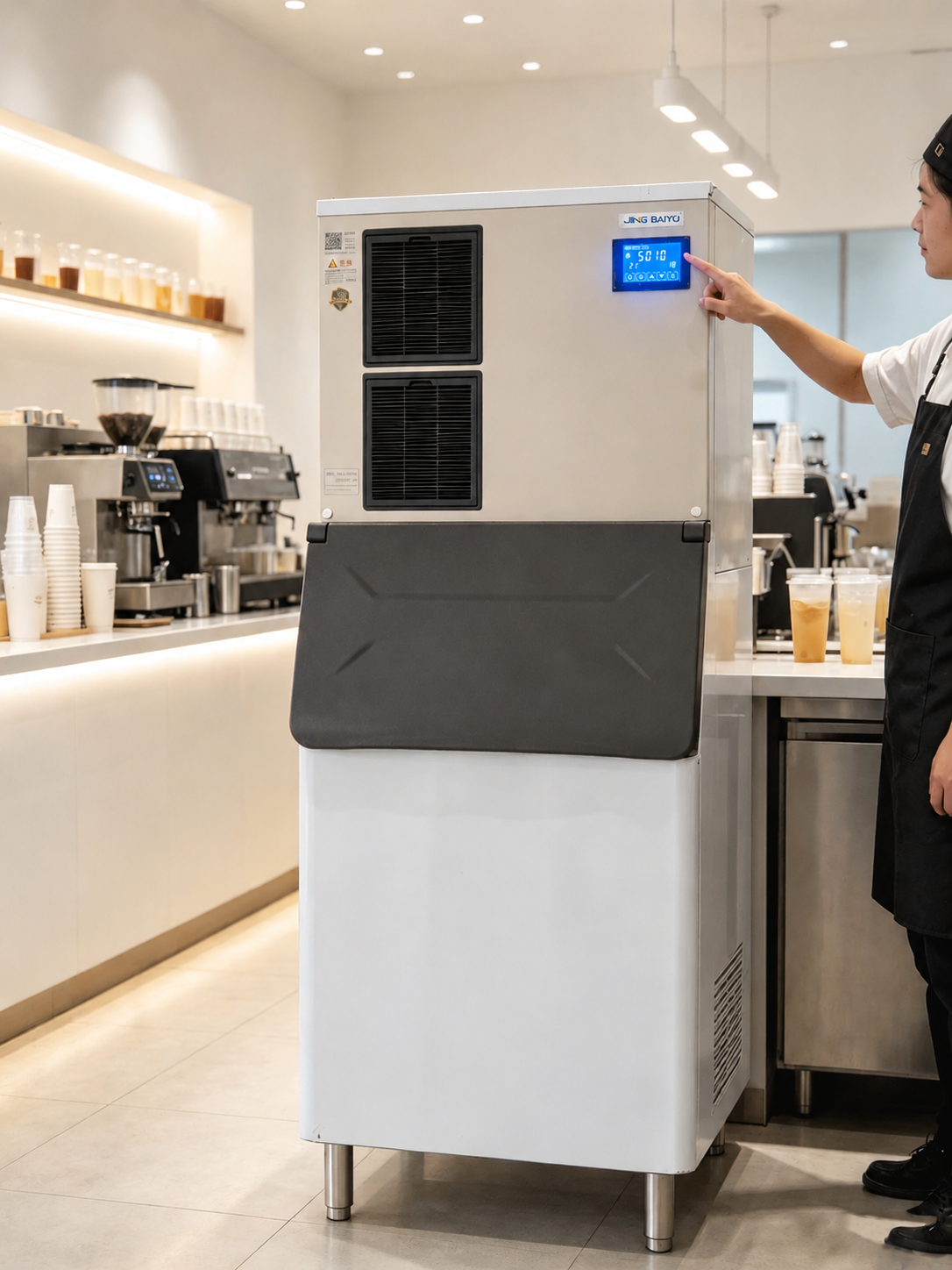
When to Call a Professional
You can fix yourself: water valve and supply, inlet filter, float switch, ice bridge, cleaning-mode reset and ventilation.
Call a professional: anything involving refrigerant, the compressor, the control board or the thermistor — working on a sealed system without training is unsafe and usually futile.
Choosing a Machine That Won't Let You Down
Most "no ice" failures are preventable with a machine built for real kitchen conditions. Look for:
Reliable components — commercial-grade compressors and quality inlet valves and sensors;
It keeps working in a hot kitchen;
Easy-access panels for cleaning and servicing;
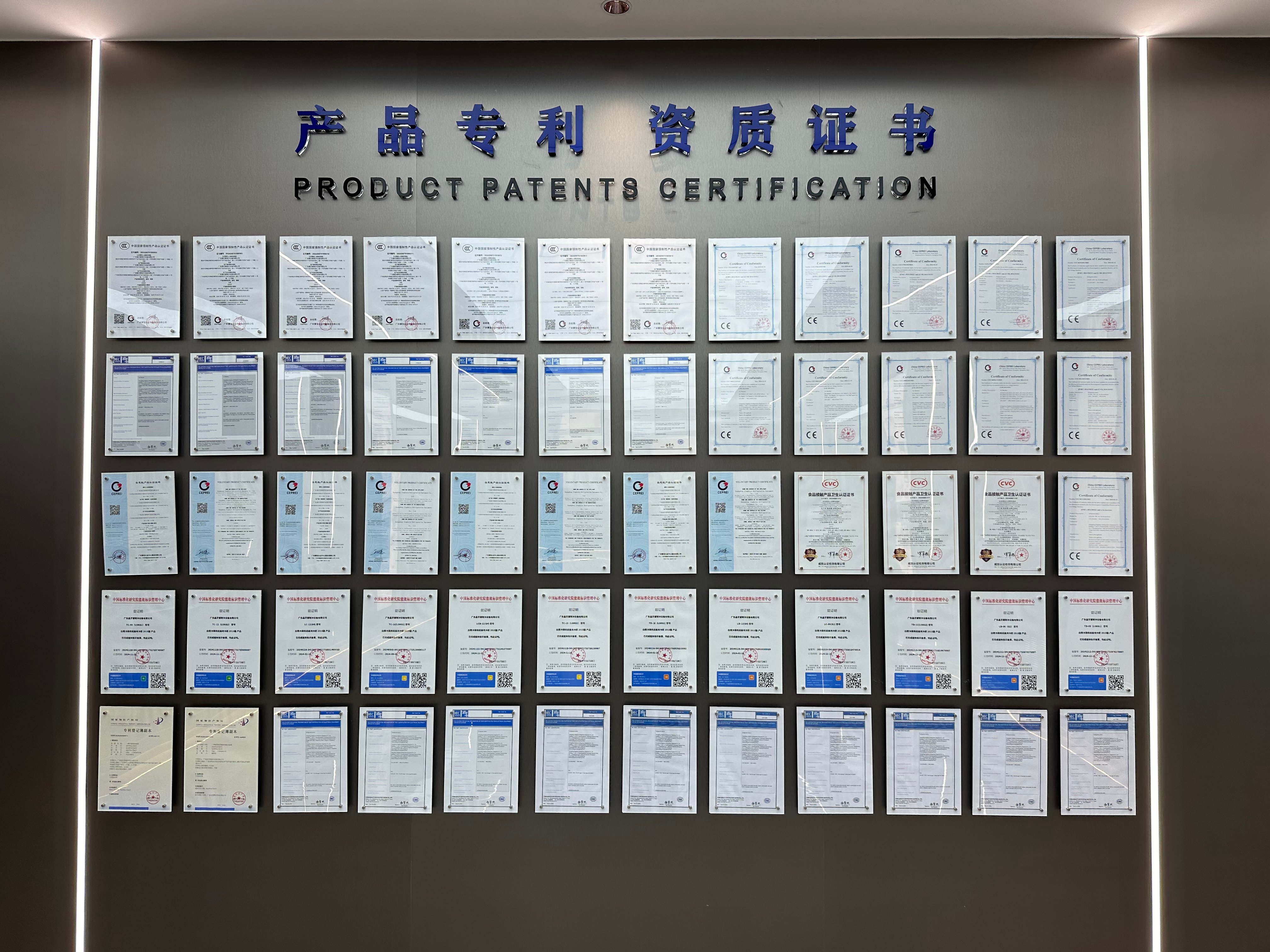
Certifications your market requires — CE, CB, UKCA and food-contact safety, among others;
Spare parts and factory support after the sale.
JINGBAIYU is a commercial refrigeration source factory in Qingyuan, Guangdong, China, with over 20 years of experience, an 18,000 m² facility and an annual capacity of more than 60,000 units. Our ice makers cover all six ice types — square, half-square, large cube, nugget, cylindrical and flake ice — and carry ISO 9001:2015 quality control plus CE, CB and UKCA certification. OEM/ODM customization and full-process support are available.
FAQ
Q: Why did my ice maker suddenly stop making ice?
A: Check the most common causes first: a closed or blocked water supply, a bin-full sensor or ice bridge, a stuck cleaning cycle, or a power/error code. If water is fine and the compressor runs without cooling, suspect a refrigeration fault.
Q: Why is my ice maker running but not producing ice?
A: If it runs continuously but the evaporator stays warm, the likely causes are low refrigerant, a leak or a failing compressor — all of which need a professional.
Q: Can I fix it myself?
A: Water-side problems are usually DIY. Anything involving refrigerant, the compressor, the control board or sensors should be handled by a professional.
Conclusion
No ice rarely means "the machine is finished". In most cases it is water supply, a sensor, a paused cycle or a refrigeration fault — and a methodical check finds it fast. Keep the water side clean, stay on a maintenance schedule, and call a professional before a sealed-system fault becomes a replacement.
Troubled by repeat breakdowns? JINGBAIYU builds factory-direct [commercial ice makers] in all six ice types, plus [cold storage] and [stainless steel work tables] — [contact us] for a free consultation and quote.

Copyright © 2026 by Guangdong Jingbaiyu Refrigeration Equipment Co., Ltd. - Privacy policy
 EN