 EN

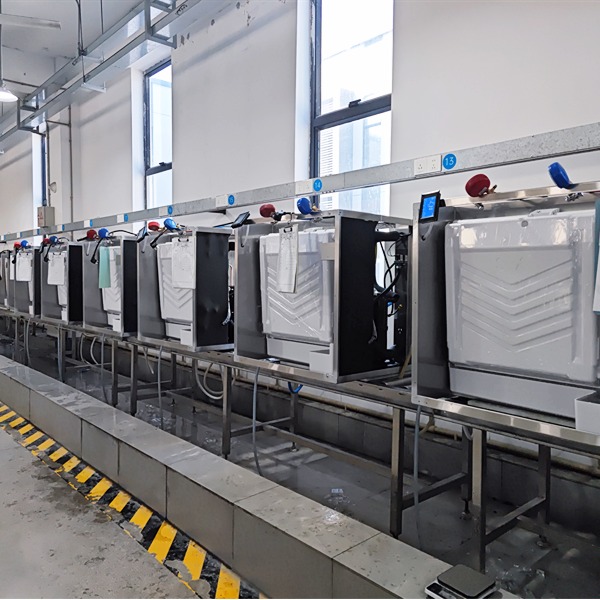
Daily-use ice makers work harder than any other equipment in a commercial kitchen. Where a domestic unit produces a tray a day, a commercial ice maker runs continuously through service, cycles hundreds of harvests a week, and faces water quality, airborne grease, and cleaning schedules that would destroy household equipment. A reliable ice maker for daily use is therefore specified for durability, hygiene, and serviceability rather than for price per pound of ice. The features that separate a dependable ice maker from an expensive disappointment are known, measurable, and worth checking before purchase rather than after the first breakdown during Saturday service.
Real-World Industry Case / Scenario
A Restaurant Running Two Ice Makers
A busy restaurant operated two ice makers of similar rated capacity, purchased at different times from different suppliers. The older ice maker, in service for six years, produced consistent ice quality with predictable maintenance: descaling every quarter, filter changes on schedule, and one compressor replacement in its life. The newer unit, purchased on price, developed problems within a year: inconsistent harvest cycles, cloudy ice with a slime film in the bin, and condensate that backed up during peak service. Staff cleaned the second ice maker repeatedly without resolving the bin hygiene issue.
The restaurant's logs showed the difference clearly. The older machine averaged one service call per year, each scheduled around the cleaning routine. The newer machine generated four emergency calls in eighteen months, two of them during peak weekend service when the kitchen could not afford downtime. Ice quality complaints traced to the second unit's bin design, which had seams and corners that cleaning could not reach. The restaurant replaced the unit with a model whose bin construction and drain routing could actually be cleaned, and the complaints stopped. The case shows that reliability is designed in, not maintained in.
Risk & Failure Mode Analysis
Scale, Biofilm, and Bin Hygiene Risks
Water carries dissolved minerals that deposit as scale on evaporators and water paths, and scale reduces both efficiency and ice quality long before it stops a machine entirely. Biofilm is the second risk: a thin bacterial film that colonizes wetted surfaces and bin interiors, producing slime, off-flavors, and a public health exposure that ice, as a food, demands attention to. A unit with inaccessible seams, sharp internal corners, or poorly routed condensate cannot be cleaned effectively no matter how diligent the staff. Hygiene is therefore a design property, and it is verified by inspection of the bin and water path rather than by the cleaning schedule.
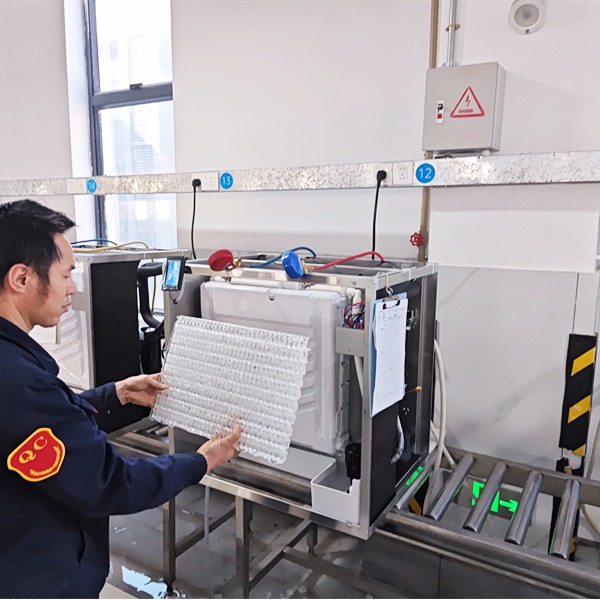
The supporting systems around an ice maker fail as often as the machine itself. Drain lines that are undersized or poorly sloped back up during harvest, and standing water in a drain produces both odors and bacterial growth. Condenser airflow is the second vulnerability: a machine installed in a tight enclosure or behind kitchen equipment cannot reject heat, and the resulting high operating temperatures shorten compressor life and reduce production. Refrigerant leaks, while less common, are detected through falling production and rising run times, and they require certified service. Every ice maker installation should be checked for drainage, airflow clearance, and service access.
Technical Principles & Standard Compliance
Refrigeration Cycle and Harvest Control
An ice maker produces ice by circulating water over a refrigerated evaporator plate until a sheet forms, then releasing it with a harvest cycle that routes the ice to the storage bin. Harvest control determines both quality and efficiency: a machine that releases ice too early produces a wet, low-quality product, while one that holds too long wastes energy and can jam. Production rate depends on entering water temperature and ambient temperature, which is why a unit rated at one figure in a cool room delivers less in a hot kitchen. Understanding the refrigeration cycle helps operators recognize when falling production indicates scale, airflow, or a control fault.
Standards: NSF/ANSI 12 and Food Safety
NSF/ANSI 12 is the certification standard for commercial ice makers, covering materials, design, construction, cleanability, and performance for machines producing ice for human consumption. An ice maker certified under this standard has been evaluated for food-contact safety, including the materials in the water path and the cleanability of the bin. Ice is regulated as a food under the FDA Food Code, which means the unit sits inside the kitchen's food safety system, and HACCP-based procedures cover cleaning, handling, and storage. Electrical safety listings such as UL or ETL confirm the machine meets recognized electrical standards, completing the certification stack.
Actionable Buyer & Maintenance Guide
Feature Checklist for Daily-Use Ice Makers
Procurement teams should score candidate ice makers on a short checklist. Production rate should be verified at the kitchen's actual entering water and ambient temperatures rather than at nameplate conditions. Bin capacity should match peak demand, since storage, not production, limits service. Hygiene design should be inspected directly: accessible corners, drainable surfaces, and spray coverage of the bin. Construction should favor stainless or food-safe polymers in the water path. Serviceability includes accessible filters, clear diagnostic displays, and available parts. Suppliers of ice makers such as Guangdong-based Jingbaiyu publish production curves and certification data that allow these comparisons to be made on evidence.
Maintenance That Sustains Reliability
Maintenance follows the water. Descaling on a schedule matched to local water hardness keeps the evaporator efficient and the ice clear, and filter changes protect both quality and the water path. Bin cleaning should follow a documented procedure with attention to seams, corners, and drain points, since those are where biofilm establishes. Condenser coils require cleaning matched to kitchen lint and grease, and drain lines should be flushed and checked for slope. Ice maker logs that record production, service events, and cleaning dates provide the trend data that predicts failures before they interrupt service.
Frequently Asked Questions
Question 1: What production capacity does a daily-use ice maker need?
Answer: Capacity should be sized against peak-hour demand rather than daily average, since an ice maker cannot make ice faster than its rated production regardless of how empty the bin is. Production rate also depends on entering water temperature and ambient temperature, so a unit rated in cool conditions delivers less in a hot kitchen. Bin capacity matters as much as production, because storage, not output, limits service during peak periods.
Question 2: Why does an ice maker produce cloudy or slimy ice?
Answer: Cloudy ice usually indicates air or minerals in the water path, scale on the evaporator, or a harvest cycle releasing ice before it is fully formed. Slime indicates biofilm colonizing wetted surfaces or bin areas that cleaning cannot reach, which is a design problem as much as a hygiene practice. An ice maker with accessible seams and drainable surfaces can be cleaned effectively; one with unreachable corners cannot, regardless of cleaning frequency.
Question 3: What certifications should a commercial ice maker hold?
Answer: NSF/ANSI 12 is the core certification for commercial ice makers, covering materials, design, construction, cleanability, and performance for machines producing ice for human consumption. Electrical safety listings such as UL or ETL confirm recognized electrical standards. Ice is regulated as a food under the FDA Food Code, so the machine sits inside the kitchen's food safety system, and HACCP-based procedures cover its cleaning and handling.
Question 4: How often should an ice maker be descaled?
Answer: Descaling frequency follows local water hardness and run hours, with harder water requiring more frequent service. A typical range is quarterly for moderate hardness and monthly for hard water, adjusted by the scale observed at inspection. Ice maker descaling keeps the evaporator efficient and the ice clear, and filter changes on the same schedule protect the water path. Recording service dates against production trends shows when the interval needs adjustment.