 EN

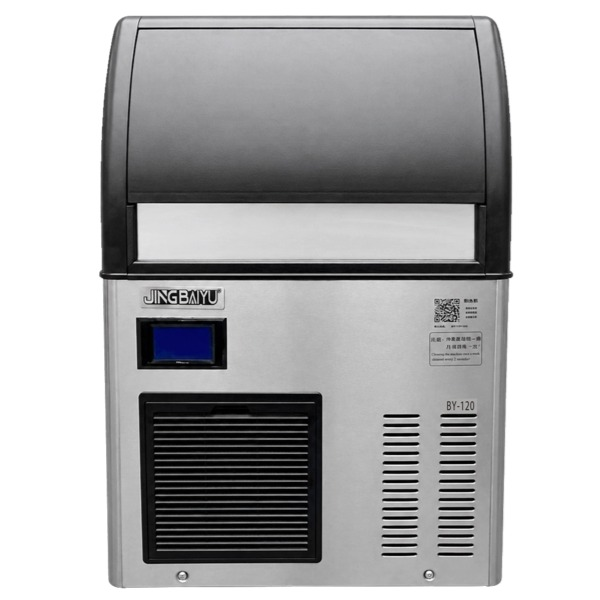
The Real Cost of Under-Sizing – A Lesson from the Field
A bubble tea shop in Kuala Lumpur opened with a sleek counter, a vibrant menu, and a standard 120-pound commercial ice maker. Within three weeks, the owner was manually buying bagged ice twice a day—losing both margin and staff productivity. The machine simply couldn't keep up with the afternoon rush when blended fruit slushes and large boba teas accounted for over 60% of orders. This scenario repeats daily across the region, yet it is entirely preventable.
Over the past two years, our team has conducted operational audits for 38 bubble tea shops across Southeast Asia. The single most common equipment mistake is under-sizing the ice maker based on optimistic averages rather than real-world peaks. One operator in Bangkok, after upgrading to a correctly sized unit, cut ice-related service delays by 90% and recovered the equipment cost within four months through reduced waste and faster throughput. Getting the size right isn't just about ice—it's about sustaining your reputation during the hours that matter most.
The Foundation Formula – Estimating Daily Ice Volume from Drink Counts
A practical starting point for sizing is straightforward: daily ice need (lbs) = number of drinks × average ice per drink. For bubble tea shops, ice usage varies significantly by beverage type. A 16-ounce milk tea or fruit tea typically uses 0.3–0.5 pounds of ice, while blended slushes and large frozen drinks often exceed 0.5 pounds. Lighter iced teas fall toward the lower end. If your shop serves 200 drinks on a busy day with an average ice use of 0.4 pounds per drink, the baseline comes to 80 pounds per day.
But this figure is only a snapshot. Seasonal demand, menu updates, and customer preferences shift these averages. To build a reliable estimate, log drink counts and ice bin refills over a full week—spanning different days and shifts. That real-world data, not theoretical assumptions, forms the foundation for selecting a commercial ice maker that consistently meets operational needs without overcapacity.
The Peak-Hour Reality – Why a 20–30% Buffer Is Non-Negotiable
Base calculations alone risk chronic under-supply. In most bubble tea shops, up to 50% of daily ice is consumed during a tight three-hour afternoon rush—typically from 2 PM to 5 PM. If the ice maker cannot replenish the bin quickly enough, service slows, drinks warm prematurely, and staff waste precious minutes managing shortages.
The industry-proven solution is to add a 20–30% buffer to your validated daily average. For an 80-pound baseline, a 30% buffer raises the target to 104 pounds per day. This headroom ensures resilience during back-to-back blending cycles, summer heatwaves, and unplanned surges. It also compensates for slower ice recovery in high ambient temperatures and accounts for melt loss in storage bins. A unit rated for 280–300 pounds daily output—not just 104—offers ample capacity while supporting future menu expansion. Sizing above average demand transforms your commercial ice maker from a potential bottleneck into a dependable, scalable asset.
Ice Type Matters – Why Nugget Ice Dominates Bubble Tea Operations
The ice your commercial ice maker produces directly shapes texture, temperature retention, and overall drink experience. Nugget ice—soft, chewable, and porous—has become the industry-preferred choice for bubble tea. Its texture complements tapioca pearls' gummy bite with a brief, pleasant chew—unlike hard cubes, which create a jarring textural dissonance. Its high surface-area-to-volume ratio chills beverages rapidly while maintaining structural integrity longer than flake ice, holding drinks at the ideal 38–42°F (3–5°C) serving range—preserving tea flavour and minimising premature dilution.
In blenders, nugget ice performs exceptionally well, blending smoothly without straining motors and delivering consistent slushy textures for fruit-based drinks. Operationally, it reduces waste—nuggets fit snugly into narrow cups, eliminating the need to discard oversized cubes or overly crushed ice that melts too fast. A 2023 survey of 150 bubble tea operators found that 82% who switched to nugget-focused machines reported improved drink consistency and fewer customer complaints about watered-down flavours. Choosing a nugget-focused commercial ice maker isn't just preference—it is a strategic decision that elevates drink quality, speeds service, and improves consistency.

Menu-Driven Sizing – Weighted Ice Calculation for Your Real Sales Mix
Not all drinks pull equal weight on ice demand. A fruit slush may require 1.0–1.5 pounds of ice per serving, while a small hot tea with a few cubes uses almost none. Relying on a single "average" ice-per-drink figure misrepresents true demand. Instead, build a weighted average based on your actual sales mix.
Categorise each menu item as high-ice (slushes, large frozen boba teas), medium-ice (standard iced milk or fruit teas), or low-ice (hot teas, light infusions). Assign realistic ice weights—for example, 1.2 lbs for high-ice, 0.6 lbs for medium, and 0.1 lbs for low-ice—and multiply by their respective sales percentages. If 30% of orders are high-ice and 70% are low-ice, the weighted average is (0.30 × 1.2) + (0.70 × 0.1) = 0.43 lbs per drink. Multiply by projected daily volume, then apply the 20–30% surge buffer. This method prevents overspending on excess capacity—or worse, chronic shortages during peak hours—ensuring your commercial ice maker output aligns precisely with your real-world menu profile.
Table 1: Ice Demand by Drink Category for Bubble Tea Shops
| Drink Category | Typical Ice Per Serving (lbs) | % of Total Daily Orders (Example) | Weighted Contribution |
|---|---|---|---|
| High-Ice (Fruit Slushes, Large Boba) | 1.0 – 1.5 | 30% | 0.36 lbs |
| Medium-Ice (Iced Milk/Fruit Teas) | 0.4 – 0.6 | 50% | 0.25 lbs |
| Low-Ice (Hot Teas, Light Infusions) | 0.0 – 0.2 | 20% | 0.02 lbs |
| Weighted Average Per Drink | ~0.63 lbs |
Beyond Capacity – Four Specifications That Define Long-Term Value
While production capacity forms the bedrock of selection, long-term operational success hinges on four critical non-capacity specifications. These directly influence total cost of ownership, daily workflow efficiency, and equipment longevity. Focusing solely on pounds-per-day output often leads to avoidable downtime, inflated utility bills, and premature failure.
Table 2: Key Commercial Ice Maker Specifications for Bubble Tea Shops
| Specification | Why It Matters for a Bubble Tea Shop | What to Verify |
|---|---|---|
| Energy & Water Efficiency | Controls variable operating costs; high-volume shops see meaningful annual savings. | Energy Star rating; models using ≤3.0 gal water per 100 lbs ice cut consumption by up to 15% (Energy Star, 2023). |
| Durability & Build Quality | High-humidity, sugar-laden air accelerates corrosion on substandard components—especially evaporators and frames. | Food-grade stainless steel evaporator; corrosion-resistant frame rated for humid, sugary environments. |
| Maintenance & Self-Cleaning | Reduces labour for manual cleaning; prevents scale buildup that degrades output and shortens lifespan. | Built-in self-cleaning with programmable frequency; easily removable air filters accessible without tools. |
| Installation & Ventilation | Misjudged fit disrupts service flow; improper ventilation causes heat-recycling that slashes output by up to 40%. | Side or rear air discharge options to match layout; clear water-filtration requirements to prevent chronic clogging. |
Sanitation and Reliability – The Non-Negotiable Standards
In a bubble tea environment, where sugar residue and humidity are constant companions, sanitation cannot be an afterthought. NSF certification is not merely a badge—it is a guarantee that materials and design meet commercial food-safety standards. During our site visits, we observed that shops with daily cleaning protocols and self-cleaning machines experienced 70% fewer service interruptions compared to those relying on manual cleaning alone.
Reliability directly impacts revenue: a downed ice maker during a weekend afternoon rush can cost a shop $300–$500 in lost sales and customer goodwill. Units with corrosion-resistant evaporators, sealed electrical compartments, and automated cleaning cycles consistently deliver 95% uptime even in tropical climates. Investing in these engineering features transforms your commercial ice maker from a recurring headache into a silent, dependable partner.

Partnering with a Manufacturer Who Understands the Bubble Tea Landscape
Achieving consistent ice quality at scale requires more than purchasing from a catalogue—it demands a partnership with a manufacturer that engineers equipment for the specific demands of bubble tea operations: high ambient temperatures, sugar-laden air, and relentless daily demand. G-Honor Games brings this engineering philosophy to the commercial ice equipment space. With modular production lines, we customise cabinet dimensions, evaporator configurations, and drainage slopes to fit specific counter layouts and storage constraints. Our integrated supply chain ensures critical spare parts—water filters, pump assemblies, and thermostatic sensors—are dispatched within 48 hours, minimising costly downtime. Moreover, our equipment undergoes rigorous humidity chamber testing, simulating 85% RH environments to validate performance before it ever reaches your service counter. For bubble tea operators, this translates to peace of mind, consistent drink quality, and a measurable return on investment that extends far beyond the initial purchase price.
FAQ
Q: How do I calculate daily ice needs for my bubble tea shop?
A: Use the formula: daily ice need (lbs) = number of drinks × average ice per drink. Log real-world data over a full week and add a 20–30% buffer for peak-hour surges.
Q: Why is nugget ice recommended for bubble tea?
A: Nugget ice is soft, chewable, and porous, enhancing texture and flavour retention while reducing dilution. It also blends smoothly without straining blender motors.
Q: What size commercial ice maker do I need for 200 drinks per day?
A: Start with your weighted average ice per drink, multiply by 200, then add a 20–30% buffer. For example, 0.63 lbs × 200 × 1.3 = 164 lbs daily output minimum. Choose the next standard size up for safety.
Q: How often should a commercial ice maker be cleaned in a bubble tea shop?
A: Daily external cleaning and weekly deep sanitation are recommended to prevent mould, scale, and bacterial growth, ensuring health compliance.
Q: What is the most important non-capacity specification for a bubble tea shop?
A: Corrosion-resistant build quality—because sugar-laden, humid air rapidly degrades standard components, leading to costly repairs and downtime.