 EN
EN

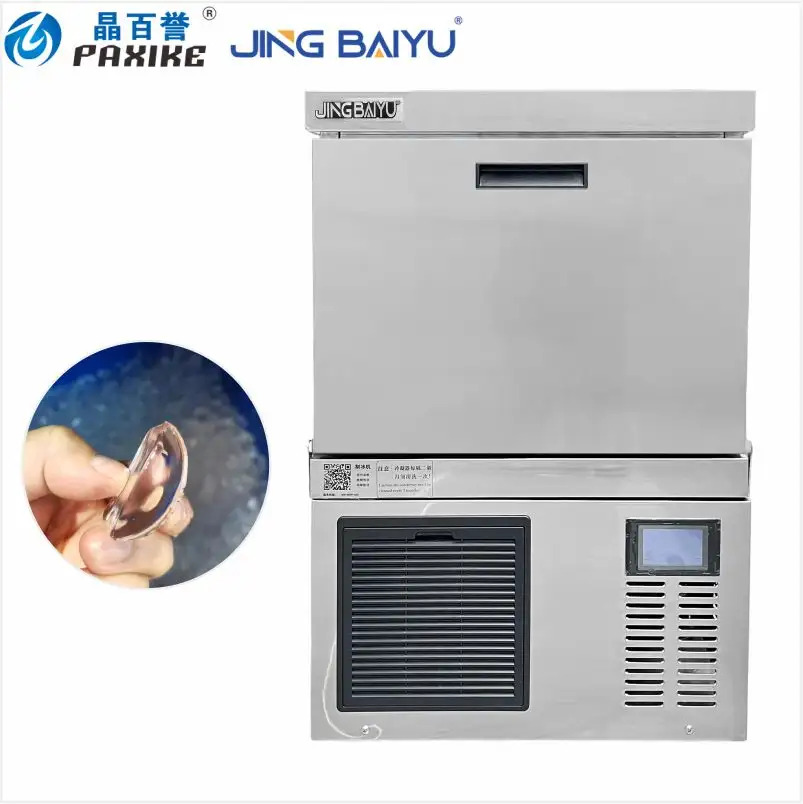
Investing in a high-quality ice maker has evolved from being a luxury addition to a critical operational necessity for modern households and bustling small businesses. Whether hosting domestic gatherings or running a boutique coffee shop, a reliable supply of fresh ice directly impacts daily lifestyle comfort and customer satisfaction metrics. Choosing an incorrect configuration typically leads to unexpected operational bottlenecks, excessive energy expenditures, and frequent maintenance headaches. From a commercial standpoint, selecting the proper equipment is an essential strategy for maintaining smooth workflow pacing and enhancing beverage presentation quality. Understanding the advanced engineering principles and specific technical features behind these appliances is key to choosing a solution that delivers reliable performance under varying ambient conditions.
Assessing Spatial Realities and Daily Production Demands
The journey toward selecting the ideal refrigeration solution begins with a thorough evaluation of physical spatial constraints and expected peak usage patterns. Experienced kitchen planners and hospitality managers know that ignoring ambient temperature fluctuations and ventilation clearances guarantees suboptimal machine performance down the road. An appliance situated in a confined space with poor airflow will struggle to dissipate heat, causing the refrigeration cycle to prolong and reducing the overall harvest rate. In a recent commercial lounge project, a failure to account for peak weekend demand resulted in premature ice depletion during crucial operational hours. By matching the precise volumetric requirements with the available square footage, users establish a solid planning foundation that protects them against unexpected capacity shortages.
Evaluating Refrigeration Technologies and Ice Form Factors
Modern cooling systems utilize diverse methods to convert water into solid ice, and each technology satisfies distinct culinary and commercial applications. The selection between traditional bullet ice, dense gourmet cubes, and easily chewable nugget ice depends entirely on the intended end-use scenario. Dense, crystal-clear cubes dissolve at a much slower rate, making them preferred for premium beverage service where flavor dilution must be avoided. Conversely, softer ice variants excel in blended smoothies and therapeutic healthcare applications. Understanding the mechanical differences between air-cooled mechanisms, which offer straightforward installation, and water-cooled systems, which deliver consistent output in hot environments, allows buyers to choose a system tailored to their specific localized climate and utilities framework.
To clarify how these engineering choices align with specific user requirements, the following matrix outlines the core equipment configurations and their industrial applications:
| Configuration Type | Core Technical Focus | Primary Application Strength | Operational Impact |
| Countertop Compact Models | Rapid cycle times and localized mobility | Residential kitchens and executive offices | Provides immediate convenience without complex plumbing |

| Under-Counter Built-In Units | High-density insulation and front-breathing ventilation | Boutique cafes and residential bars | Delivers seamless spatial integration and stable storage capacity |
| Modular Heavy-Duty Heads | Maximum structural throughput and separate storage bin pairing | High-volume convenience stores and restaurants | Supports continuous large-scale harvesting under constant stress |
Prioritizing Hygienic Compliance and Maintenance Automation
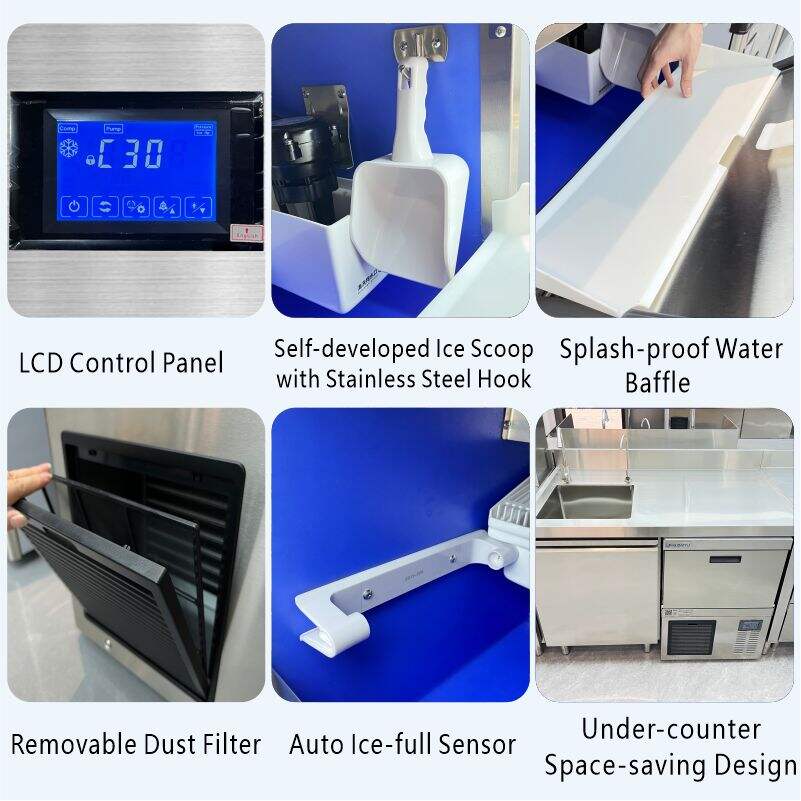
Because ice is legally classified as a food product in many jurisdictions, strict adherence to public health and safety regulations is completely non-negotiable. Mineral accumulation from hard water scales can quickly coat evaporator plates, leading to misshapen cubes, restricted water flow, and premature compressor wear. Advanced machinery mitigates these biological and mechanical risks by integrating automated self-cleaning cycles and advanced diagnostic alert systems. Utilizing premium internal materials, such as food-grade antimicrobial liners and rust-resistant stainless steel housings, ensures that the internal components remain completely impervious to corrosion from aggressive sanitizing solutions, guaranteeing pure taste profiles and compliance with stringent sanitary codes.
Optimizing Energy Efficiency and Total Cost of Ownership
Long-term financial value in refrigeration equipment is dictated far more by daily utility consumption than by the initial purchase price. High-efficiency compressors, precision electronic expansion valves, and thick polyurethane foam insulation work in tandem to minimize thermal transfer and lower monthly electrical bills. Discerning small business owners closely review voluntary environmental compliance certifications to ensure their selected hardware operates with minimal environmental impact. Choosing an appliance equipped with smart programmable timers allows the system to harvest ice during off-peak utility hours, shifting energy loads and creating a highly predictable, cost-effective operational workflow that maximizes long-term profitability.
Leveraging Precision Manufacturing and Global Supply Solutions
Achieving reliable, year-round performance from a cooling appliance ultimately requires a manufacturing partner capable of merging advanced thermodynamics with high-precision engineering standards. This specialized production capacity is precisely where premier industrial networks, such as Jingbaiyu, provide significant commercial advantages to global buyers. By combining advanced automated assembly lines with comprehensive performance testing and strict quality control measures, the fabrication facility ensures that every component meets rigorous international durability thresholds. This deep integration of engineering expertise and dependable logistical support ensures that residential and commercial clients receive elite, certified equipment optimized for long-term operational excellence anywhere in the world.