Commercial ice‑makers are widely used in restaurants, cafés, bars, hotels, supermarkets and medical facilities. By 2026, overseas buyers and distributors no longer base their product selection merely on nominal daily ice output and price. Full‑cycle energy consumption, adaptability to local operating conditions (including extreme conditions such as high ambient temperature and high inlet‑water temperature), hygienic design, ease of maintenance and supply‑chain stability have become core criteria for screening equipment and suppliers.
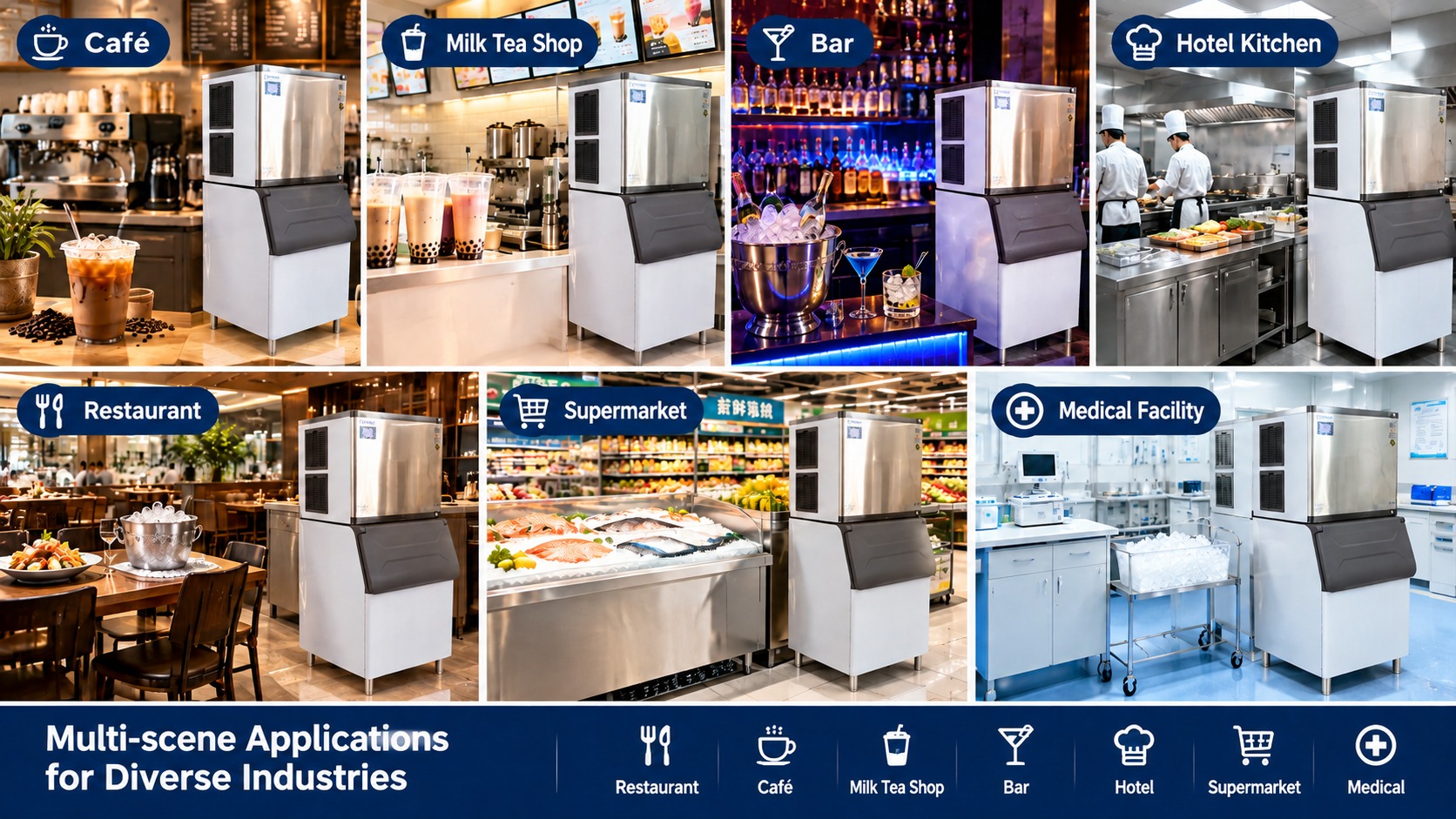
Commercial ice‑makers run non‑stop for long periods. Ambient temperature and inlet‑water temperature directly affect ice‑making stability, power consumption and water consumption. Many models boast impressive specifications under standard operating conditions, yet suffer sharp drops in ice output, soaring energy use and higher failure rates when exposed to extreme conditions such as hot summer weather and elevated inlet‑water temperatures.
When comparing models, do not rely solely on peak ice‑making capacity from marketing materials. Instead, request measured performance data under both standard conditions and typical / extreme conditions for your target market: actual ice output, daily power consumption, water consumption, allowable operating‑temperature range, condensation type, and routine cleaning‑and‑maintenance costs. Low‑cost units with poor condition adaptability and severe performance degradation in high‑temperature environments require frequent repairs, resulting in higher total operating costs over the long term.
Food‑safety regulations governing ice production and storage in foodservice and retail businesses are growing stricter. Removable internal components, standardized clear cleaning procedures, food‑contact compliant materials, comprehensive maintenance documentation and responsive supplier technical support can effectively reduce equipment downtime and customer complaints.
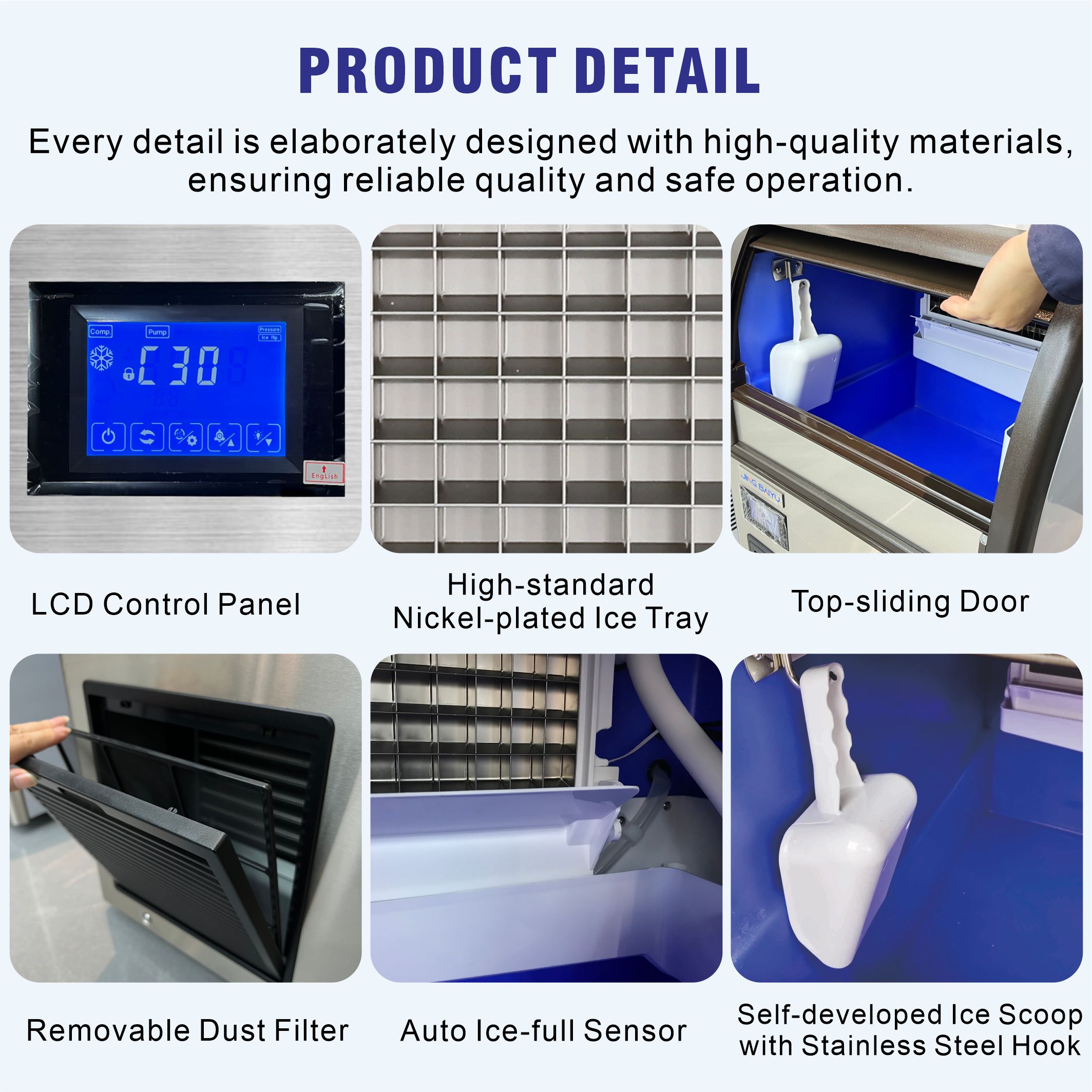
The right‑sized model should be selected through comprehensive assessment of peak customer traffic, ice type, ice‑bin storage capacity, installation space, water‑quality conditions, ventilation, local year‑round climate, as well as extreme conditions including maximum summer ambient temperature and peak inlet‑water temperature.
Insufficient capacity combined with hot weather will easily lead to ice shortages during peak business hours. Excessive capacity, on the other hand, occupies valuable back‑of‑house space and increases procurement costs. Buyers should first calculate maximum peak daily ice demand, use the ice‑storage bin as a buffer, reserve adequate ventilation space, and match on‑site water and electrical interfaces. For full‑kitchen projects, integrate ice‑makers, commercial refrigerators and stainless‑steel worktables to optimize kitchen workflow and space utilization.

For importers and overseas distributors, equipment is only one piece of the business puzzle. Consistent product quality, complete shipping documentation, efficient communication, controllable lead‑times and practical after‑sales support lay the foundation for sustainable channel partnerships. OEM / ODM customization enables distributors to develop product portfolios tailored to local markets; however, custom solutions must not compromise equipment safety, compliance certifications or universal maintainability.
When evaluating suppliers, buyers may assess Jingbaiyu from the perspective of complete commercial‑kitchen solution provision. Our product portfolio covers commercial ice‑makers, commercial refrigerators and stainless‑steel worktables. Supported by our 18,000 m² manufacturing facility, we support consolidated multi‑category procurement and act as your one‑stop manufacturing partner for commercial refrigeration and kitchen equipment.
During inquiry and sample‑evaluation stages, you may verify item by item: ice‑making performance under normal and extreme operating conditions, full‑set certifications, customization scope, warranty terms and spare‑parts supply plans.

Use this standardized checklist to mitigate procurement risks: ✅ Compliance certifications for target‑market requirements ✅ Measured ice‑making performance data and performance‑degradation statements under standard and extreme conditions (high temperature, high inlet‑water temperature) ✅ Power‑consumption and water‑consumption specifications ✅ Hygienic structural design and maintenance complexity ✅ On‑site installation requirements: ventilation, water and electrical conditions ✅ Warranty coverage and duration ✅ Spare‑parts supply plan for wearing components ✅ Packaging standards and production lead‑times
Prioritize suppliers who provide comprehensive technical documentation and transparent parameters including multi‑condition test reports, so as to foster long‑term stable cooperation.
A: Procurement priorities are shifting away from simple price comparison toward total‑cost‑of‑ownership management. Increasing weight is placed on stable equipment output under local and extreme operating‑condition scenarios, food‑safety‑oriented hygienic design, convenient maintenance, reliable delivery and after‑sales support.
A: First calculate maximum peak daily ice consumption based on business type, ice format and ice‑bin volume. Validate capacity against extreme local conditions such as maximum summer ambient and inlet‑water temperatures. Always request multi‑condition measured ice‑output reports from suppliers; never select models based solely on marketing‑spec data obtained under ideal operating conditions.
A: Product consistency, complete technical documentation (including multi‑condition performance testing), export compliance certifications, OEM / ODM capabilities, lead‑time stability, packaging standards, warranty policies, spare‑parts availability and business‑team response speed.
A: Jingbaiyu specializes in commercial ice‑makers, commercial refrigerators and stainless‑steel worktables. Consolidated bulk purchasing is available. Feel free to contact us to discuss packaged solution proposals, confirm available models, customization options and after‑sales guarantees, and request performance‑test documentation for different operating conditions.

Copyright © 2026 by Guangdong Jingbaiyu Refrigeration Equipment Co., Ltd. - Privacy policy
 EN