Restaurant and beverage businesses are changing how they serve customers. Specialty coffee, bubble tea, iced beverages, takeaway orders, and experience-focused dining have become important parts of many foodservice operations. These shifts are influencing not only menus, but also the equipment businesses need behind the counter.
For cafés, bars, restaurants, hotels, and beverage chains, a reliable commercial ice maker is increasingly central to daily service. Understanding these trends can help buyers and distributors select equipment that meets current demand and supports future business growth.
Consumers increasingly expect more choices, including iced coffee, cold brew, fruit tea, smoothies, mocktails, and drinks with customizable sweetness or toppings. In warm climates and busy urban areas, cold beverages can represent an important part of daily sales.
This creates demand for ice machines that can keep up with rush periods and provide a consistent supply of ice.
When choosing a machine, operators should consider peak-hour demand rather than average daily use alone. Ice type, production capacity, storage-bin volume, available space, and the workflow between preparation and serving all matter. A machine that cannot replenish ice quickly enough may slow service, while an oversized unit may occupy valuable space and increase initial costs.
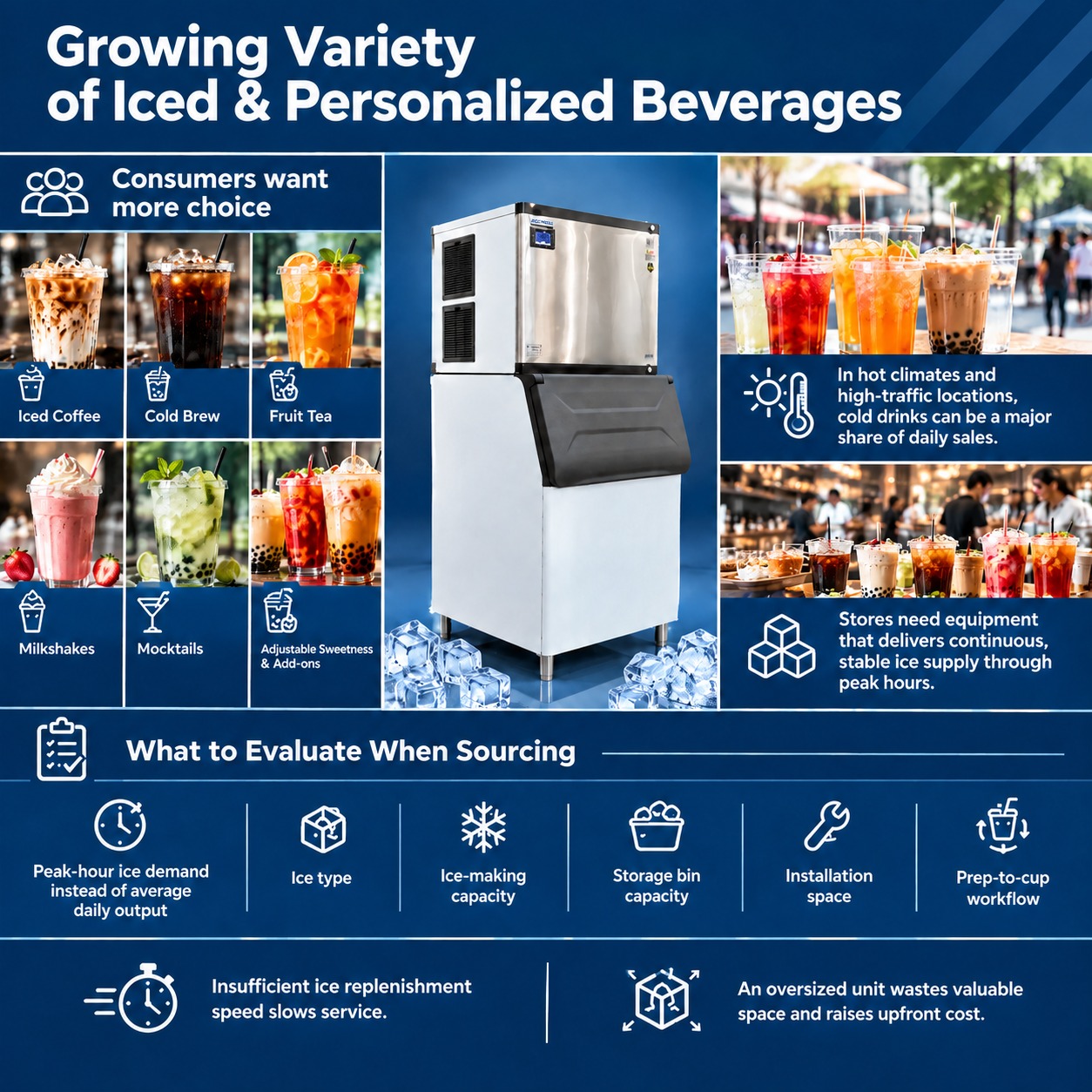
Coffee shops and bubble tea stores rely on ice to maintain drink temperature, texture, presentation, and consistency. Different menus require different ice formats. Some businesses prioritize solid cubes, while others need ice suitable for blending or rapid chilling.
Buyers should confirm that the selected machine produces the ice type and size required by their recipes and service style.
Daily cleaning and preventive maintenance are equally important. Staff need clear cleaning instructions, accessible components, and a practical maintenance routine. Water quality, filter replacement, ventilation, and condenser cleanliness can all affect performance.
A purchasing decision should therefore consider both production capacity and the work required to keep the machine operating reliably.
Takeaway and delivery orders can concentrate demand into short periods. A store may serve many iced drinks during a lunch or evening rush, even when average daily sales appear manageable.
Buyers should estimate peak-day consumption, account for seasonal increases, and consider whether a storage bin can provide a buffer between production cycles and customer demand.
Installation conditions are just as important. High ambient temperatures, warm inlet water, restricted airflow, and inadequate maintenance may reduce actual ice output. Buyers should ask suppliers for clear technical data and operating requirements, then evaluate capacity against the conditions at the intended installation site—not only ideal test conditions.
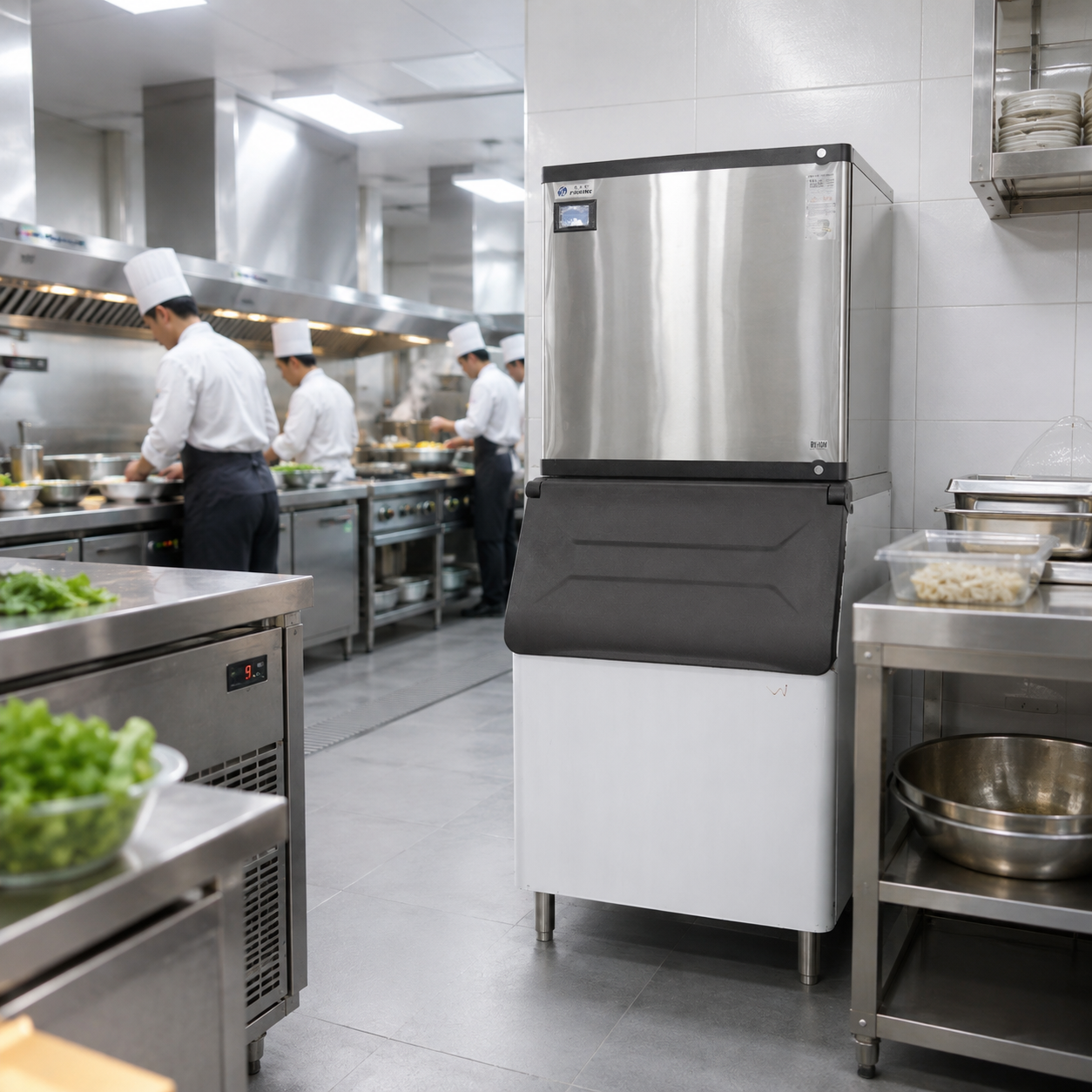
Modern foodservice operators want equipment that fits their space and supports an efficient workflow.
A well-planned beverage station may need an ice maker, refrigerated storage, and a stainless-steel worktable positioned close together, with enough room for staff movement, cleaning, and ventilation. Coordinating these elements can reduce unnecessary steps and keep ingredients and tools organized.
This creates an opportunity for buyers to assess equipment as a complete system rather than as separate purchases. When planning a new café, bar, or beverage shop, consider the layout, electrical and water connections, heat dissipation, cleaning access, and future business growth before confirming an order.
A suitable supplier should provide more than a product catalogue. Buyers and distributors should review model specifications, production data, destination-market compliance, warranty terms, spare-parts availability, packaging, lead times, and after-sales communication.
OEM and ODM options can also help distributors tailor a product range to local customer needs, provided that customization does not compromise safety, compliance, or serviceability.
JINGBAIYU offers commercial ice makers, commercial refrigerators, and stainless-steel worktables, giving buyers an opportunity to explore coordinated equipment sourcing for commercial kitchens and beverage stations.
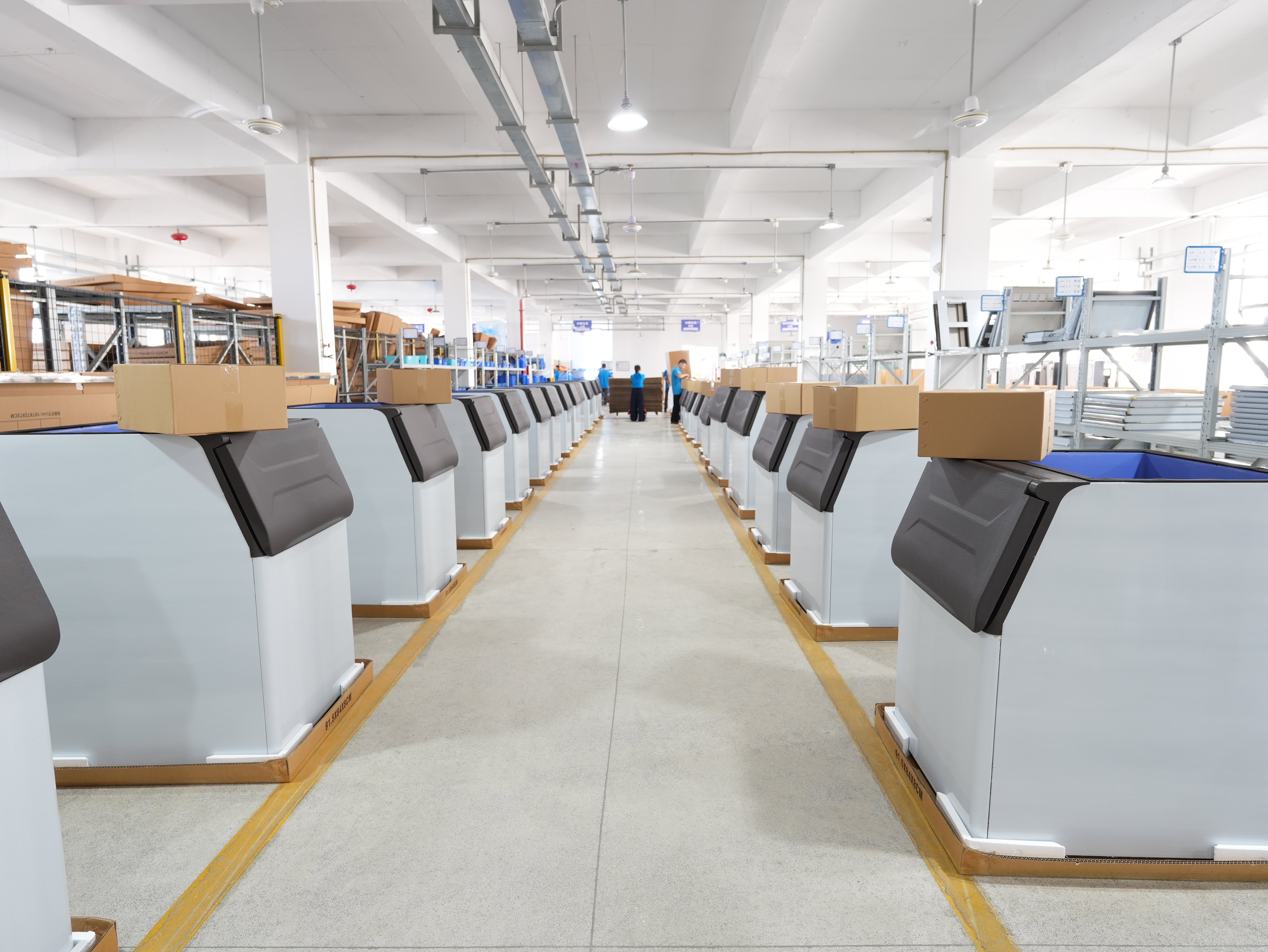
Supported by an 18,000 m² manufacturing facility, JINGBAIYU can be considered by importers and distributors looking for a manufacturing partner across several related product categories. During quotation and sample evaluation, buyers should confirm the specifications, certifications, customization scope, warranty terms, and spare-parts arrangements for each model.
Changing restaurant and beverage trends are making dependable ice production an important part of customer service. As menus diversify and busy periods become more demanding, businesses should select equipment based on actual peak demand, ice type, installation conditions, maintenance needs, and long-term operating costs.
By planning the beverage workspace as a whole and evaluating suppliers carefully, buyers can build a more reliable operation that is ready for changing customer expectations.
Q1: Which businesses commonly need commercial ice makers?
Restaurants, cafés, coffee shops, bubble tea stores, bars, hotels, convenience stores, and other foodservice businesses that serve iced drinks or use ice in food preparation.
Q2: How do I choose the right ice maker capacity for a café or beverage shop?
Estimate peak-hour and peak-day ice use, then consider the menu, ice type, storage-bin capacity, seasonal demand, ambient temperature, inlet-water temperature, and available ventilation. Ask suppliers for performance data under clearly stated operating conditions.
Q3: Does ice type matter when choosing a commercial ice maker?
Yes. The best ice type depends on the drink menu, presentation, chilling speed, and whether ice is used in blending. Confirm the machine's ice shape and size before ordering.
Q4: Why should buyers consider maintenance before purchasing?
Cleaning access, water filtration, condenser maintenance, spare-parts availability, and clear service instructions can affect hygiene, downtime, and long-term operating costs.
Q5: Can JINGBAIYU help buyers source more than an ice maker?
JINGBAIYU's product categories include commercial ice makers, commercial refrigerators, and stainless-steel worktables. Buyers can discuss coordinated sourcing and confirm available models, specifications, customization options, and service terms directly with the company.

Copyright © 2026 by Guangdong Jingbaiyu Refrigeration Equipment Co., Ltd. - Privacy policy
 EN