The ice maker is running, yet the ice‑storage bin never fills up. Every shortage of ice translates to lost business. The good news is that low ice output usually stems from predictable issues, most of which can be resolved without replacing the whole unit. This guide covers common root causes, initial quick checks, and preventive maintenance practices.
Before concluding that the machine is faulty, rule out simple issues first:
| Cause | Why Ice Output Drops | Remedial Action |
|---|---|---|
| Dusty condenser | Dust and grease impede heat dissipation, lengthening each ice‑making cycle | Clean the condenser every two months; increase cleaning frequency for grease‑heavy kitchen environments |
| Poor ventilation / inadequate heat dissipation | Restricted airflow over‑strains the unit’s heat‑rejection capacity | Maintain a 5‑10 cm clearance around all sides of the machine |
| Clogged water filter | Restricted incoming water slows ice‑making and promotes limescale buildup | Replace the filter every 3‑6 months |
| Limescale‑coated evaporator | Hard‑water mineral deposits form an insulating layer that hinders ice formation | Carry out regular descaling; install filtration or water‑softening systems in hard‑water regions |
| Refrigerant shortage / refrigerant leakage | The refrigeration system cannot reach ice‑making temperatures | Call a qualified technician. Do not attempt to add refrigerant yourself |
| Aged door gasket or poorly closed ice‑bin door | Cold air escapes, melting already‑formed ice back into water | Inspect and replace magnetic gaskets; keep the bin door tightly closed |
| Faulty compressor or fan motor | Reduced cooling capacity extends each ice‑making cycle | Schedule professional service before total compressor failure |
| Over‑thick ice setting | Longer freeze cycles reduce the number of ice batches per hour | Adjust ice‑thickness to the standard setting |
| Undersized unit for peak‑demand loads | The machine is sized for average daily use yet cannot handle summer peak‑time demand | Upgrade the model if ice output remains insufficient after full maintenance |
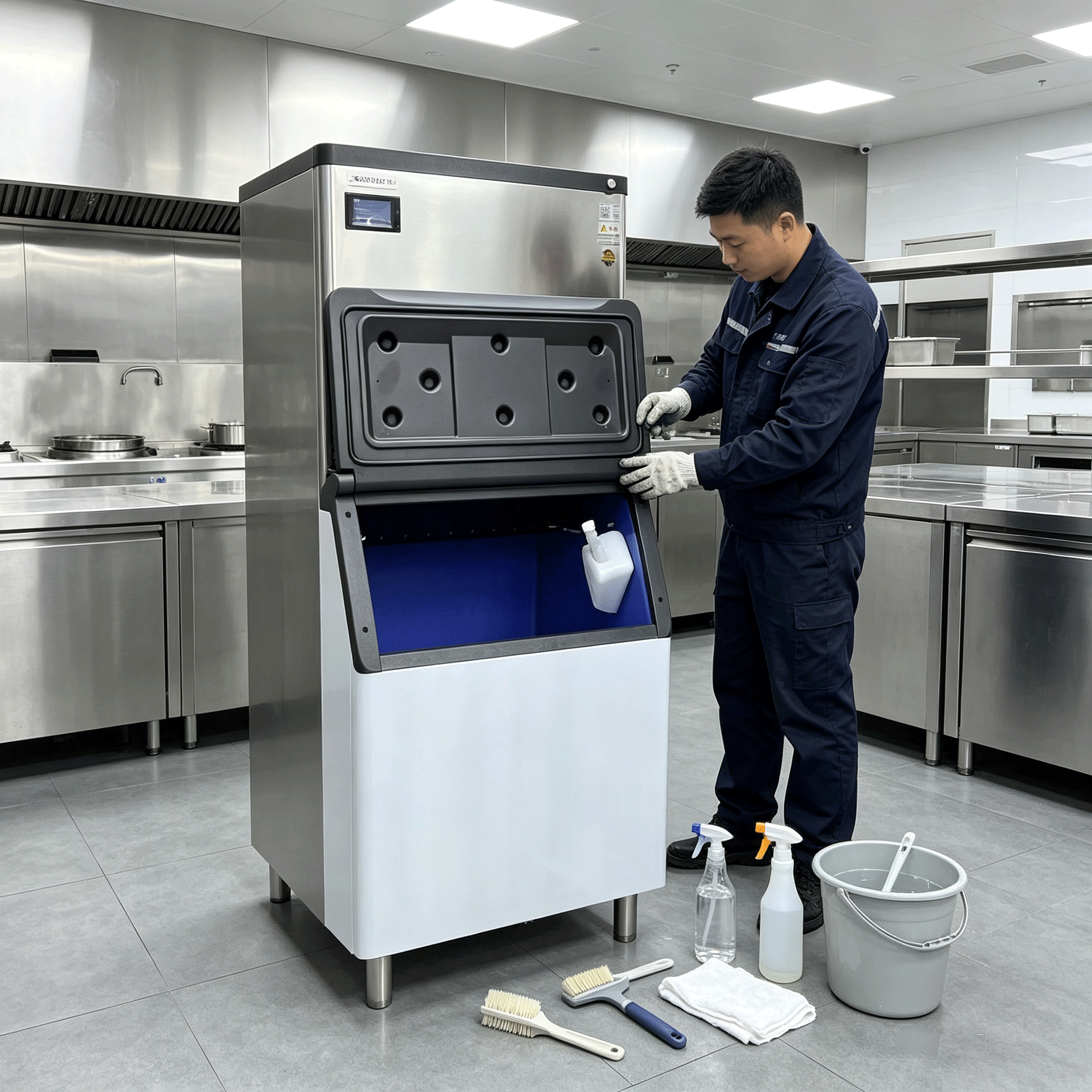
When maintenance is complete and performance is still inadequate, the unit was most likely specified for average daily consumption instead of peak‑period requirements. As a reference: estimate 0.3‑0.5 kg of ice per beverage. A shop serving 200 iced drinks daily requires an ice maker with a rated capacity of 100 kg per day together with a matching ice‑storage bin.
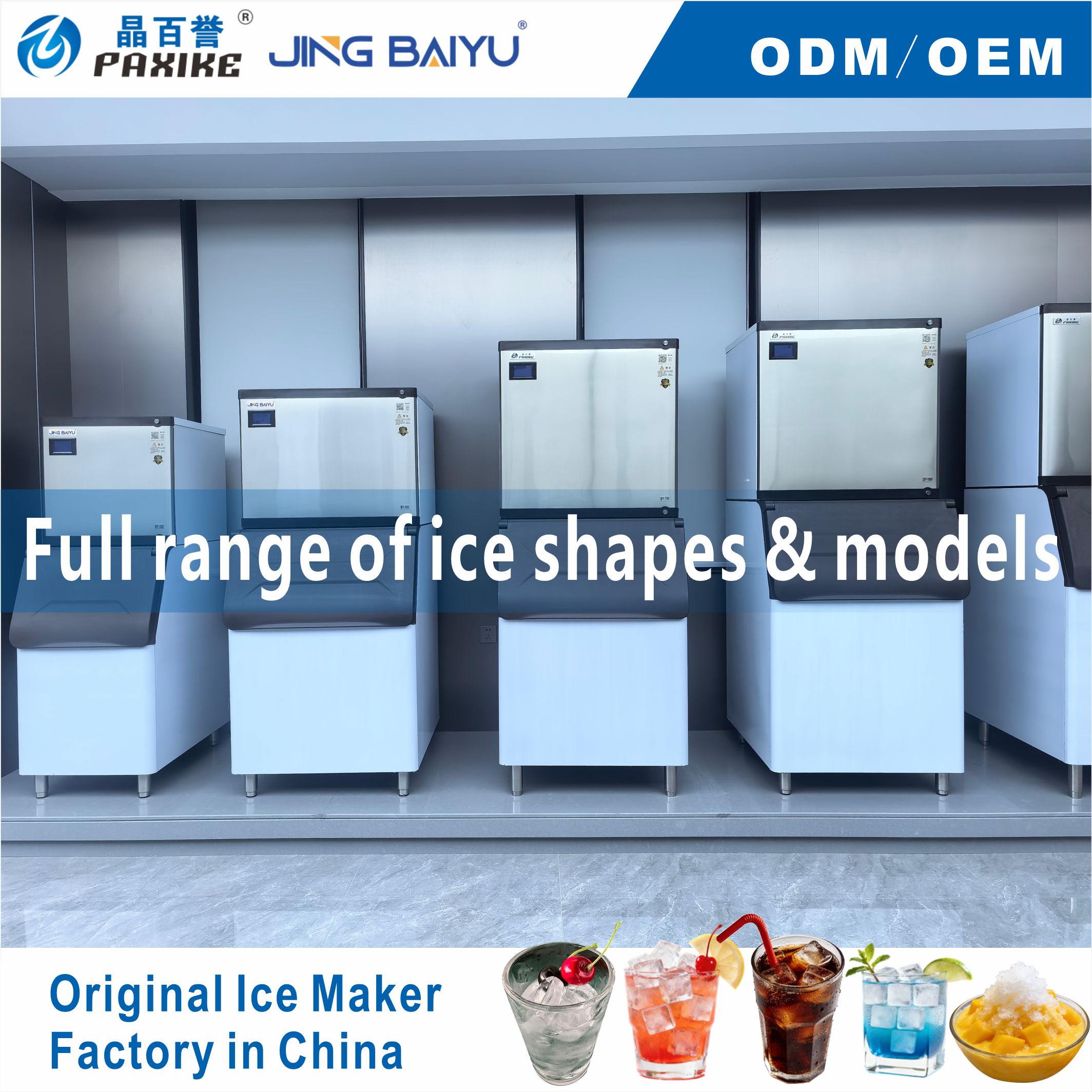
Commercial ice makers manufactured by Guangdong Jingbaiyu Refrigeration Equipment are purpose‑built for harsh environments where standard units struggle:
Harsh operating environments best demonstrate the true value of a quality ice maker.
Jingbaiyu is a professional original‑equipment manufacturer of commercial refrigeration gear based in Qingyuan, Guangdong Province, China. With over 20 years of industry experience, it operates a 18 000 m² factory boasting an annual production capacity of more than 60 000 units. The factory produces all six mainstream commercial ice shapes and holds ISO 9001:2015, CE, CB and UKCA certifications. Comprehensive OEM / ODM customisation services are available, including full‑cycle support from design drawings through to product delivery.
Q: Why does ice‑making slow down in summer?
A: Higher ambient temperatures lengthen each ice‑making cycle and lower output. Ensure adequate ventilation.
Q: How frequently should a commercial ice maker be cleaned?
A: Clean the condenser every two months; replace water filters every 3‑6 months; perform evaporator descaling quarterly for hard‑water locations.
Q: When should replacement be preferred over repair?
A: Replacement is usually more cost‑effective for units aged 8‑10 years or older that require major overhauls such as compressor replacement or refrigerant system repairs, especially if they still cannot meet peak‑time ice demand.
Insufficient ice production rarely results from mysterious failures. Root causes are nearly always condenser fouling, poor ventilation, water‑quality‑related issues, component wear, or an undersized machine. Troubleshoot step‑by‑step and stick to scheduled maintenance. If output remains unsatisfactory for peak‑time operation, select your next ice maker based on peak‑period rather than average‑day consumption.
Need an ice maker that keeps up with your beverage throughput? Jingbaiyu supplies commercial ice makers in all six ice shapes, plus freezers and stainless‑steel worktables. Contact us for free consultation and quotation.

Copyright © 2026 by Guangdong Jingbaiyu Refrigeration Equipment Co., Ltd. - Privacy policy
 EN
EN