A commercial ice maker is one of the hardest-working machines in your business — running almost nonstop, in a hot kitchen, with water flowing through it every hour. How long it lasts depends far less on luck than on maintenance.
This guide covers the tasks that actually extend service life, from daily habits to yearly service.
Skipping maintenance is never free. A dirty machine produces less ice, uses more electricity, and eventually fails years earlier than it should. A breakdown in peak season costs you orders, emergency repair fees and possibly an unplanned replacement. Scheduled maintenance is the cheapest insurance for your equipment.
Every day:
Every week:
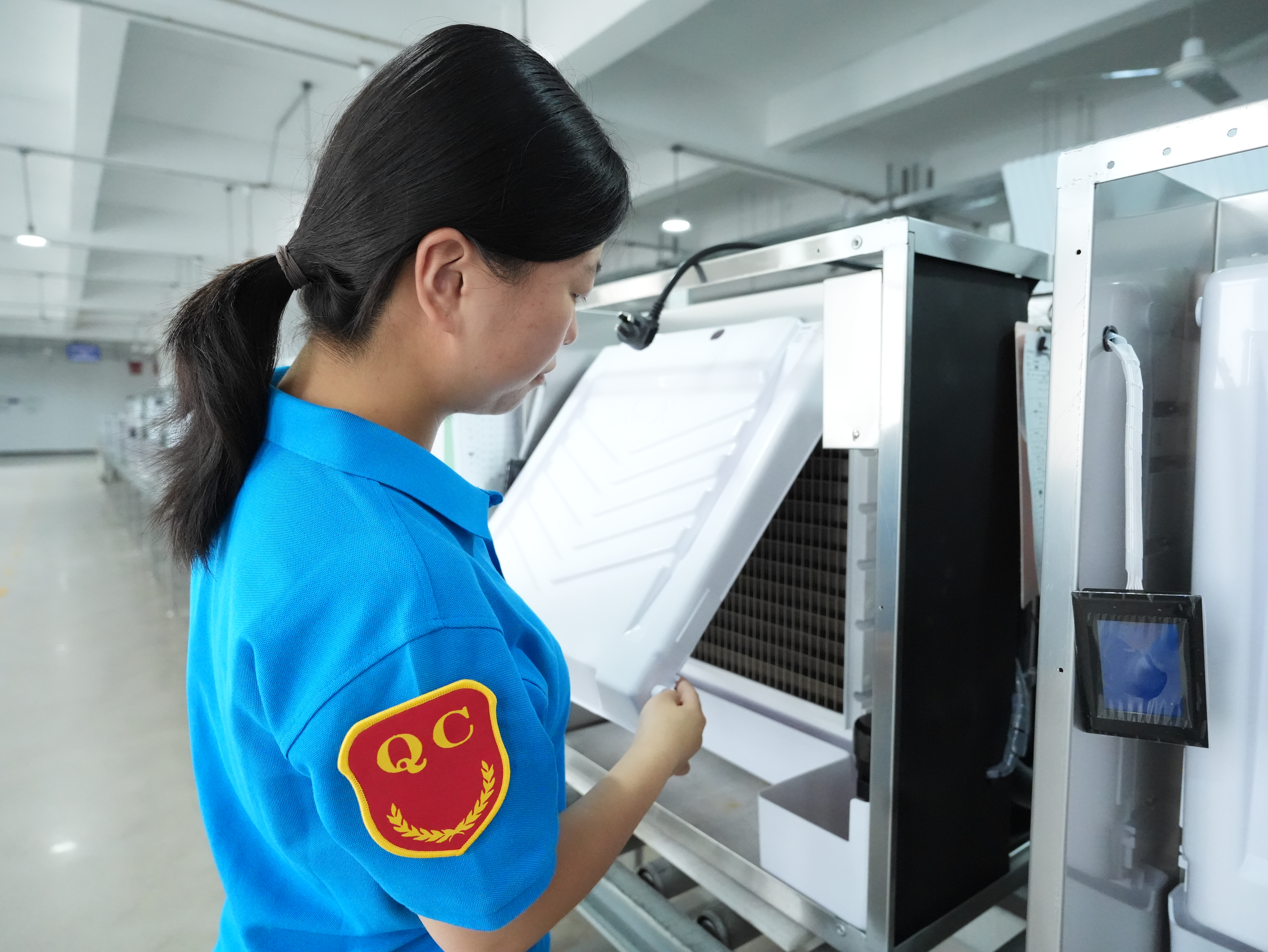
1. Clean the condenser coils. The single most important task. Dust and grease stop the machine rejecting heat, so every cycle takes longer and uses more power. Clean the coils every one to three months — more often in greasy kitchens.
2. Clean and sanitize the evaporator and bin. Use a commercial ice machine cleaner, following the manufacturer's instructions, then rinse thoroughly. Never mix cleaner and sanitizer.
3. Check the water filter. A clogged filter slows production and causes scale. Replace it every three to six months, or sooner in hard-water areas.
4. Inspect the door gaskets. Worn or torn gaskets let cold air escape. Replace them as soon as they lose their seal.
5. Clear the ventilation space. Leave at least 5–10 cm around the machine so warm air can escape.
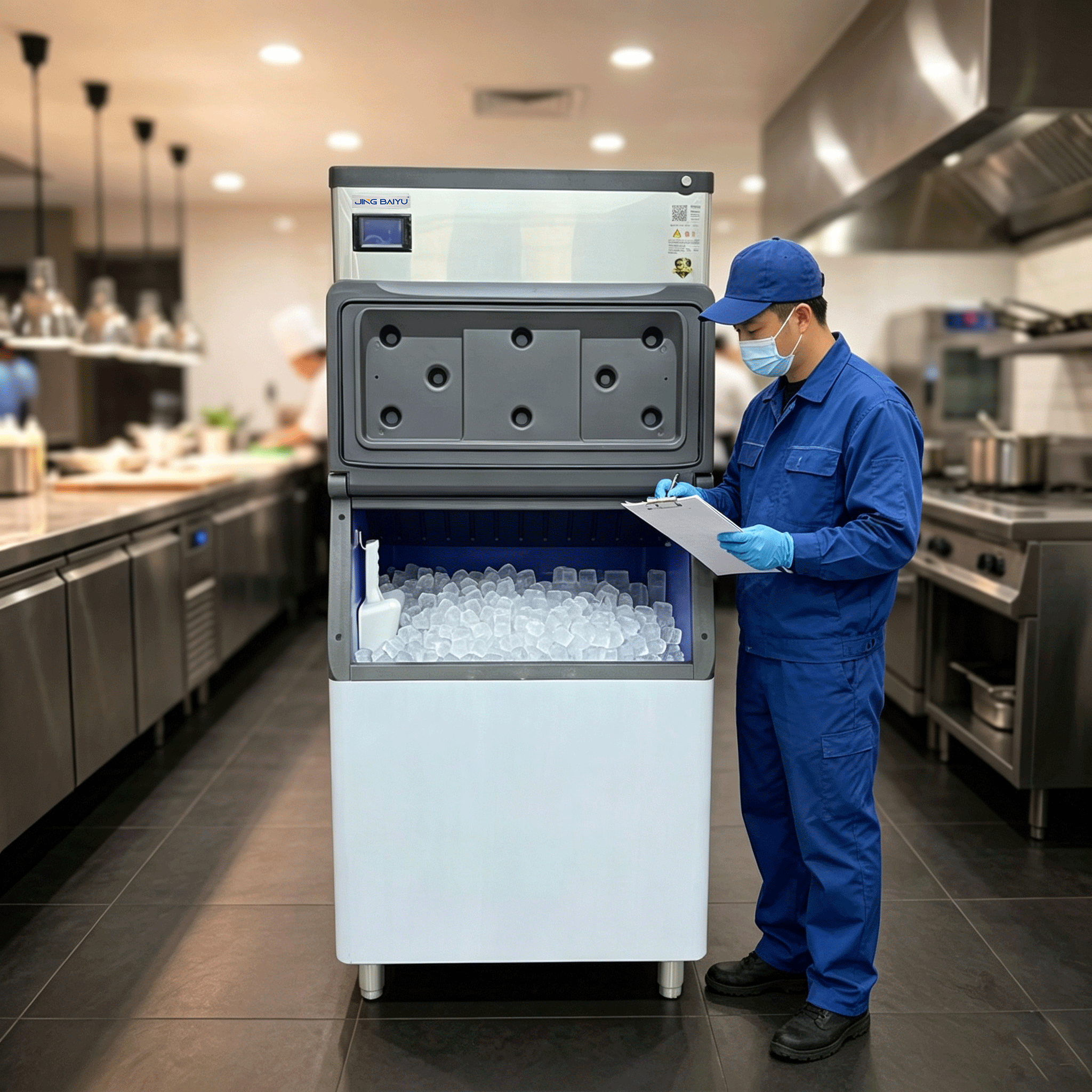
Book a service call — rather than waiting for a total failure — if you notice:
Most are cheap to fix early and expensive to fix late.
Maintenance works best on a machine built to be maintained. When buying or upgrading, look for:
Jingbaiyu is a commercial refrigeration source factory in Qingyuan, Guangdong, China, with over 20 years of experience, an 18,000 m² facility and an annual capacity of more than 60,000 units. Our ice makers cover all six ice types — half-square, square, large cube, nugget, cylindrical and flake ice — and suit restaurants, bars, cafés, milk tea shops, hotels, seafood restaurants, resorts and convenience stores. Using world-renowned brand commercial-grade compressors, our factory holds ISO 9001:2015 quality management certification and CE, CB and UKCA certification. OEM/ODM customization and full-process support are available.
How often should I clean a commercial ice maker?
Clean the condenser coils every 1–3 months, clean and sanitize the bin monthly, replace the water filter every 3–6 months, and descale quarterly in hard-water areas.
How long should a commercial ice maker last?
With proper maintenance, most commercial ice makers last 8–12 years — and units serviced on schedule regularly reach the top of that range.
Can I clean the machine myself?
Yes — daily, weekly and monthly cleaning is designed for owners to do. Descaling and any work involving refrigerant, the compressor or the control board should be left to a qualified technician.
Extending the life of a commercial ice maker comes down to three habits: keep it clean, keep it ventilated, and service it on schedule. Do that, and you'll get more ice, lower energy bills, and years of extra service — plus a machine that never picks your busiest day to break down.
Keep your ice makers running — and when it's time to upgrade, Jingbaiyu builds factory-direct [commercial ice makers] in all six ice types, plus [cold storage] and [stainless steel work tables] — [contact us] for a free consultation and quote.

Copyright © 2026 by Guangdong Jingbaiyu Refrigeration Equipment Co., Ltd. - Privacy policy
 EN
EN