 EN
EN

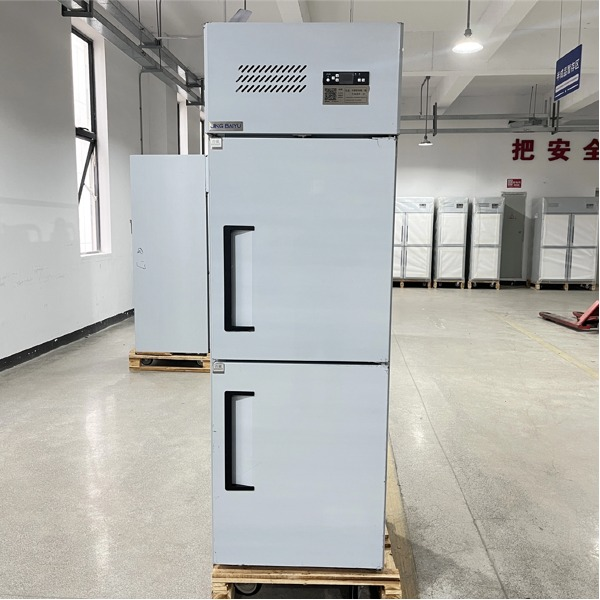
Finding the Sweet Spot Between Overcrowding and Empty Space
Choosing the right size for a commercial freezer is one of those high-stakes decisions that can quietly make or break a restaurant's daily rhythm. Pick something too small, and kitchen staff end up playing a stressful game of Tetris with frozen proteins, blocking vital airflow and risking costly health department violations. Buy an oversized unit, and the business bleeds utility cash every month just to chill empty shelves. Kitchen planners know that finding the perfect capacity requires looking past external dimensions. It is all about calculating the delicate balance between seating capacity, menu structure, and delivery frequencies to keep inventory fresh and operations smooth.
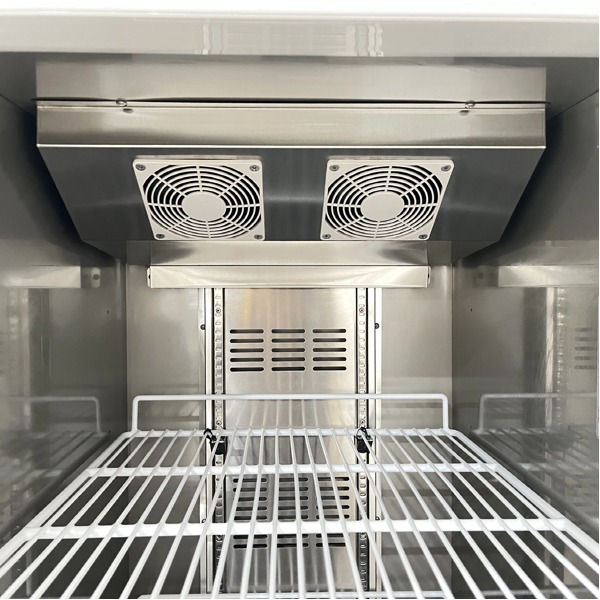
The Golden Mathematical Formulas for Kitchen Planners
When calculating storage requirements, professional kitchen designers rely on industry-standard baseline metrics rather than pure guesswork. A reliable rule of thumb suggested by food service consultants is to allocate between 1.5 and 2.5 cubic feet of usable freezer space per seat for a standard, full-service restaurant. To give you a clearer picture of how this translates to different restaurant formats, see the quick capacity breakdown below:
| Restaurant Concept | Average Capacity Per Seat | Recommended Commercial Freezer Size (100 Seats) |
| Farm-to-Table / Fresh Focus | 1.0 to 1.5 Cubic Feet | 100 to 150 Cubic Feet |
| Standard Full-Service Bistro | 1.5 to 2.5 Cubic Feet | 150 to 250 Cubic Feet |
| Fast-Casual / Heavy Frozen Menu | 2.5 to 3.5 Cubic Feet | 250 to 350 Cubic Feet |
Real Lessons From a Mid-Sized Bistro Re-Engineering
A practical example of this calculation in action comes from a popular downtown bistro that expanded its seating from 40 to 75 chairs. The owner assumed their existing single-section reach-in would suffice if deliveries were increased to three times a week. However, the crowded shelves restricted the internal air circulation, causing temperature fluctuations that spoiled high-end wagyu portions and premium seafood. After conducting a thorough inventory audit, the management swapped the small unit for a heavy-duty, two-section commercial freezer boasting 49 cubic feet of storage, alongside a compact walk-in unit. The immediate result was a 15% drop in monthly food waste and a much faster, less chaotic prep line during Friday night rushes.

Aligning Storage with Global Food Safety Protocols
Authoritative bodies like the National Restaurant Association (NRA) emphasize that cold-chain integrity inside a commercial kitchen is completely non-negotiable. Freezers must maintain a steady internal environment at or below -18°C (0°F) to halt bacterial growth effectively. If a unit is jammed to 100% capacity, the compressor has to work overtime to push cold air through the dense obstacles, resulting in dangerous warm pockets. Industry experts advise keeping a freezer filled to roughly 70% or 80% of its theoretical capacity. This intentional headroom leaves enough space for cold air to cascade evenly over every shelf, ensuring absolute compliance with local health regulations and preserving the taste profile of stored goods.
The Long-Term Financial Impact of Smart Capacity Decisions
Looking strictly at the initial price tag of commercial refrigeration equipment is a classic trap for new restaurateurs. The true cost of ownership reveals itself in monthly energy bills and equipment longevity. An overstuffed freezer suffers from frequent compressor cycling, leading to premature mechanical failure and expensive emergency repair calls. On the flip side, running a massive, half-empty unit wastes valuable kitchen footprint and drives up electricity overhead. Investing in a properly sized, energy-efficient model protects the bottom line by turning volatile maintenance costs into stable, predictable operational expenses over a ten-year lifespan.
Streamlining Kitchen Operations Through Advanced Manufacturing Supply Chains
Setting up a highly efficient kitchen demands access to reliable refrigeration equipment backed by exceptional manufacturing standards. Jingbaiyu answers this critical market demand by engineering robust, high-performance commercial freezer solutions designed to withstand the brutal demands of high-volume food service. With advanced production facilities focused on thermal optimization and variable-capacity configurations, Jingbaiyu manages every step of the supply chain with strict quality control. This comprehensive manufacturing and global logistics expertise ensures that hospitality businesses worldwide receive durable, precisely sized storage solutions that keep inventory secure, energy bills low, and kitchens running at peak performance.