 EN

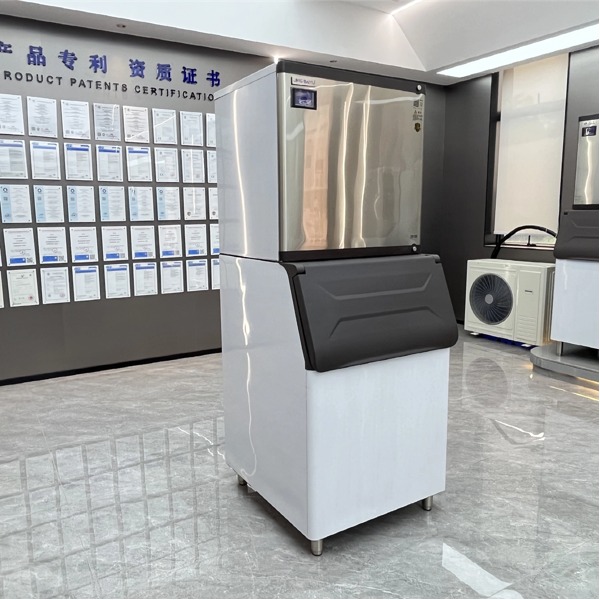
Higher Ice Production Capacity and Scalable Output
How modular design enables independent optimization of compressor and evaporator
A split-type ice maker separates the compressor and evaporator into distinct, thermally isolated modules—enabling each to be sized and tuned for peak performance without compromise. In self-contained units, compressor heat bleeds into the ice-making zone, forcing the evaporator to overwork and shortening freeze cycles. By contrast, the split design locates the compressor in a ventilated, ambient-temperature environment while the evaporator operates solely within the ice bin or dispensing area. This isolation improves heat exchange efficiency, extends freeze cycle duration, and reduces energy waste. Critically, it also supports scalable output: operators can upgrade capacity by pairing a larger condenser with a higher-capacity evaporator—or add modular ice-making heads to a single storage bin as demand grows. The result is consistent production, efficient operation, and a clear, cost-effective path to expansion—without replacing the entire system.
Real-world output comparison: Split type ice maker (90 lbs/day) vs. integrated refrigerator ice maker (2.5 lbs/day)
The performance gap is operationally decisive. A commercial-grade split-type ice maker rated at 90 lbs/day produces ~3.75 lbs/hour—refilling a standard 30-lb serving bin in under eight hours and sustaining output through peak service. An integrated refrigerator ice maker typically yields just 2.5 lbs/day (~0.1 lbs/hour), requiring nearly 12 days to produce the same 30-lb batch. That 36× difference isn’t theoretical: it determines whether a bar can serve 40 guests during a Friday-night rush—or whether a home entertainer must pre-freeze trays for every gathering. For any setting where ice demand is continuous and unpredictable, the dedicated split configuration delivers measurable, mission-critical production reliability.
Consistently Better Ice Quality for Hospitality and Home Bars
Clear, dense, slow-melting cubes from dedicated freeze cycles and filtration
Split-type ice makers produce premium ice through purpose-built engineering: a larger, dedicated evaporator enables slower, more controlled freezing—typically over 15–25 minutes per batch—while integrated water circulation removes air and impurities before crystallization begins. Built-in sediment and carbon filtration further reduces chlorine, minerals, and organic compounds that cause off-flavors and cloudiness. As water freezes gradually from the outside in, dissolved solids are naturally expelled, yielding crystal-clear, dense cubes with minimal internal fractures. These cubes melt up to 50% slower than standard ice, preserving drink temperature and minimizing dilution. For hospitality professionals and serious home bartenders, that means visually striking cocktails, consistent spirit expression, and less wasted product—especially critical when serving high-end spirits on the rocks.
Why integrated units produce cloudy, brittle ice due to compromised condensing and water flow
Integrated refrigerator ice makers share a single compressor and condenser with the fresh-food compartment—a fundamental design constraint. To accommodate refrigeration needs, the evaporator runs warmer and cycles rapidly (often freezing cubes in under 10 minutes), trapping air bubbles and mineral deposits inside the ice. Water flow is low, intermittent, and unfiltered beyond basic fridge filters—leaving chlorine, calcium, and other contaminants embedded in the cube. Restricted airflow and poor drainage around the buried ice mold compound thermal instability, while shared condensing waste heat raises freezer temperatures, further destabilizing freeze consistency. The outcome is cloudy, porous, brittle ice that cracks easily, melts quickly, and may impart mineral or chemical notes to drinks. In professional and premium home settings, this compromises both presentation and palate—undermining the very experience premium ice is meant to elevate.
Greater Reliability and Longer Service Life
42% lower annual failure rate for split type ice makers (AHAM 2026 field data)
According to the 2026 Appliance Manufacturers Association (AHAM) field reliability study, split-type ice makers exhibit a 42% lower annual failure rate than integrated refrigerator ice makers delivering comparable daily output. This stems from reduced thermal stress: independent condensing and evaporator circuits eliminate heat recirculation, while dedicated fan and compressor controls avoid the frequent on/off cycling that accelerates wear in shared systems. Operators across cafes, bars, and healthcare facilities report fewer unscheduled service interruptions—critical during high-volume service windows. Lower failure rates also correlate with fewer refrigerant leaks and extended compressor life, as each module operates within its optimal thermal envelope. Over time, that reliability translates directly into uninterrupted ice supply and predictable maintenance planning.
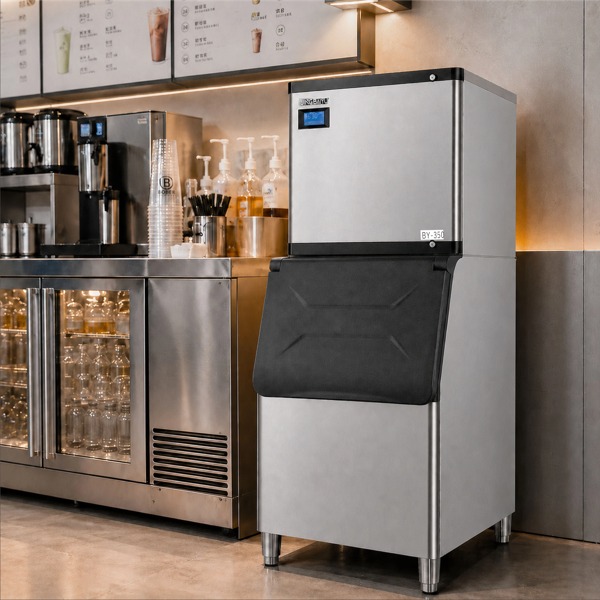
Design advantage: Full-service accessibility vs. buried compressors in integrated systems
Integrated refrigerator ice makers conceal compressors, water valves, and refrigerant lines behind fixed panels and insulation—making diagnostics, cleaning, and repairs time-intensive and labor-heavy. Split-type systems position the condensing unit—including service valves, fans, and controls—in an open, floor-standing or wall-mounted module with unobstructed access. Technicians can inspect, clean, replace filters, or swap components without moving cabinetry, pulling appliances, or compromising adjacent refrigeration. This full-service accessibility cuts average repair time by more than half and significantly lowers labor costs. Vibration and heat are also physically isolated from the ice storage bin, reducing seal fatigue and moisture infiltration. For commercial kitchens and home bars alike, that means faster resolution, less downtime, and sustained system integrity over years of use.
Lower Total Cost of Ownership Over Time
Repair cost breakdown: $129 module replacement (split type ice maker) vs. $359 average integrated repair
Modularity drives down long-term service costs. When a component fails in a split-type ice maker—such as a condenser fan, water inlet valve, or control board—technicians replace only the affected module, typically for around $129. In contrast, integrated refrigerator ice makers embed critical components behind panels, share control boards, and rely on proprietary assemblies; a single fault often triggers a bundled repair averaging $359, including extensive disassembly, recalibration, and labor. Because the ice-making head and condensing unit operate independently, parts are standardized, widely stocked, and interchangeable across models. Repairs target one subsystem—not an entire appliance—reducing diagnostic time, minimizing collateral part replacement, and avoiding unnecessary refrigerant handling.
| Cost factor | Split type ice maker | Integrated refrigerator ice maker |
|---|---|---|
| Typical module replacement | $129 | Not modular; part bundles common |
| Average repair invoice | Lower, focused labor | $359 average |
| Downtime per repair | Under 1 hour | Often 2–4 hours |
Extended lifespan (8–12 years vs. 5–7 years) and reduced downtime impact on operations
Split-type ice makers routinely deliver 8–12 years of service—nearly double the 5–7-year typical lifespan of integrated units. That longevity arises from cooler, better-ventilated condensing operation outside the refrigerated cabinet, eliminating heat recirculation and thermal overload. The physical separation of components also reduces mechanical stress on seals, gaskets, and tubing. For bars, restaurants, and home entertainers, this extended service window means fewer capital expenditures, less operational disruption, and no need to melt and replace stored ice during routine maintenance. With repairs completed quickly and without moving the storage bin, uptime remains high—and so does revenue protection. Over a decade, the combination of lower failure rates, simpler repairs, and longer life delivers a demonstrably lower total cost of ownership than integrated alternatives.
FAQ
What is a split-type ice maker?
A split-type ice maker is a specialized design where the compressor and evaporator are separated into distinct modules, allowing each component to operate independently and efficiently without thermal interference.
How does the output of a split-type ice maker compare to a standard integrated unit?
A split-type ice maker can produce significantly more ice, often up to 90 lbs/day, compared to around 2.5 lbs/day for an integrated refrigerator ice maker—making it better suited to high-demand settings.
Why does a split-type ice maker produce better-quality ice?
The split design allows for slower and more controlled freezing cycles, integrating advanced filtration, which results in clear, dense, and slow-melting ice cubes that offer better taste and presentation.
How reliable are split-type ice makers compared to integrated models?
Split-type ice makers have a 42% lower annual failure rate due to reduced thermal stress and modular construction, leading to better reliability and longer service life.
What are the cost-saving benefits of a split-type ice maker?
Thanks to modular construction, repairs are less expensive and quicker compared to integrated systems. They also have a longer lifespan (8–12 years), reducing long-term costs and downtime.
Table of Contents
- Higher Ice Production Capacity and Scalable Output
- Consistently Better Ice Quality for Hospitality and Home Bars
- Greater Reliability and Longer Service Life
- Lower Total Cost of Ownership Over Time
-
FAQ
- What is a split-type ice maker?
- How does the output of a split-type ice maker compare to a standard integrated unit?
- Why does a split-type ice maker produce better-quality ice?
- How reliable are split-type ice makers compared to integrated models?
- What are the cost-saving benefits of a split-type ice maker?