 EN
EN

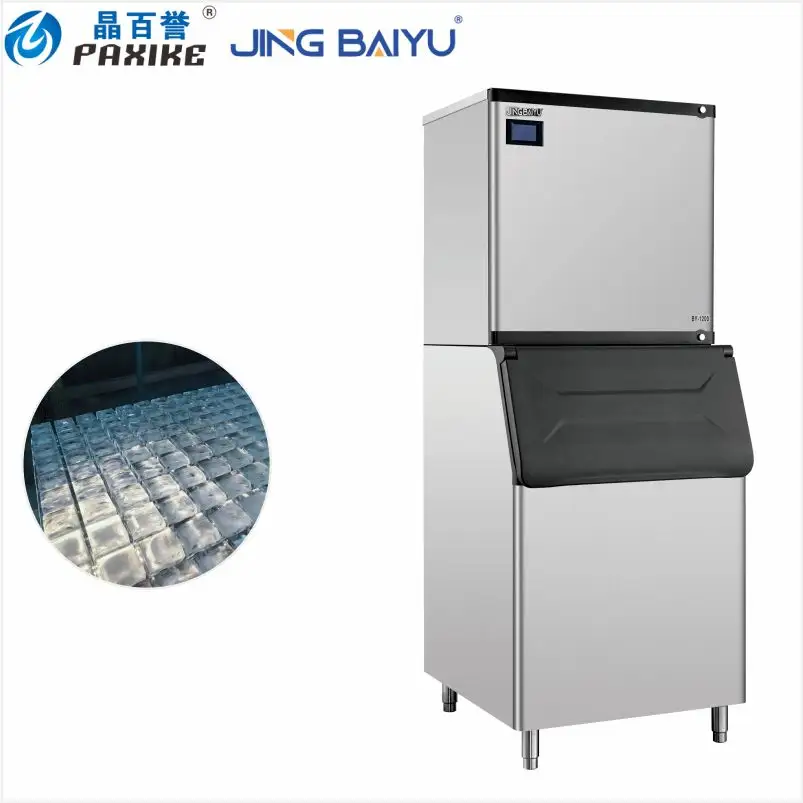
Thermal Performance of Water Cooled Ice Makers in Tropical Heat How do ambient temperatures exceeding 35ºC impact condensers and the stability of ice output?
The Tropical Climate, with High Ambient Temperatures, Places Great Strain on the Ice Production Process. When the ambient temperature is Above 35ºC, Water Cooled Ice Makers See Significant Limitation in Condenser Heat Rejection. The Reduced Delta T of Condenser Water and Refrigerant Compressors Results in an Increased Work Load, Significantly Increasing Energy Consumption. This directly impacts the output of Ice. According to Industry Data, it is Reported that an Increase in Ambient Temperatures of 5ºC Above the Standard Operating Temperature will Reduce the Production Capacity of the Machine by 15 to 18%. The High Humidity which Severely Impacts an Ice Production Machine, will Reduce the Rate of Evaporative Cooling, which is especially Important to Machines that Rely on the Wet Bulb Temperature Differential.
JINGBAIYU’s Rated Capacity Retention at 38ºC WB vs 25ºC Standard Test Conditions
JINGBAIYU’s Water Cooled Ice Makers, Optimized for the Tropical Climate, Retain Approximately 85% of their Rated Capacity at 38ºC WB Compared to the 25ºC Standard Test Condition, and are Considerably Better than the Conventional Units, which will Lose Approximately 30 to 40% Capacity in the Same Condition. This is the Result of Over Designed Condensers, High Efficiency Compressors, and Refrigerant with Higher Saturation. These Units have Increased the Reliability of Ice Production in the Tropical Climate, even with an Inlet Water Temperature of 32ºC. This is of Particular Benefit to the Tropical Hospitality and Sea Food Processing Industry, where Ice Production is Vital.
The Essential Role of Water Infrastructure for Reliable Functioning
Cooling Tower Circulation vs. Single-Pass Municipal Supply: Efficiency, Cost, and Sustainability Tradeoffs for the High-Humidity Tropics
The use of recirculating cooling towers vs. single-pass municipal supply for water-cooled ice makers in tropical climates affects operational sustainability and economics. Adopting cooling towers can lower water usage by 90% as water evaporates to cool the system and is reused, requiring only a ~5% blowdown loss. While there is a higher initial cost for the tower and the pumps and the chemical treatments, the savings in water and wastewater fees (especially where municipal water is expensive) creates a good ROI. Conversely, single-pass systems are much easier to implement, but use mains water at full flow rates, resulting in higher costs and a much greater environmental impact.
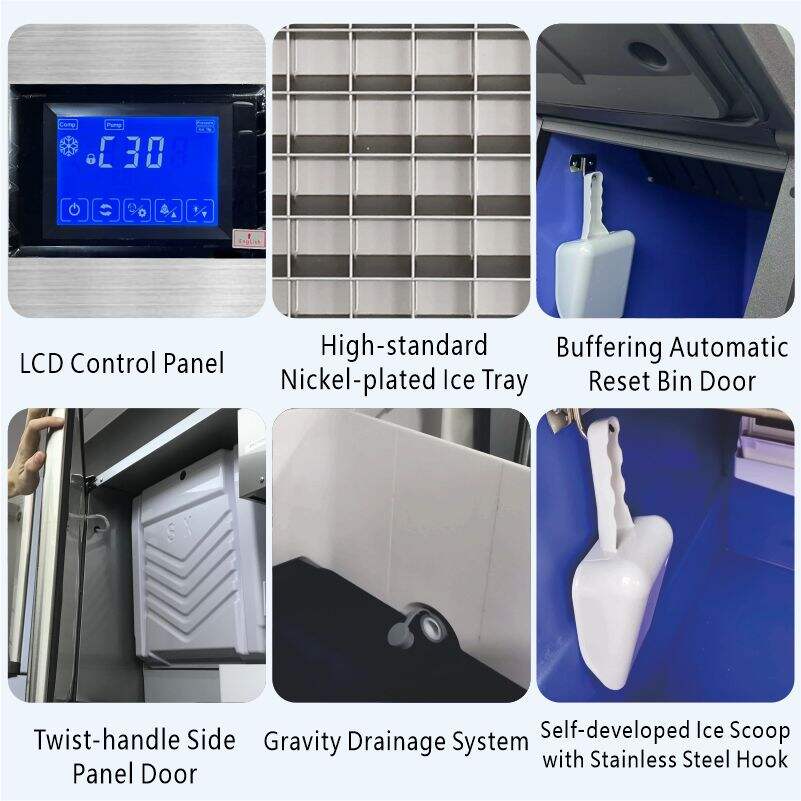
Factor Cooling Tower Circulation Single-Pass Municipal Supply
Water Efficiency High (reuses water, ~5% blowdown loss) Low (100% consumption)
Operating Cost Lower over time (reduced water bills) Higher (constant water purchase and sewer fees)
Sustainability More eco-friendly (conserves water) Less sustainable (high demand on local supply)
Reliability Consistent performance with proper maintenance Susceptible to municipal pressure drops or interruptions
Real-world validation: Bangkok monsoon deployment — inlet water temperature 28-34°C, consistent ice production >90 days
A 90-day field trial during the Bangkok monsoon season of a JINGBAIYU water cooled ice maker, showed sustained performance of the unit within 95%, even with inlet water of 28-34°C. This is well beyond the typical test standard of water temperature. This sustained performance was enabled with a high surface area heat exchanger, designed for warm water operation coupled with a smart controller. This controller enabled uninterrupted operation during the most humid monsoon days. No ice production was impeded. The trial confirmed the need not only for the specialized design of the equipment, but also the basic pre-treatment of the water to include a sediment filter and water softener to mitigate scaling from moderately hard water to sustain the heat transfer throughout the entire deployment.
Water vs Air Cooled Ice Makers: Better Choice for the Tropics?
Choosing between water vs air cooled ice makers for tropical climates is a no brainer. Water cooled ice makers are the only option. In tropical climates, high heat, air cooled ice makers are inefficient since they rely on ambient air to cool the system. If ambient air is above 35°C, the system is unable to produce ice reliably. Water cooled ice makers do not have this issue. Water is a more efficient medium for cooling than air, so even if the water is above room temp, the system can still be efficient. It is also important to note that in tropical environments, water cooled ice makers will use 100 gallons of water for every 100 lbs of ice made, but will also conserve energy by 30-50% vs the air cooled system. The other trade off when it comes to choosing between air vs. water cooled ice makers, is space. Air cooled ice makers need more space to account for air flow customization, while a water cooled ice maker can fit in a smaller space, but requires a large water system. For ice in the tropics, choose water cooled systems.
Mitigating Tropical Operational Risks for JINGBAIYU Water-Cooled Ice Makers

Scaling, Biofilm, and Corrosion from Warm, Hard Water in Tropical Regions — OEM Protocols and Practices
In JINGBAIYU water-cooled ice makers, warm and hard water of the tropics accelerates the formation of three failure modes that are interrelated and synergistic: scaling from minerals, biofilm from microbes, and corrosion from galvanic action. JINGBAIYU’s OEM mitigation strategy begins with upstream water pre-treatment that includes a sediment water filter and a water softener to remove water of its particulate and dissolved calcium and magnesium. Biocide application at the cooling water line once a month inhibits microbial growth. A sacrifical anode installed in the condenser is an effective method for cathodic corrosion protection. Quarterly, the rotary chiller is serviced and cleaned with citric acid to remove scaling. These protocols are defense-in-depth that are designed to give permanent retention of the rated ice production of the water-cooled ice maker, despite the extreme tropical conditions of water.
Frequently Asked Questions (FAQs)
What are the contributing factors that affect the performance of a water-cooled ice maker in a tropical climate?
High ambient temperatures, together with high inlet water temperatures, have an adverse impact on heat rejection, condenser efficiency, and the consistency of ice output.
How do JINGBAIYU ice makers operate in high heat tropic conditions?
Compared to conventional systems, JINGBAIYU ice makers operate with stable and consistent output at high inlet water temperatures of 32°C. JINGBAIYU ice makers also retain 85% of rated output at wet-bulb conditions of 38°C.
What are the benefits of implementing a cooling tower circulation system?
Cooling towers are more sustainable water cooling systems that, over the long-term, reduce water use by 90% and have a lower cost of continuous operation compared to single-pass systems.
How can scaling and biofilm formation be effectively controlled in the tropics?
Sediment filter use, water softener use, biocide dosing every 30 days, and the use of citric acid for cleaning can control scaling and the microbial growth.