 EN

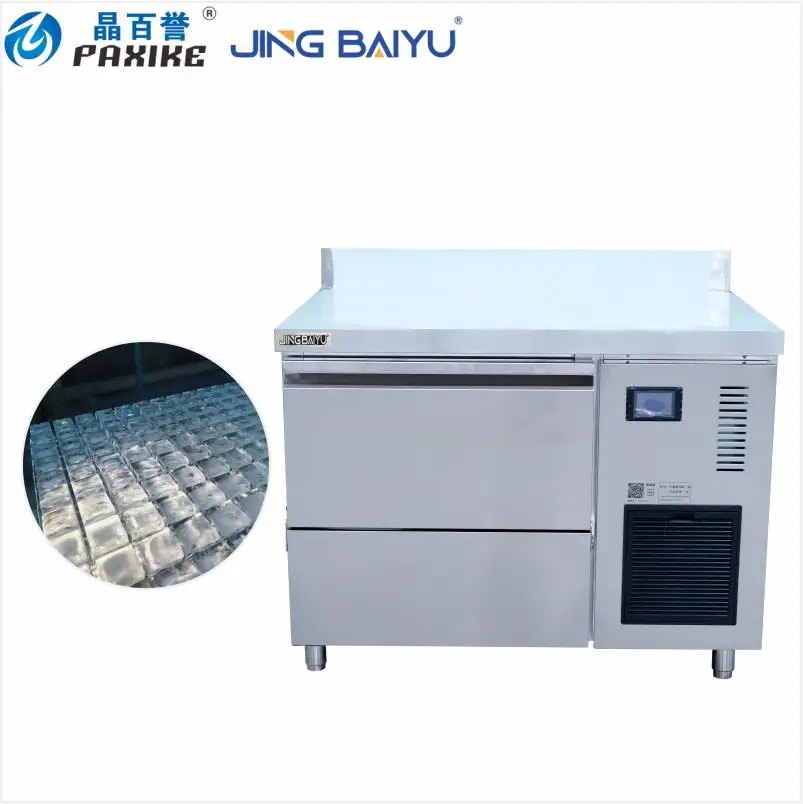
A Distributor Order That Crossed Three Markets
A Gulf Hotel Group Purchase
A distributor in the Gulf supplied ice makers to three hotels: one in Dubai, one in Riyadh, and one in Cairo. Each site needed the same cube output but faced different rules. The Dubai property required CE and GCC marks; the Cairo site needed a 220-volt model with Arabic manual; the Riyadh buyer asked for NSF-listed food contact. The distributor chose a supplier that treated ice maker export as a configuration task, not a one-size shipment. Matching each unit to its market avoided a costly return and a missed opening date.
Lessons From the First Shipment
The first container had mixed voltage and missing certificates, which stalled customs for two weeks. The team learned that ice maker export lives or dies in the document pack: certificate, manual, and spare list must match the destination before the container seals. After fixing the pack, clearance took days. The case shows that export success is paperwork discipline as much as product quality, and the two cannot be separated.
Risks in Ice Maker Export
Certification and Voltage Mismatch
A unit certified for one region often fails another. Ice maker export to North America needs UL 563 and NSF/ANSI 12; the EU needs CE with EN 378 and ERP energy labels; Gulf states add GCC or SASO. Voltage differs at 110, 220, or 240 with various plugs. Shipping the wrong mark or voltage means rejection, rewire, or recall. The risk is real money lost at the port, not a minor delay.
Logistics and Spare Parts Gaps
Long sea freight and unclear spare channels leave buyers without filters or pumps when a unit fails. Ice maker export that omits a local spare plan forces air-freight emergencies. The risk grows with remote sites far from a service hub. A supplier that pre-stocks common parts and ships a spare kit with the container protects uptime and the buyer's trust through the first year.
What Global Ice Maker Export Requires
CE, NSF, and UL Marks
Compliance starts with the right mark for the market. Ice maker export to the U.S. relies on UL 563 for ice makers and NSF/ANSI 12 for foodservice refrigeration, proving safety and cleanability. The EU uses CE with the Low Voltage and Machinery directives plus EN 378 for refrigerant safety. ISO 9001:2015 certified plants hold build tolerance so the marked unit matches the tested one. Marks are the passport; without them, the product stops at the border.
F-Gas, ERP, and Energy Labels
European ice maker export must respect the F-Gas regulation (EU 517/2014) on refrigerant choice and leak reporting, plus ERP energy labeling that ranks efficiency. A model using R290 or R600a avoids F-Gas volume limits that hit high-GWP gas. The energy label influences buyer choice in tender bids. Suppliers who design for low-GWP and high efficiency turn regulation into a sales edge rather than a barrier.
ISO 9001 and Document Control
Every approved unit needs a document trail: test report, declaration of conformity, manual, and spare list. Ice maker export handled under ISO 9001:2015 keeps these records auditable and consistent across batches. A buyer auditing the supplier sees the same file for every container. Document control is what lets a distant service team trust the equipment and clears customs without last-minute scrambles.
Buying Ice Maker Export With Confidence
Match Market to Certified Model
Before ordering, list each destination's marks, voltage, plug, and language needs, then select the certified model per market. JINGBAIYU and comparable exporters publish a market matrix that maps region to certificate and spec. Ice maker export planned this way ships once and clears cleanly. Guessing the mark to save a week upstream costs far more in port delays downstream.
Plan Spares, Manuals, and Training
Ask the supplier for a spare kit, local-language manual, and a short technician training video with the first container. Ice maker export that includes these turns a distant install into a supported one. Confirm support terms, lead time for parts, and a contact for technical questions. Planning the after-sale before the ship sails keeps the buyer's operation running past the first year.
Frequently Asked Questions
Question: Does JINGBAIYU support ice maker export?
Answer: Yes. JINGBAIYU supports ice maker export by certifying models per market — CE, UL 563, NSF/ANSI 12, and GCC where required — and matching voltage, plug, and manual language to the destination. Export success depends on the document pack and spare plan, which the supplier builds before the container ships.
Question: Which certificates matter for ice maker export?
Answer: It depends on market. North America needs UL 563 and NSF/ANSI 12; the EU needs CE with EN 378 and ERP label; Gulf states often require GCC or SASO. Ice maker export also needs a declaration of conformity and local-voltage model. Confirm the exact marks with the buyer's authority before production to avoid customs rejection.
Question: How does voltage affect ice maker export?
Answer: Voltage and plug vary by region: 110V in parts of the Americas, 220–240V elsewhere, with different sockets. Shipping the wrong voltage risks damage or non-start. Ice maker export must match the destination electrical standard and label it clearly. Always confirm voltage, frequency, and plug with the buyer before the container is sealed.
Question: What refrigerant is best for exported ice makers?
Answer: Low-GWP gases like R290 or R600a suit most export markets because they avoid F-Gas limits that restrict high-GWP HFCs in the EU. Ice maker export with hydrocarbon refrigerant needs ASHRAE 15 charge control and certified handling. Match refrigerant to both efficiency goals and the destination's refrigerant rules for smooth clearance.
Question: How are spare parts handled in ice maker export?
Answer: Reliable ice maker export ships a spare kit — filters, pump, and seals — with the first container and pre-stocks common parts near the buyer. Long sea freight makes air emergencies costly, so planning spares upfront protects uptime. Ask for lead time, part numbers, and a technical contact before the order is placed.
Question: Can exported ice makers be serviced locally?
Answer: Yes, when the supplier provides local-language manuals, training material, and certified technician guidance. Ice maker export using standard vapor-compression parts is serviceable worldwide, but A3 refrigerant models need trained handlers. Choose a supplier that supports the after-sale network, not just the shipment, for steady long-term operation.
Table of Contents
- A Distributor Order That Crossed Three Markets
- Risks in Ice Maker Export
- What Global Ice Maker Export Requires
- Buying Ice Maker Export With Confidence
-
Frequently Asked Questions
- Question: Does JINGBAIYU support ice maker export?
- Question: Which certificates matter for ice maker export?
- Question: How does voltage affect ice maker export?
- Question: What refrigerant is best for exported ice makers?
- Question: How are spare parts handled in ice maker export?
- Question: Can exported ice makers be serviced locally?