Most failures of commercial ice machines are not caused by compressor damage, but by improper installation conditions: excessive ambient temperature, hard water, unreasonable drainage layout, or long‑term uncleaned condensers. Half of the ice production capacity of a commercial ice machine depends on the unit itself, and the other half relies on on‑site installation conditions. This guide covers installation requirements, daily maintenance, basic troubleshooting and warranty support to help you operate commercial ice‑making equipment properly.
The installation of commercial ice machines requires suitable ambient temperature, inlet water conditions, water pressure & water quality, power supply and drainage space. These factors directly affect ice‑making efficiency, ice quality and equipment operating stability. Hard water tends to generate limescale easily. We recommend equipping a commercial water purifier to protect the ice evaporator and water‑circuit components. Plan the positions of water inlet, drainage and power sockets to ensure sufficient water flow. High‑capacity ice machines shall be fitted with earth‑leakage protection switches and air circuit breakers for electrical safety.
Four different pipelines shall be distinguished for water‑cooled commercial ice machines: ice‑making water inlet pipe, condensing water inlet pipe, ice‑making drain pipe and condensing drain pipe. Each serves a separate function. Wrong pipe connections will lead to insufficient ice output and high‑pressure alarm. Please connect each pipeline correctly for water‑cooled models.
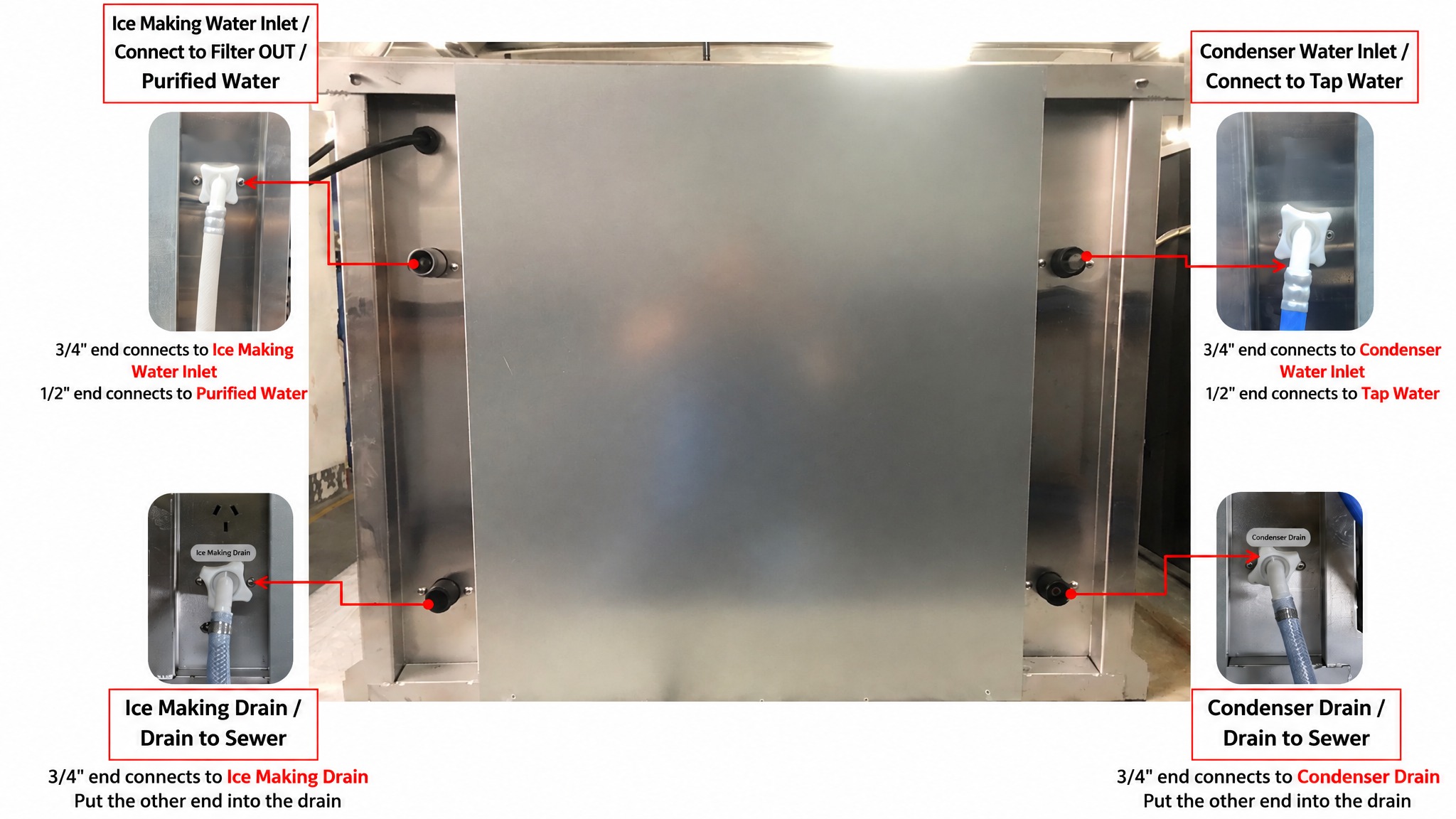
Do not invert the ice machine during transportation. After positioning the unit, leave it standing for a period before power‑on to allow compressor refrigeration oil to flow back. For air‑cooled ice machines, reserve sufficient heat‑dissipation clearance around the unit; do not place it tight against walls. Level the cabinet during installation to guarantee uniform ice shape and smooth ice‑harvesting. Upon delivery, verify the model number and outer‑package information. Unpack and check accessories including inlet & drain hoses, connectors and user manual. Take photos on‑site for missing or damaged parts to avoid subsequent after‑sales disputes.
Carry out routine maintenance: inspect unit condition, ice storage status and operating noise every day. Regularly clean the water tank, ice evaporator and condenser; check for water pipe leakage and unobstructed drainage. Limescale and dust are two major causes of reduced ice‑making efficiency. Dust buildup on the condenser will directly lower ice output. The unit is built‑in with auto‑cleaning program. Run the cleaning mode periodically as instructed. Perform full deep maintenance and condenser dust removal before peak business seasons to prevent unexpected downtime during operation.
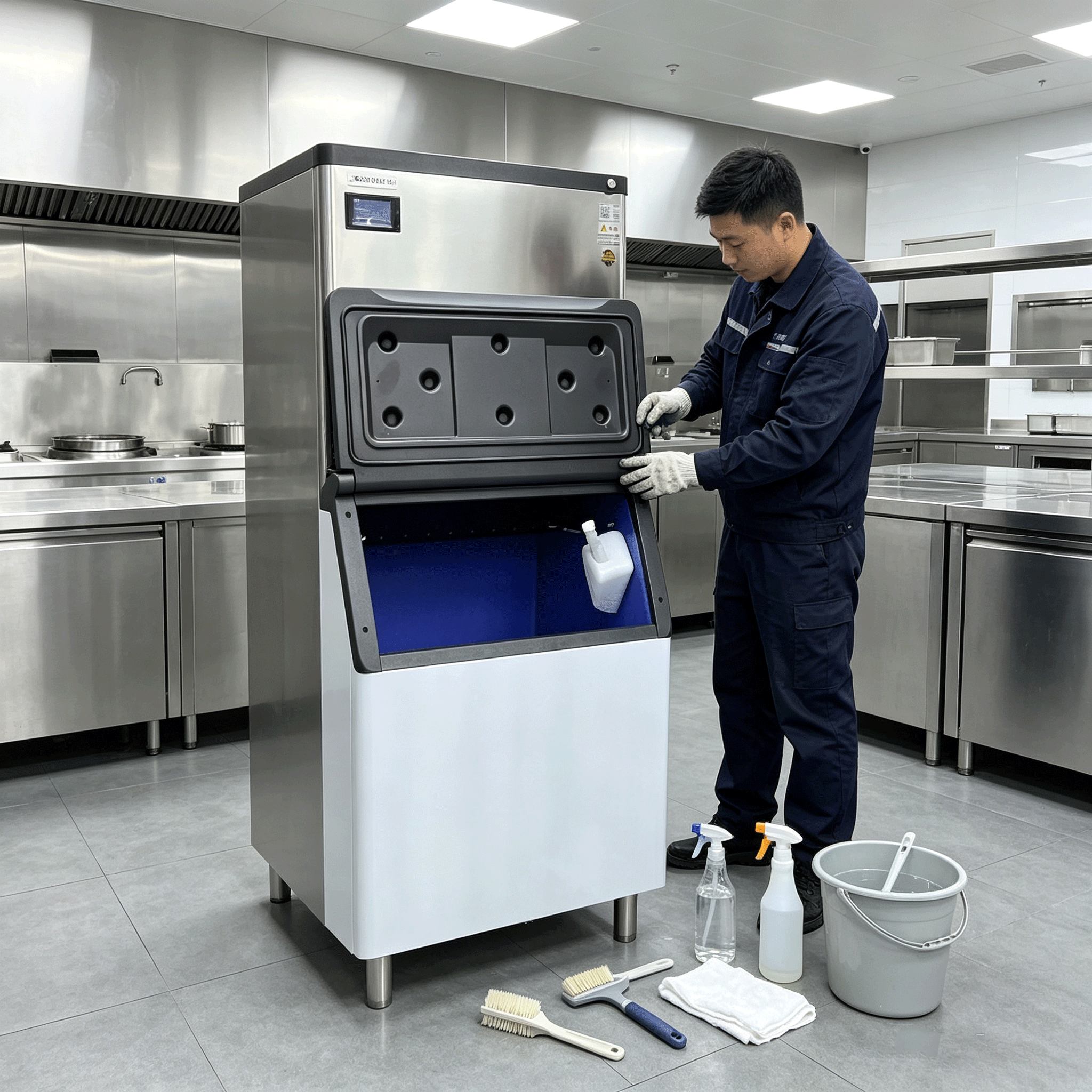
The control panel features functional codes for power on/off, auto‑cleaning, ice‑making, water draining and ice harvesting. When fault codes pop up, first check external factors such as ambient temperature, water pressure and inlet water quality. Contact professional after‑sales technicians for complicated malfunctions. The machine will stop automatically when the ice bin is full, and resume ice‑making after ice is taken out. For new units, complete one full ice‑making cycle without load before formal use in catering venues, to confirm proper ice thickness and smooth ice‑harvesting.
Troubleshooting sequence: Check external environment, water circuit and cleanliness before inspecting internal spare parts.
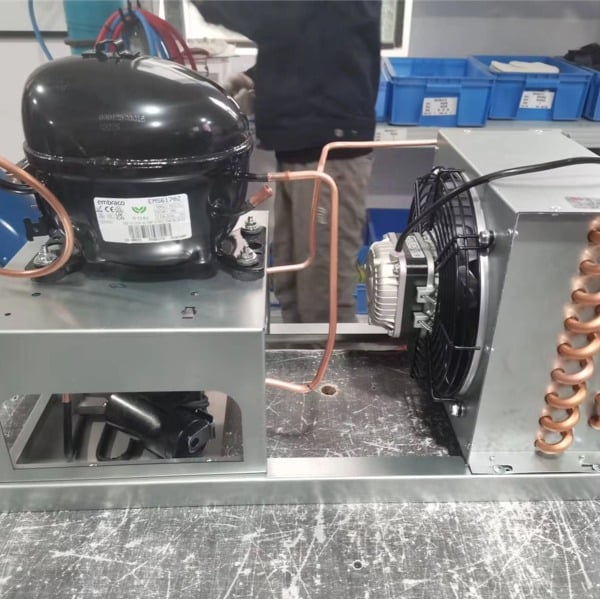
Standardized installation and regular maintenance are critical to extend service life and maintain stable ice output of commercial ice machines. Before delivery, Jingbaiyu helps customers confirm on‑site installation conditions. Installation & maintenance manuals are included in every package. We provide long‑term after‑sales support, and accept OEM & ODM customization for commercial ice machines.

Copyright © 2026 by Guangdong Jingbaiyu Refrigeration Equipment Co., Ltd. - Privacy policy
 EN