Commercial refrigeration never switches off. Refrigerators and freezers run 24 hours a day, 7 days a week — making them one of the largest electricity costs in any food business. The good news: most of that cost is controllable. A few changes to how you operate and maintain your equipment can cut energy use significantly, without affecting food safety or your ice supply.
Why Refrigeration Energy Matters
In a typical commercial kitchen, refrigeration accounts for a large share of total electricity use — the equipment runs without pause, and it rejects heat into an already-warm room, so the compressor works harder the hotter it gets. Every degree of unnecessary cooling, every clogged coil and every worn gasket adds to the bill, month after month. And unlike rent or wages, this is a cost you can reduce without losing a single customer — most savings come from better habits and maintenance, not from extra spending.
8 Practical Ways to Cut Refrigeration Energy Use
1. Set the right temperature — and stop over-cooling. Chilled storage needs only 2–8°C, and freezers -12 to -20°C. Every degree colder than necessary increases energy use by roughly 2–3%. Check your settings monthly.
2. Clean the condenser coils. Dust and grease stop the machine rejecting heat, so the compressor runs longer. Clean the coils every one to three months.
3. Keep ventilation clear. Leave 5–10 cm around the unit, and keep it away from ovens, fryers and direct sunlight.
4. Protect the door seal. Worn gaskets leak cold air continuously. Check them monthly and replace them as soon as they harden or tear.
5. Keep doors closed — and open them less. Keeping cabinet doors closed prevents cold air from escaping.
6. Fill the empty space. A half-empty cabinet loses cold air fast every time it opens; stored product holds the cold. Use water bottles or spacers to fill the gaps.
7. Don't overload or block airflow. Leave space between shelves and in front of the evaporator so cold air circulates freely.
8. Stay on a maintenance schedule. Descale, replace filters and book an annual service — a well-maintained machine uses noticeably less energy than a neglected one.
Choose Efficient Equipment When You Upgrade
Operating habits only go so far. Equipment efficiency is decided at the point of purchase:
Thick insulation — high-density polyurethane foam locks in cold and shortens run time.
Energy-efficient compressors — a commercial-grade compressor with an eco-friendly refrigerant such as R290 uses less power.
Ambient temperature rating — it keeps working efficiently in hot kitchens instead of running at full load all day.
Right-sizing — an oversized machine wastes energy cooling empty space; size it for your peak day.
Dual-temp cabinets — one cabinet with independently controlled zones can replace two units, cutting standby and maintenance load.
Monitor and Measure
You cannot manage what you do not measure. Check your electricity bill each month, or install a simple energy monitor on your refrigeration circuit. A sudden rise in consumption almost always points to a maintenance problem — dirty coils, a failing gasket or a worn compressor — long before it becomes a visible breakdown.
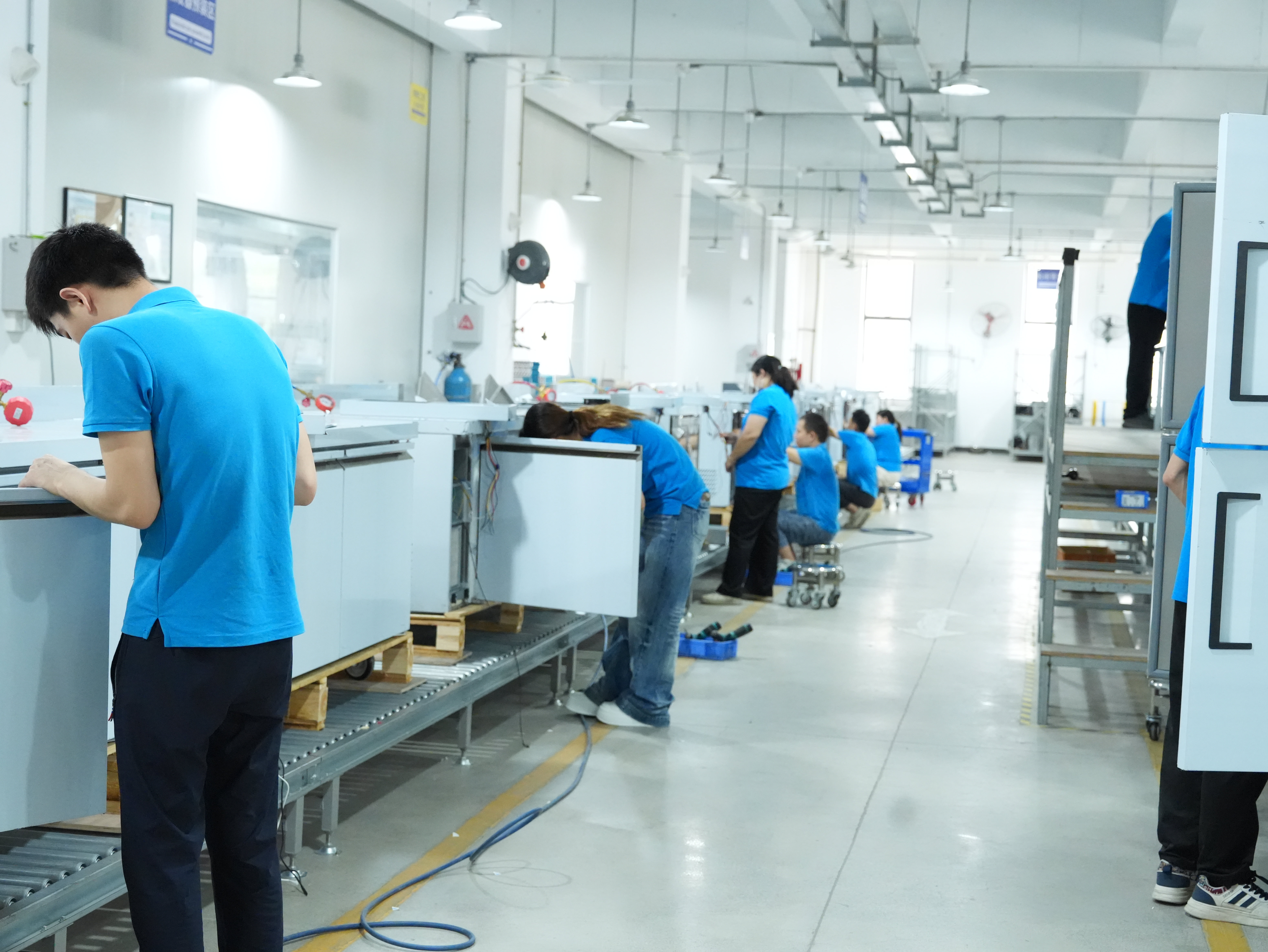
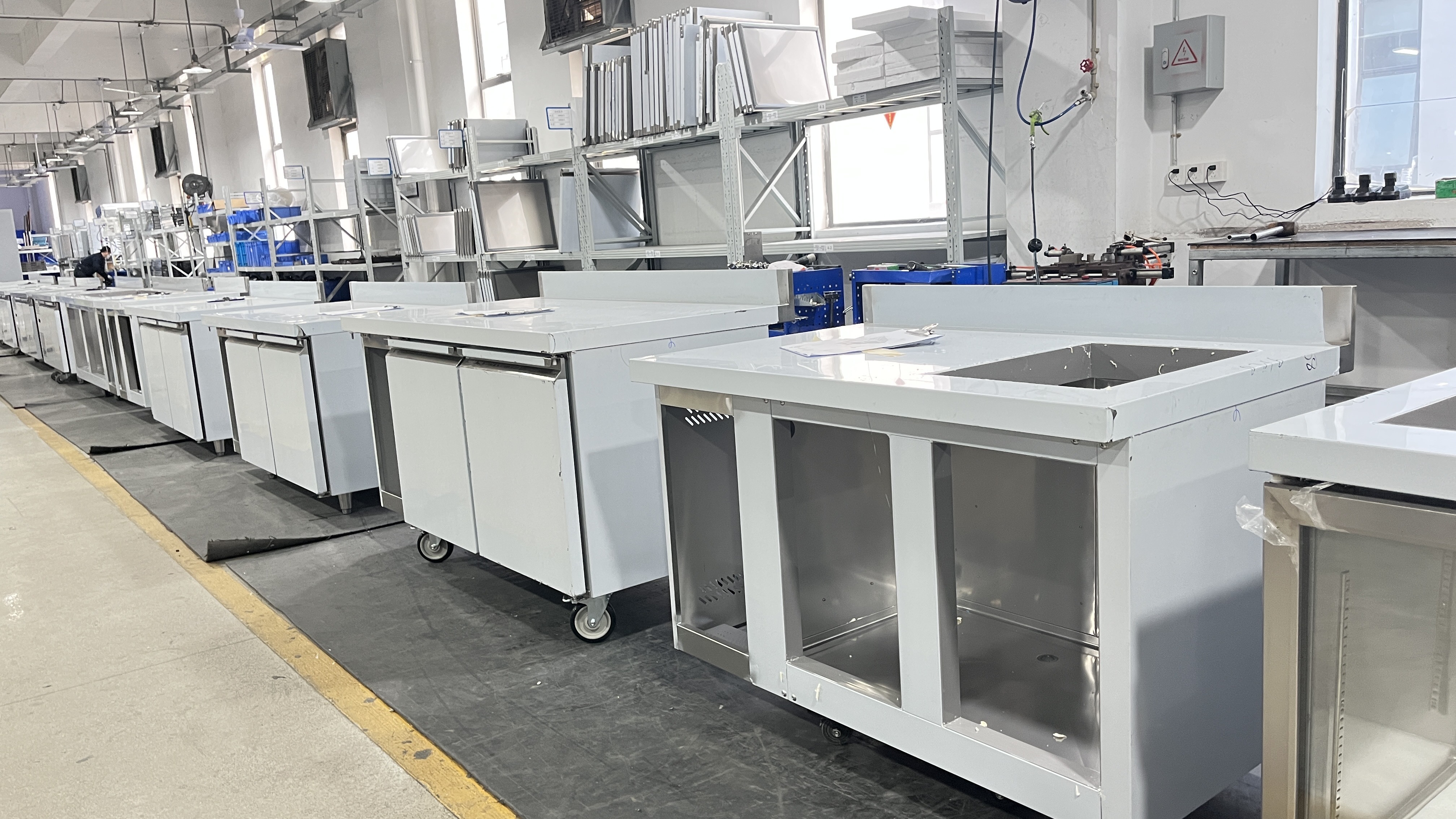
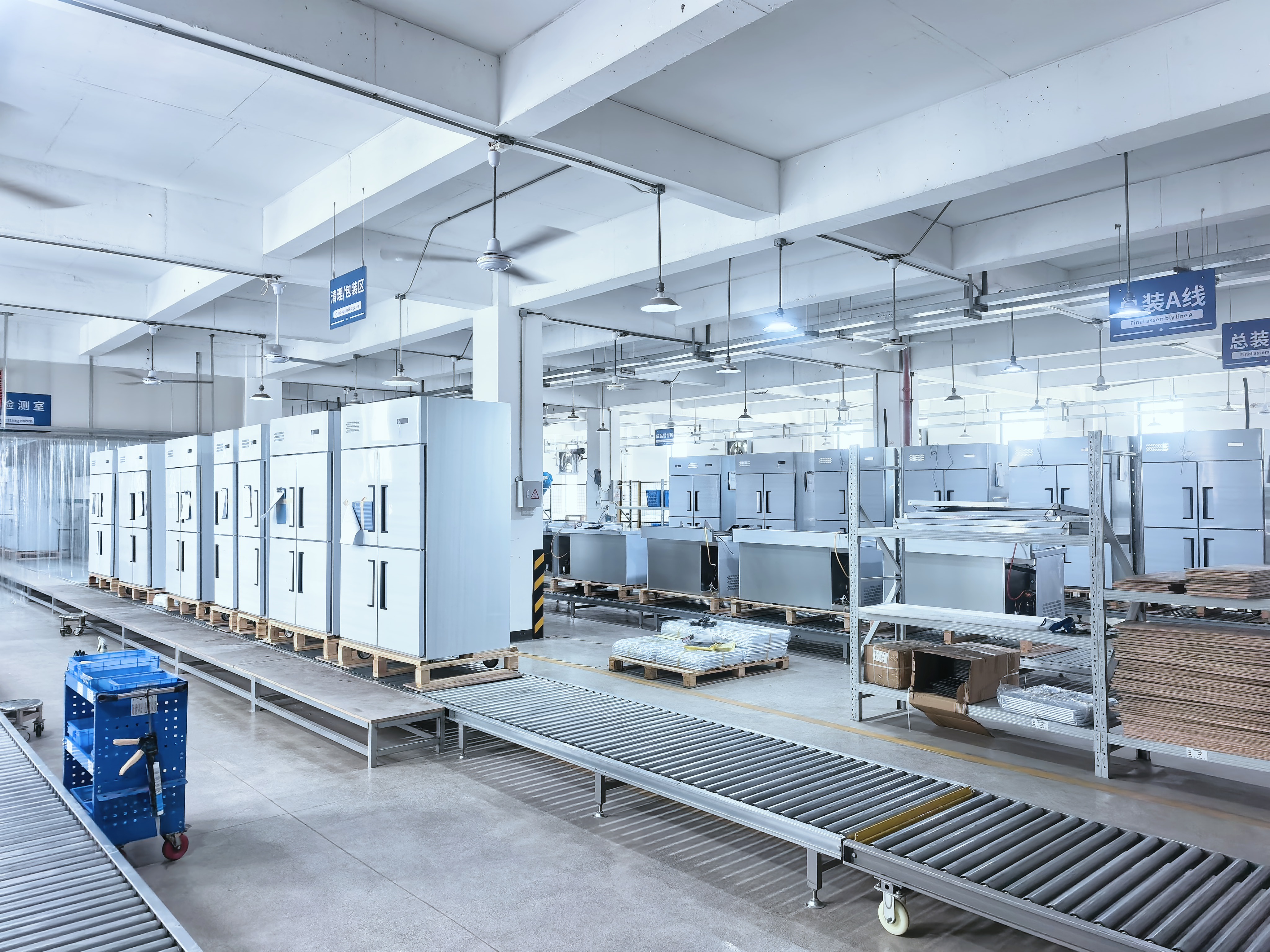
Jingbaiyu is a commercial refrigeration source factory in Qingyuan, Guangdong, China, with over 20 years of experience, an 18,000 m² facility and an annual capacity of more than 60,000 units. Our ice makers, cold storage cabinets and stainless steel work tables are built for efficiency — commercial-grade compressors, thick insulation, ISO 9001:2015 quality control, and CCC, CE, CB and UKCA certification. OEM/ODM customization and full-process support are available.
FAQ
How much energy can I actually save?
It depends on the machine's condition. A unit that has never been cleaned or serviced can use 10–30% more energy than a well-maintained one. Cleaning the coils and checking the door seals is the fastest payback.
What temperature should I set?
2–8°C for chilled storage and -12 to -20°C for frozen — never colder than your products actually need.
Does an old refrigerator cost more to run?
Yes. Efficiency standards keep improving, and worn compressors, failing gaskets and damaged insulation all raise consumption. If a unit is 8–10 years old and needs major repairs, replacing it often pays back quickly.
Conclusion
Reducing refrigeration energy use is not about switching equipment off — it is about running it the way it was designed to run: at the right temperature, with clean coils, sealed doors and clear airflow, and upgrading to efficient units when the time comes. Small, consistent habits add up to meaningful savings every month.
Keep your energy costs down — Jingbaiyu builds factory-direct [commercial ice makers], [cold storage] and [stainless steel work tables] designed for efficient 24/7 operation — [contact us] for a free consultation and quote.

Copyright © 2026 by Guangdong Jingbaiyu Refrigeration Equipment Co., Ltd. - Privacy policy
 EN
EN